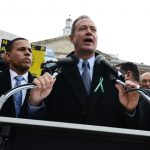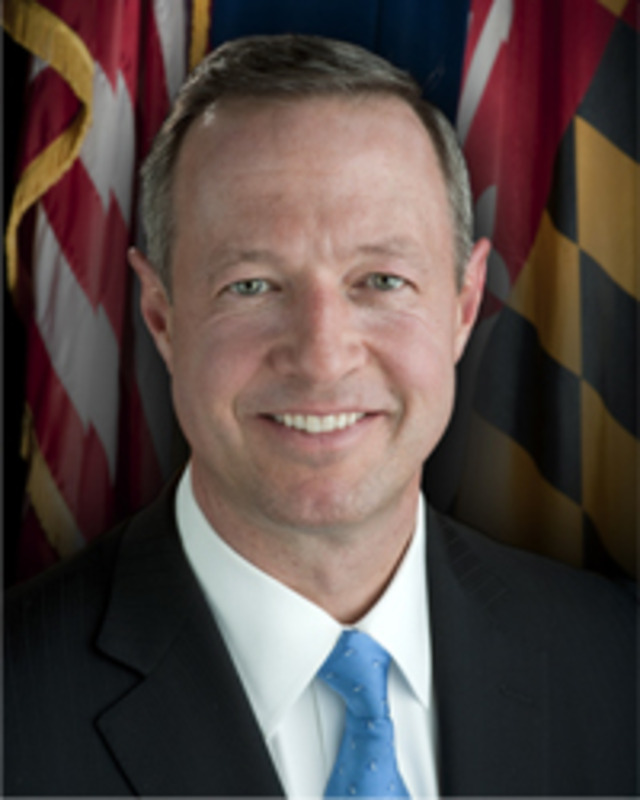
 Maryland Gov. Martin O’Malley is delivering a speech today in which he will outline his plan to make repealing the state’s death penalty one of his top legislative priorities of the year. O’Malley appeared at a news conference in Baltimore today along with Rep. Elijah Cummings (D-Md.) and NAACP President Benjamin Jealous to call on state legislators to end capital punishment in the Old Line State.
O’Malley last attempted to overturn the death penalty—which has been the law since Maryland’s colonial founding in 1638—in 2009, but his efforts came up short in the General Assembly. Maryland Senate President Mike Miller said earlier this month that while he supports capital punishment in some instances, he is open to putting a repeal to a vote provided the governor can muster up the legislative support. The Baltimore Sun reports that the NAACP’s own counting shows majorities in both houses prepared to overturn the death penalty.
Previous attempts to get rid of the death penalty, including O’Malley’s 2009 bid, have come up short because some legislators prefer to have it on the books, even if hasn’t been applied in seven years, the Sun reports:
In past votes, the death penalty has remained on the books because most Republicans and a bloc of mostly conservative and moderate Democrats have balked at outright repeal. Even some generally liberal Democrats believe it should be retained in certain circumstances. At least one bill has been introduced to expand the use of the death penalty, but it has no realistic chance of becoming law.
Del. Neil C. Parrott, a Washington County Republican, said Monday he rejects the idea of repeal. “The death penalty’s a tool that has to be in the toolbox,” Parrott said. He said prosecutors use it to negotiate with defendants to get them to accept plea bargains with sentences of life without parole.
The last convict to be executed by Maryland was Wesley Eugene Baker, who received lethal injection in December 2005 as punishment for a 1991 homicide. Maryland’s death row currently has five inmates.
However, while the NAACP might have a favorable whip count for overturning the death penalty, it remains slightly opposed by Maryland voters. A recent poll by the Annapolis firm OpinionWorks found that 48 percent of voters oppose a repeal, while 42 percent support it. Any repeal could be challenged by a public petition and be put to a vote in the 2014 general election.