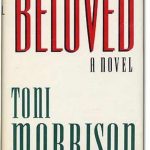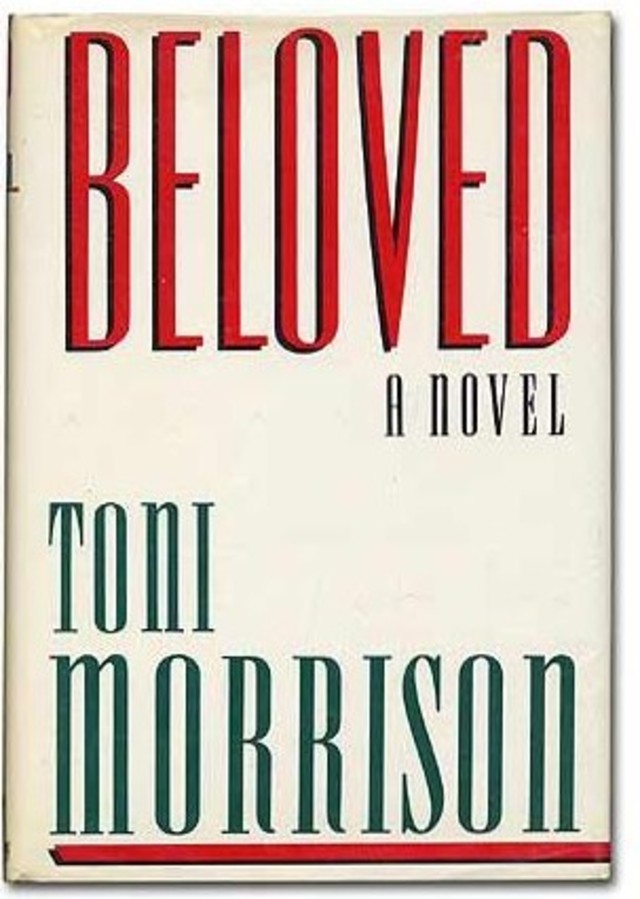
 One of the greatest American novels of the past 30 years is giving a Fairfax County high-school student a bit of agita. Naturally, the kid’s mother wants it banned.
The Washington Post reports that Laura Murphy, the mother of a student in an Advanced Placement English class, wants her county’s schools to stop including Toni Morrison’s 1987 novel Beloved, because its graphic depictions of slavery, rape, murder and other brutal scenes gave Murphy’s son bad dreams:
“It’s not about the author or the awards,” said Murphy, a mother of four, whose eldest son had nightmares after reading Beloved for his senior year Advanced Placement English class. “It’s about the content.”
Murphy, who has challenged Beloved and has asked the county school system to ban it, is awaiting a ruling from the school board this week after a six-month appeals process, during which members of the school board have been reading the novel to assess it. She argues that the book’s critical acclaim should not grant it blanket acceptance in school classrooms.
Well, where to start? No, Beloved is not an easy book to digest. In fact, it’s about as harrowing a novel as any American writer has produced. Set in the aftermath of the Civil War, it follows an escaped slave and her daughter’s evasion from slave-hunting posses and includes many grisly depictions of a mother killing her children rather than seeing them returned to bondage.
It’s not uncommon in school systems around the country for Beloved to be challenged by squeamish parents, but at least in Fairfax County, the schools have never banned any of the books parents have challenged over the years. But while students are allowed to decline reading volumes with disturbing themes, Murphy wants this one book stripped from the curriculum.
Murphy tells the Post that she’s “not some crazy book burner.” OK, whatever. But Advanced Placement courses are designed to push students toward more adult studies, and Morrison’s book is about as serious as it gets for literature about slavery and its immediate aftermath.
She also says that her definition of “mature themes” is either slavery or the Holocaust. Those certainly qualify, but any good piece of fiction based on either era will be nothing short of horrific. These were not nice times, and accurate portrayals are not going to gussy anything up. Elie Wiesel’s Night, which is also taught in many high-school English classes, features Jewish prisoners being forced to dig their own graves before being shot, and infants being snatched from their parents’ arms and tossed in the air for Nazi target practice.
Books like these are shocking and devastating, as well they should be. And if students are waking up in cold sweats because they can’t shake the most traumatic portions, well, then, Morrison has done her job. Oh, and the quality of Morrison’s writing is phenomenal. Beloved is one of the best examples of approaching a disturbing subject with compelling, often lyrical prose.
Murphy, meanwhile, can’t even seem to get her own story straight, as evidenced by this bit of the Post’s article:
“I don’t shelter my kids, but I have to be a responsible parent,” said Murphy, of Fairfax Station. “I want to make sure every kid in the county is protected.”
Luckily, Murphy’s attempt to shelter—er, “not shelter”—her children and others’ faces long odds of being adopted as policy. The Fairfax County School Board has already rejected her request once. In order for her appeal to be heard, at least four of the 12 board members will have to read Beloved and agree to take Murphy’s challenge into consideration. But based on the statement of at least one board member, that seems unlikely.
“I don’t think we want to be censoring great literature just because great literature addresses difficult topics,” board member Ted Velkoff told the Post.