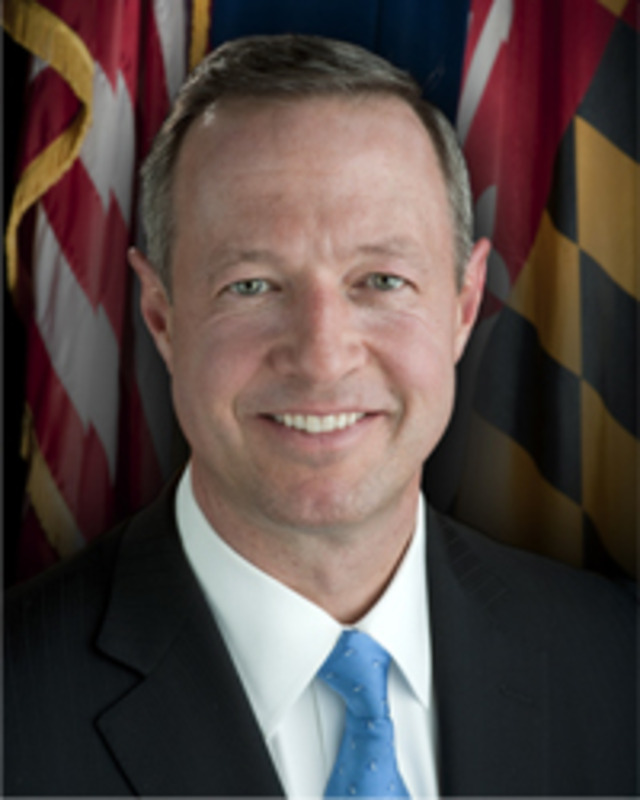
 Maryland Gov. Martin O’Malley spent yesterday being grilled by his state’s legislators when he testified in support of his push to repeal Maryland’s death penalty. O’Malley, who has long opposed capital punishment and last month announced that he would make overturning it a significant part of his policy agenda, was joined at the Maryland State House by Archbishop William E. Lori of the Roman Catholic Archdiocese of Baltimore.
In his testimony before a Maryland Senate panel, O’Malley charged that the death penalty, which has been on Maryland’s books since its colonial founding in 1689, is is an expensive policy which does not work as an effective crime deterrent.
“As the chief executive of Baltimore City for seven years, I watched our city become the most violent and addicted in America,” O’Malley said. “In the entire time that the City of the Baltimore had found itself slipping into the dubiousness of becoming the most violent and drug addicted city in America. The death penalty was on the books and did absolutely nothing to prevent these awful crimes.”
The governor also said capital punishment, which was last carried out in Maryland in 2005, is too costly to maintain.
“Especially in tough times, if a public policy is expensive and does not work, it would seem to me that we should stop doing it,” he said. “The death penalty is exactly that. It is expensive, and the overwhelming evidence tells us that it does not work.”
Instead of the death penalty, O’Malley is proposing that a life sentence without parole be the most severe punishment for the most heinous crimes.
O’Malley was rebuffed by prosecutors, police officials, and family members of victims, The Baltimore Sun reports:
Though outnumbered at the witness table, prosecutors, police officials and some relatives of murder victims pushed back. They argued that the death penalty should be preserved for the “worst of the worst” killers, that the public wants to keep it, and that DNA technology and new legal safeguards adopted in Maryland in 2009 have greatly reduced the chances that any innocent person would be wrongly convicted, much less executed.
“Don’t you think it is true there are individuals that commit such heinous acts that they don’t deserve to live in any society, even and especially in a correctional institution?” asked Scott D. Shellenberger, the Baltimore County state’s attorney. He said the death penalty is not about vengeance for the murdered, but about justice.
Still, O’Malley and other death penalty opponents are confident about their chances about getting a repeal. Maryland Senate President Thomas V. Mike Miller, who personally supports the death penalty, said last month that he will bring a repeal bill to the floor if he believes there are enough votes to pass it.