Martin Austermuhle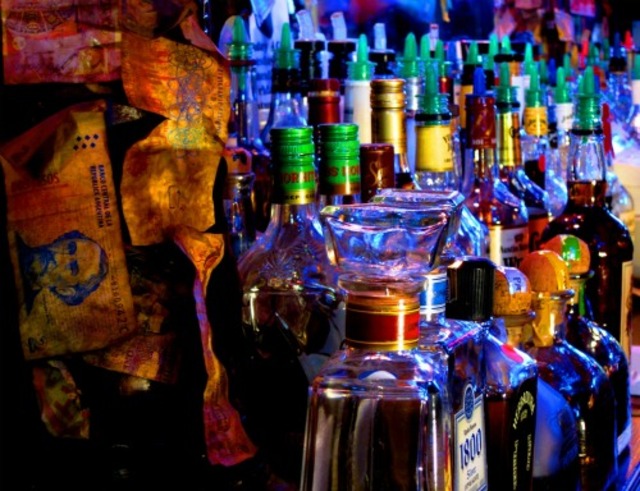
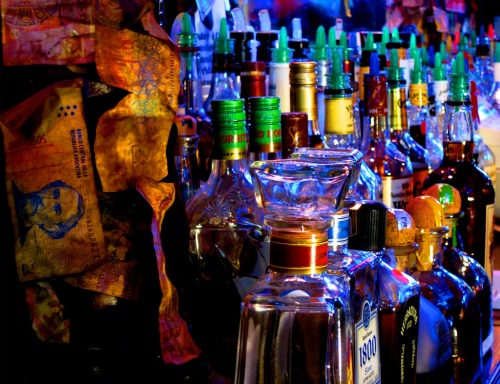 Photo by LaTur
There are more and more bars in D.C., many stay open until 4 a.m. on select holiday weekends throughout the year and now liquor stores are able to sell spirits on Sundays. Needless to say, there’s plenty of places and ways to get a drink in town. And while that may be great for attracting new residents and padding city coffers, it also has a downside—crime.
A report published by the Urban Institute last month (and noticed this morning by the Examiner) found that the presence of on-premise outlets (like bars) tend to track with increases in aggravated assaults while off-premise outlets (like liquor stores) are more closely associated with increases in domestic violence.
The report says that cities like D.C. have a number of tools at their disposal to deal with violence in areas where many bars are concentrated, including shutting down bars associated with violent incidents (D.C. Police Chief Cathy Lanier can unilaterally close down bars for 96 hours), mandating better training for staff and staggering closing times. (D.C. also bans the sale of single beers in wards 2, 4, 7, and 8 and in Mt. Pleasant.) Interestingly, during a debate in the D.C. Council last year on whether or not to allow bars to stay open until 4 a.m. year-round, some bar owners argued that the later hours would allow them to better manage the outflow of patrons.
For Lanier, the key is getting more police officers. In a letter to D.C. Council Chairman Phil Mendelson late last year, Lanier said that an analysis done by her office found that areas with many bars needed many more cops. “We have determined that when a new bar opens, city blocks with 10 or more ABRA establishments require four times the additional manpower than blocks with one to nine bars,” she wrote, adding that there are 17 blocks throughout the city that have 10 or more bars or liquor stores and 10 more blocks that are within a bar or two of hitting that threshold. (Mayor Vince Gray recently set aside money to hire 50 new police officers, but wants 50 more on top of that.)
Other areas of town have approached the situation more bluntly by putting a cap on the number of license-holders. Adams Morgan currently has a moratorium in place, as do Georgetown, Glover Park, and parts of Dupont Circle. The idea of a similar moratorium was floated for H Street NE in 2011, and will soon be debated for a large area around the intersection of U and 14th streets NW.
On top of all of these options, the Urban Institute researchers say that D.C. should study the impact of later operating hours on the weekends that they occur. Additionally, they say that legislators can consider another tool: making booze more expensive. Last year the council briefly debated raising the excise tax on alcohol, but the proposal went nowhere.
412735 Addressing Violence and Disorder Around Alcohol Outlets by