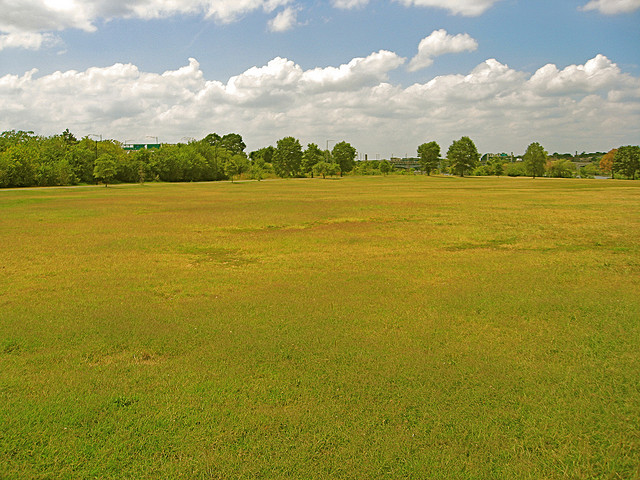
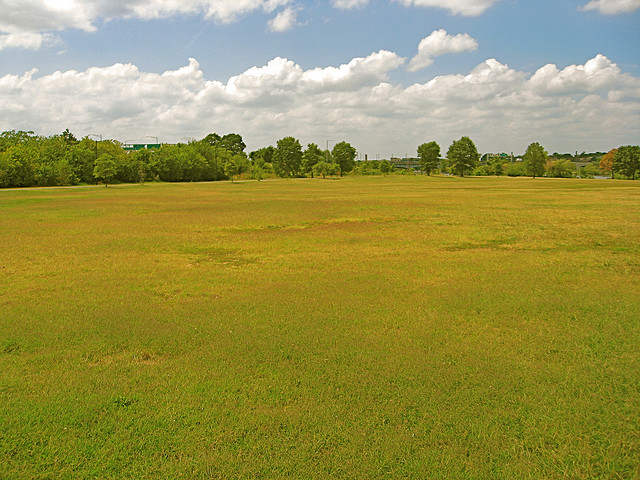
 Photo by Laura Rotondo
Mayor Vince Gray’s administration is releasing today a comprehensive plan that aims to make D.C. the “healthiest, greenest, and most livable” city in the United States within the next 20 years. The Sustainable D.C. plan, first announced by the mayor in mid-2011, calls for sweeping changes to the way the city obtains its energy, food, and water, and to how D.C. residents carry out their lives.
By 2032, the plan suggests, D.C. will be a city where biking or walking accounts for 25 percent of all transportation and one where newly constructed buildings would be required to return to the grid as much electricity as they consume. Gray’s plan also asks city-dwellers to increase their reliance on urban agriculture projects.
Many aspects of the plan, would not be realized until nearly two decades for now. But there are several components that Gray says can be achieved in the short term, including legislation to accelerate urban farming and pop-up agriculture. Gray’s plan would also begin to allow neighboring businesses to share containers for waste collection and recycling as a way to cut down on the amount of refuse produced.
The 129-page document also has big plans for D.C.’s green spaces, including the annual planting of 8,600 trees beginning this year. Gray is also calling for the creation of a new group of eight small parks that can be built in the next year in neighborhoods that are underserved by city park facilities. Further out, the plan also envisions more connections between public transportation and public parks and greatly expanded biking and walking trails in city parks, particularly the Anacostia Riverwalk Trail.
With vehicles responsible for the second-biggest share of D.C.’s greenhouse emissions output, the ways D.C. moves around are of particular concern in the sustainability plan. In the medium term, Gray is calling for at least 200 more Capital Bikeshare stations to be installed around the city, and also for the expansion of car-sharing services like Zipcar and Car2Go. The transportation phase of Gray’s plan also hinges on the streetcar system being implemented. The first stretch of one line, along H Street and Benning Road NE, is not set to be go into service until later this year.
The plan also suggests an increased number of charging stations for electric vehicles, doubling the number of bike lanes, and greater enforcement against cars that sit in parking spaces with idling engines. Eventually, the plan aims to reduce driving or taxi trips to 25 percent of all intracity transportation, with biking and walking taking up another 25 percent, and shared or public transportation making up the remainder.
There are also aggressive goals for energy, leading with an aim to cut the city’s total energy use 50 percent by 2032. Gray also envisions an energy supply that is at least half-sourced from renewable forms of energy. Pepco, the District’s main electricity utility, currently derives less than 10 percent of the energy it sends into the city from renewable sources and projects to remain below that threshold in 2020.
But the sustainability plan also calls for the D.C. government to generate some of its own electricity—at least if it can find land in neighboring states. Gray’s plan outlines a wind farm that could generate at least one-third of the power needed by D.C. government buildings.
Gray is outlining the plan in detail at a press conference today at the Earth Conservation Corps Pump House on the Anacostia River near Nationals Park.