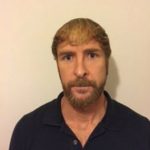
A Rockville man who documents police activities in that town on YouTube posted video a few days ago of his latest encounter with the authorities. Jared Parr, the author of a YouTube channel called Rockville Cop Watch, recorded two minutes of himself conversing with a pair of Montgomery County Police officers who confronted him after he recorded them making a routine traffic stop against another driver.
But then Parr, as recounted by WJLA, then became the subject of the officers’ attention as they started demanding he turn off his camera. Most of Parr’s interaction with the officers is audio-only, as the camera appears to have been in his lap. Parr and the lead officer got in a heated conversation about whether or not it is legal to tape police activities in public view:
On the video, one officer is recorded saying, “I believe you’re video taping. I believe you’re audio recording.”
“Oh, I am,” Parr answers.
“Okay, you’re not allowed to do that,” the officer says. “That’s against the law to audio record without my permission.”
At that point, the camera was on Parr’s lap.
But he tells the officer, he disagrees that it’s illegal to record an officer in public and he cites the law.
“Am I being detained?” Parr asks.
“You’re being detained right now because you’re audio recording and you’re not supposed to,” the officer says.
Parr was then arrested and charged with obstructing police, WJLA reports. In the clip, which was uploaded last week, Parr also told the officers he does not have to consent to a search of his person and belongings unless he is actually suspected of any wrongdoing; the conversation later heated into an argument over Parr’s safety and the protection of his equipment and vehicle.
It’s not the first situation Parr has found himself in, but Maryland’s wiretapping law is likely on his side. In 2010, as videos of police activities posted to YouTube and other media-sharing sites were becoming increasingly popular, a judge ruled that Maryland’s wiretapping law does not protect discussions between police officers and civilians that take place in public sight, such as a traffic stop for a making a right turn on a red light when it’s not allowed. (Parr notes on his YouTube video that is what prompted his filming.)
Additionally, a July 2010 letter from Attorney General Doug Gansler predicted that while some interactions between police and civilians could be classified as “private conversations” that are protected by the wiretap law, most are not.
“This seems an unlikely conclusion as to the majority of encounters between police and citizens, particularly when the occur in a public place and involve the exercise of police powers,” Gansler wrote.