Martin Austermuhle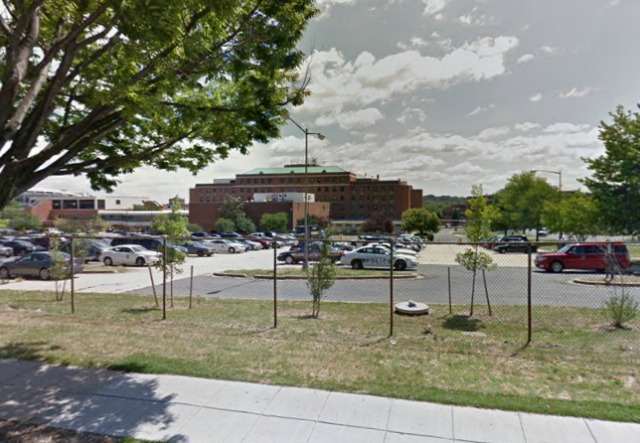
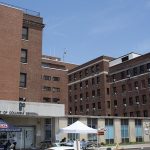
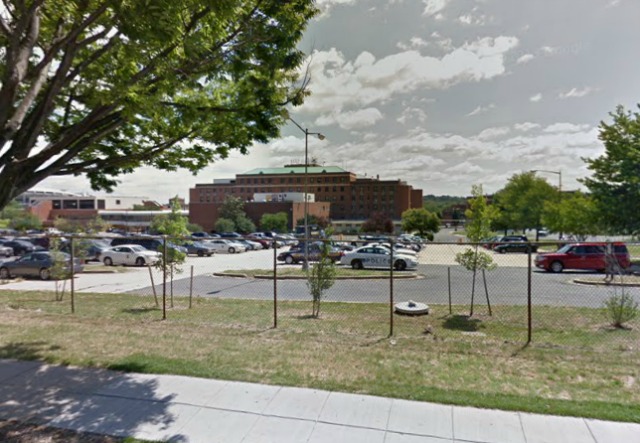 The D.C. General Hospital building, which is now used as a homeless shelter. Photo via Google Street View.
Though resident after resident of a homeless shelter that occupies the old D.C. General Hospital building on the eastern edge of Capitol Hill complained yesterday of a inconsistent heat, spotty hot water and the occasional rodent, their main concern wasn’t so much what happened in the shelter—it was more the difficulty of getting out.
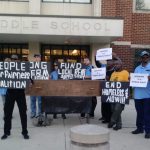
During testimony given at a D.C. Council committee hearing that took place last night at the shelter, residents repeatedly argued that transitioning out of the shelter and into more permanent housing was the biggest challenge they faced. Even those with jobs said that the cost of housing in D.C. made the search for a home harrowing, leaving them to live in the shelter for upwards of six months at a time.
The shelter, which opened after the 2007 closing of D.C. Village, has been at capacity over the winter; Councilmember Jim Graham (D-Ward 1) said at the hearing that 286 families composed of 367 adults and 591 kids (over half under the age of 12) lived in re-purposed hospital building. Recent complaints about conditions at the shelter—including the amount of time homeless residents spend there—have again focused attention on a challenge that many advocates say has become significantly more acute in recent years: finding affordable housing within city limits.
Residents generally differed on conditions at the shelter. One woman called the conditions “horrific,” saying that being housed in a building that’s within spitting distance of the D.C. Jail, an STD clinic and Congressional Cemetery only worsened residents’ situations. Another, though, said that while living at D.C. General was hard on her kids, it was better than any of the available alternatives. “D.C. General isn’t the best,” she said, “but it is a roof over our heads.”
A single father who had lived at the shelter since last October agreed that conditions and programs left him wanting, the larger problem was not being able to see a way out. “It’s humbling, but it’s frightening because I don’t see a way out,” he said. “Being here in D.C. General, it’s trying.”
City investment in affordable housing has decreased in the last five years, and options for families at the shelter are extremely limited. Late last year, the city said it would close the waiting list for public housing this April; it already had 64,000 names on it. In his recent State of the District address, Mayor Vince Gray promised to dedicate $100 million to building or re-purposing 10,000 units of affordable housing. But as the Post reported earlier this week, the cuts in federal funding set to take effect today could make things worse on a more immediate basis—cuts to federal funds for local affordable housing options could make it harder to turn places over to new residents or hand out vouchers.
Beyond the lack of affordable housing, residents spoke of a tenuous balance that exists in living at the shelter while trying to get out. They have to get their kids to school on a daily basis, but have to pay for bus or Metro fare out of pocket. (DCPS gives transportation tokens to homeless students, though, whose number has been on the rise.) If their kids don’t or can’t go to school, residents looking for jobs or housing either have to hope for child care or take the kids along; shelter rules prohibit leaving them with family or friends in the shelter.
The desire for permanent housing became evident with the few success stories on display during yesterday’s hearing. When one woman said she’s be moving to a home today, the room broke out in applause. Another woman who had lived at a Motel 6 on Georgia Avenue and then D.C. General said had recently received a housing voucher and moved out. “It is truly a blessing,” she said of her new home.
On a more immediate basis, Graham said that he’d like to see funding for the shelter increase; it currently costs $13.8 million a year to operate, and city officials say it costs $50,000 annually to shelter a family there. The larger issues of affordable housing and transitional programs also have to be addressed, he said, because without it homeless residents will continue returning to the shelter. According to the city, many do—some 40 percent of families end up back at D.C. General.