Martin Austermuhle
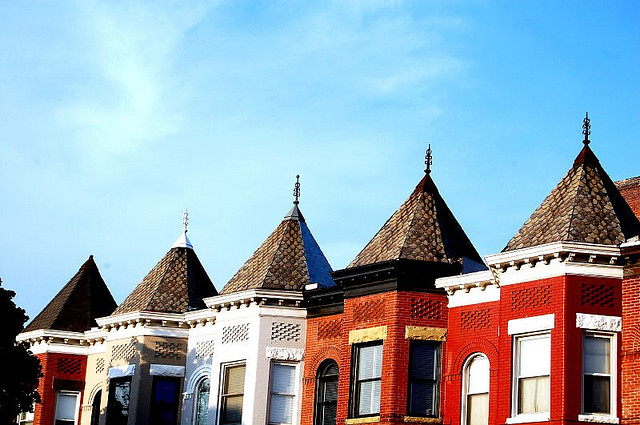 Photo by magandafille
It seemed like the perfect place to stay while on vacation in D.C.—a six-bedroom home in the bucolic Northwest neighborhood of Crestwood, able to sleep up to 22 people for a price of between $425 and $695 per night. For a family of tourists or a class trip, it’s a pretty unbeatable deal, especially considering hotel prices in and around D.C.
But for as happy as it might make the out-of-town visitor looking for a good deal in a nice neighborhood, those living around the Crestwood vacation rental seem less enamored with the idea.
“For about a year now, the house next door to us has been available for nightly rental on VRBO and other websites. We have done our best to be open minded and understanding neighbors and have never filed any form of complaint, but tonight on my way home from work I found the alley behind my house blocked by a school bus that was quite literally unloading an entire bus load of teenagers into the house and this strikes me as beyond the pale,” wrote Tyler Curtis on the Crestwood listserv earlier this week, referencing the rental property located on Upshur Street NW.
His message provoked an outpouring of similar complaints from neighborhood residents; one said that college kids had recently used it for a keg party, while others said that such uses of the house took away limited on-street parking spots. Councilmember Muriel Bowser (D-Ward 4) quickly chimed in to say that her office was aware of the house and was investigating.
According to city records, the Crestwood house has been licensed for one-family rentals since 2011. Additionally, the property taxes are fully paid up, and the owner, Milford Ebo, is not receiving the Homestead Deduction on the home. All’s kosher, right? Apparently not.
D.C. regulations are specific on what’s required for a one-family rental license: a home can’t be rented for less than 90 days at a time. And though licenses exist for a number of forms of “transient housing,” zoning regulations can prohibit them in certain residential areas.
“To rent out a property on a nightly basis would require a transient housing (e.g., hotel/motel/bed & breakfast) type of license. However, zoning regulations generally prohibit such use in low-density residential areas as a matter-of-right development; instead, a property owner would have to seek zoning relief with the Board of Zoning Adjustment,” said Helder Gil, a spokesman for the D.C. Department of Consumer and Regulatory Affairs.
On top of that, city regulations generally require that homeowners who want to open a bed and breakfast, rooming house or inn jump through other bureaucratic hoops, including properly incorporating themselves and, depending on the type of license, be inspected by anyone from the Fire Marshall to the Department of Health.
According to Gil, there are 13 bed and breakfasts, 96 hotels, 22 inns and motels, and 90 rooming houses in D.C. And though the problem is bubbling up in a small part of the city, vacation rental properties across town could similarly be targeted: there are 341 such properties available in D.C., according to VRBO.com. (Another Crestwood property listed on the site was similarly licensed as a one-family rental.)
In short, renting out your house for short-term stays is generally more complicated than simply advertising it on a website catering to people looking for vacation rentals. (You can certainly do that, and your neighbors might not ever notice or care.) And even though those services are taking a cut of the money you might be making, they say it’s on the homeowner to know relevant local regulations, obtain necessary licenses and pay required taxes.
“It’s their responsibility to be compliant,” said a company representative with HomeAway.com, which advertises D.C. vacation rentals alongside its two other services, VRBO.com and VacationRental.com. “It’s on the owners to educate themselves.” The owners of Crestwood rental property that stirred up its neighbors seem to have learned as much—as of today, the listing is no longer available on VRBO. (A woman who answered the phone listed on the house’s ad said she would call back, but never did.)
The gap between intention and legality is similarly evident with Airbnb, the popular online service that allows residents to rent out rooms for as stays as short as a single night. The service has run into regulatory issues in a number of cities; much like vacation rental services, it puts the onus on the owner to know local law as it pertains to short-term rentals.
“We are a marketplace with over 300,000 listings in 35,000 cities around the world. Because there is a patchwork of confusing and often contradictory laws governing short-term rentals in many of these cities, we ask users to make sure they understand and obey their local laws, and hosts must certify to us that they will do so before listing,” said Airbnb in a statement. “We are also engaging with governments around the world to work towards a more consistent, fair, and progressive set of laws that will allow the community of travelers and hosts who rely on Airbnb to continue to flourish.”
Gil said that the city is moving on addressing these types of services, much like it has had to adapt to the emergence and popularity of everything from Uber to food trucks.
“The Mayor has created a Business Regulatory Reform Task Force that is looking into how to simplify District business licensing laws and regulations. Issues like how existing laws may need to be modified in order to properly reflect “sharing economy” types of businesses is one thing the Task Force can look into.”