Martin Austermuhle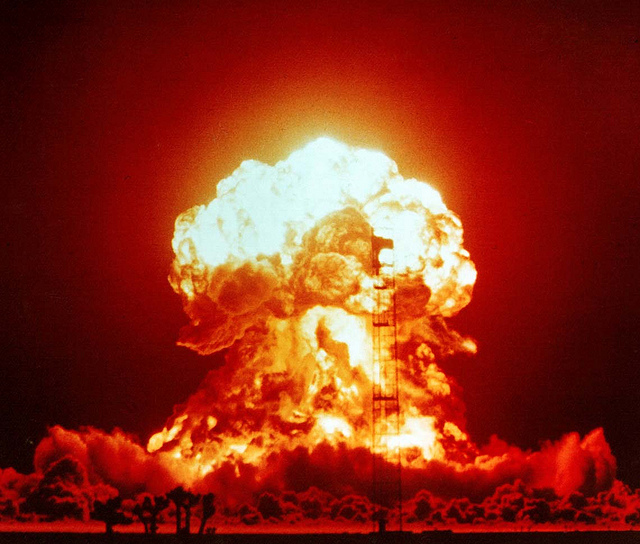
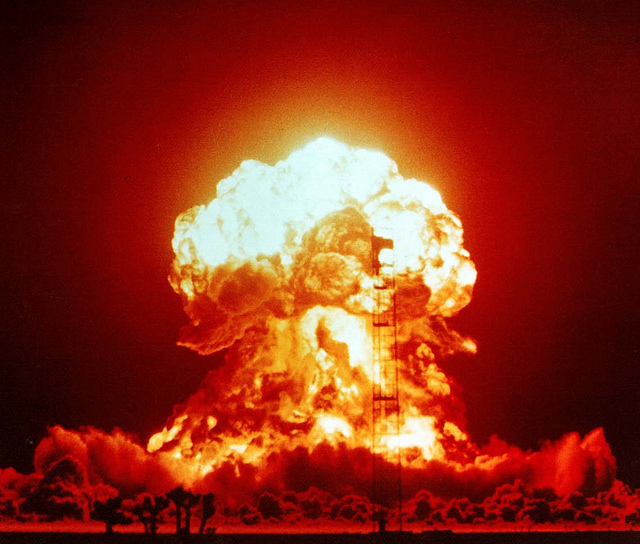 Photo via Flickr
If you believe anything coming out of the hermit kingdom that is North Korea, D.C. could well be on the list of Kim Jong-Un’s targets for his fearsome arsenal of nuclear-tipped long-range missiles. Yesterday Mayor Vince Gray seemed somewhat dismissive of the threat, though, saying that he hadn’t yet been briefed on any possible attack.
But what if he had, and just didn’t want to say anything? There’s probably no blaming him—there isn’t much he could say or do that would change the fact that we’d likely be screwed.
Let’s entertain Kim’s fiction that he’s got missiles that would reach D.C. and nuclear warheads that would do enough damage to even make the opening salvo of World War III worth the effort. And let’s say that he launches them without much advance notice. Well, given what D.C. officials were preparing for during the Cold War—when nuclear war from a more prepared adversary was more likely—there wouldn’t be a whole lot we could do.
According to a 1980 article in the Post about local preparations for a nuclear attack, getting people out of D.C. and to the closest mass shelter in West Virginia would take three days and some pretty favorable weather conditions. It would also rely on logistical execution rarely seen in the area—for those without cars, said a pamphlet, they were to meet in designated areas, where they would be sorted by ward of residence and put on Metrobuses to be shuttled out of town.
Even if all things went to plan, though, there’s simply no way that enough people would be able to get far enough away from town that quickly. A 2007 study by a group of West Virginia University academics found that 85 percent of locals would self-evacuate via a personal car, and 41 percent would be going without a specific destination in mind. Given those numbers, they concluded that “a large-scale, chaotic mass self-evacuation should be anticipated.” That sounds like daily rush hour traffic—without snow. (If you want to map out your evacuation route and maybe get a jump on the traffic, D.C. has all the resources you need here.)
All told, the academics reported, most area residents don’t have a very high opinion of the government’s capacity to move that amount of people that quickly—close to 60 percent said they little or no trust at all that the government would know what to do in the event of a massive attack or disaster.
Back during the Cold War the government did somewhat prepare for this eventuality by building the means for people to remain in place during and after an attack—fallout shelters, many of which still exist. A few years ago two locals started District Fallout, a website documenting and mapping all of the city’s remaining fallout shelters. Back in 1965, there were a couple of hundred shelters located throughout the city, and many remain—though a lot of the signs indicating as much have disappeared.
Maybe the saving grace of this whole experiment is that even though plenty of people would be killed and injured, a 2012 FEMA report found that many people in D.C. would survive a 10-kiloton nuclear blast centered around the White House. That makes some sense, from Kim’s perspective—he’d want at least some people around to enjoy the fruits of his socialist paradise, right?