Martin Austermuhle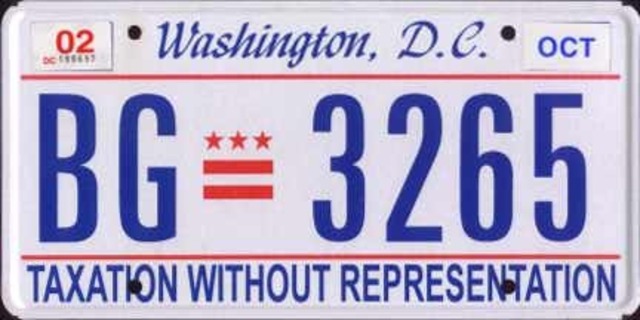
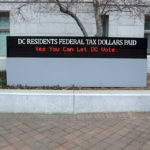
 If you haven’t already, today is the day you file your tax returns. And if you live in D.C., you know that your taxes—and there’s a good chunk of them—don’t come with the implicit benefit afforded to all other Americans: congressional representation.
Over the weekend the Post revisited an idea that advocates have floated now and again over two decades: no representation and no taxation. Much like the territories that have no vote, supporters of the proposal say that exempting D.C. residents from federal taxes would be the only fair—and easy—way to resolve the city’s longstanding second-class status. You don’t want to give us representation? Fine, then we’re not paying into the federal government.
It’s an idea with surprising staying power and bipartisan support, though it’s never gone far beyond a debate. Democrats and Republicans have supported it—it’s probably the only thing that Rev. Jesse Jackson and former South Carolina Sen. Jim DeMint would agree on, for one. Even the D.C. Council sided with it in 1994, passing a resolution asking Congress to exempt D.C. residents from federal taxes until they could gain meaningful representation on Capitol Hill. Last year Republican shadow senator candidate Nelson Rimensyder made that exemption the entire focus of his campaign.
D.C. Del. Eleanor Holmes Norton sponsored a no-taxation resolution in 2001, and it attracted more bipartisan support than any subsequent attempts to gain voting rights, autonomy, or statehood. But in a statement today, she stresses not only that exempting residents from federal taxes isn’t the end-goal everyone wants, but that doing so would also make D.C. even less affordable than it is now.
“There are steps on the way to statehood—voting rights and budget autonomy, for example—but there is only one destination if the goal is complete equality with other Americans, and that is statehood. Today’s market, reacting to scarce housing and improved living conditions here, has made the District one of the most expensive cities in the country, especially for housing. That same market, stimulated by a zero federal income tax policy, could escalate the cost of housing and property taxes, and transmit higher costs on goods and services throughout D.C., as well,” she said.
Despite being possible beneficiaries of such a scheme, we’ve always been skeptical of the values of the idea. Beyond the practical implications of every American with money suddenly becoming a D.C. resident for the purpose of dodging taxes, the people who often back the idea—Rep. Louie Gohmert (R-Texas), Rep. Allen West (R-Fla.)—seem to do so because they’re too lazy to back other more longstanding remedies. Additionally, the whole idea seems to imply that democratic values that are held up as God-given are for sale; how many other Americans would want the same no-representation deal if they were offered the chance to opt of out paying federal taxes? We might not want to find out.
What say you? Would you give up the fight for representation if it meant not having to pay federal taxes?