Martin Austermuhle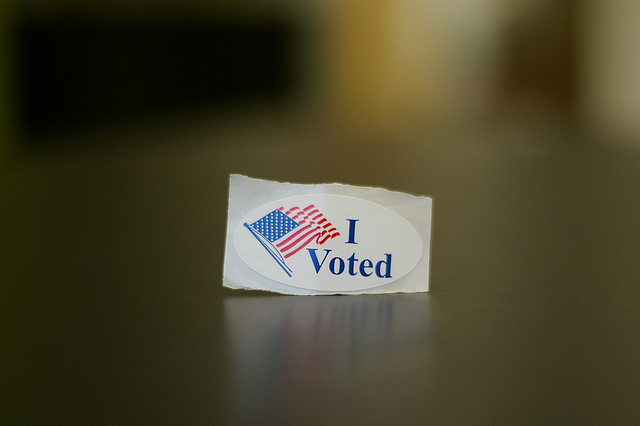
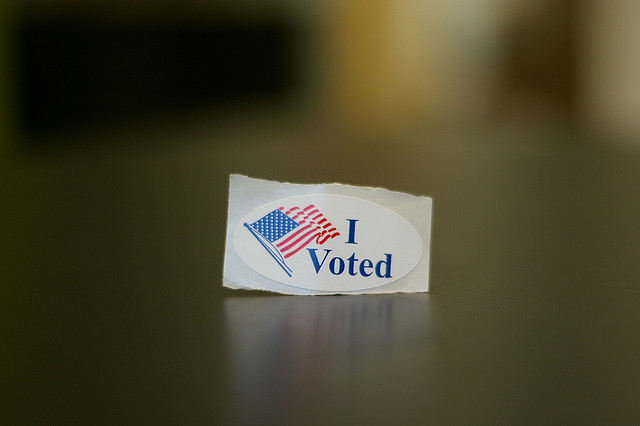 Photo by ericschoon
Wait, another freaking D.C. election? Yep—and we’re as tired as covering them as you might be of voting in them. Nonetheless, an election is an election, and these are the people that will represent you, so exercise your franchise and vote tomorrow!
These are the details: it’s for an At-Large seat on the D.C. Council, which means that the person who wins will represent us all. Six people are in the running: Anita Bonds, Patrick Mara, Elissa Silverman, Matthew Frumin, Paul Zukerberg, and Perry Redd. Only one public poll has been conducted, and while it puts Bonds in the lead, it also found that 43 percent of residents remain undecided—so this could go to anyone. There’s also a referendum on whether or not to amend the Home Rule Charter to allow city officials more control over locally raised dollars. (We’d really love you to vote for that.)
Polls will be open from 7 a.m. to 8 p.m., and any registered D.C. voter can cast a ballot. If you’re not registered but 18, you can register at the polls. You vote at your usual polling place—locations are here, a few changes are here.
And if you end up disappointed with the person who wins, fear not—the term of this seat is up next year, which means that we’re jumping through these hoops again in 12 months for the primary and 18 months for the general. Yay?
ANITA BONDS
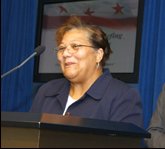 Bonds has been involved in D.C. politics for decades, but more often that not she’s been behind the scenes. She worked with Marion Barry, Sharon Pratt Kelly and Anthony Williams, and for the last few years has led the D.C. Democratic State Committee, the city’s local branch of the Democratic Party. In December, though, she was given a chance to take the lead, gaining an interim appointment to the seat vacated by D.C. Council Chair Phil Mendelson. Tomorrow she hopes to formalize the appointment with a win.
Bonds supporters say that unlike any of the other contenders, her time in D.C. government and politics has finely attuned her to the needs of longtime and low-income residents that might be pushed out by the city’s ever-widening circle of prosperity. Given the crushing lack of affordable housing in D.C., this sort of focus is vital to who the city will be able to accomodate in the coming years. And while a life spent working for D.C. politicos might seem like a shortcoming for many voters starved for a clean break, there’s something to be said for the institutional knowledge that Bonds will bring to the table; her learning curve will be shallow, for one.
Still, for all her experience, Bonds has seemed surprisingly weak on policy details. In her brief time on the council, she’s been either ineffectual or fully forgettable, depending on who you ask. Even worse, she has generally opted out of debates and forums since a March appearance on The Kojo Nnamdi Show where she explicitly said that D.C. residents want a councilmember that looks like them—black. You could call that admission brutally honest or politically awkward, but since then she’s largely kept to private events. And for anyone nervous about the bad ol’ ways, note this: Bonds has taken big money from construction companies (she currently has a job at Fort Myer Construction, the city’s largest contractor; she’s said she’ll quit if she wins) and D.C. lobbyists.
Bonds racked up endorsements from her council colleagues: Jack Evans (D-Ward 2), Muriel Bowser (D-Ward 4), Kenyan McDuffie (D-Ward 5), Yvette Alexander (D-Ward 7), Marion Barry (D-Ward 8), and Vincent Orange (D-At Large) all support her, as does the D.C. Democratic State Committee, National Nurses United, and AFSCME Local 20.
PATRICK MARA
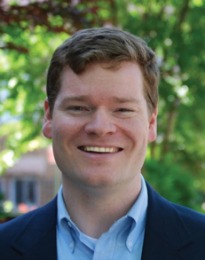 Let’s get this out of the way now: Patrick Mara is a Republican. Does that matter? Depends on who you ask.
Mara first made a name for himself when he unseated Councilmember Carol Schwartz (R-At Large) in a 2008 primary (he later lost to Michael Brown in the General Election); in 2011 he came within 1,800 votes of defeating Councilmember Vincent Orange (D-At Large) in the April 26 Special Election. He is currently the Ward 1 representative on the State Board of Education and a self-employed business consultant (and prolific eBay entrepreneur).
And yes, Mara’s a Republican. (Did we already mention that?) But as he’ll often point out, he’s not of the GOP of national infamy—he’s long supported marriage equality and has fought for D.C. voting rights; many national GOP leaders see him as they type of urban leader the party will need to cultivate in order to start winning elections again. He says that his Republican affiliation is exactly what the council needs—he’ll be a true contrarian, he argues, and the city’s legislature needs someone with true experience in education, an eye towards scrutinizing the D.C.’s ever-growing budget and the ability to lobby Republicans on Capitol Hill for D.C.-related causes.
Of course, the Republican affiliation cuts the other way—especially in a city so overwhelmingly Democratic as D.C. is. While national issues don’t always have relevance in local races, Mara has generally sidestepped the question of why he chose to support Mitt Romney in 2012. He’s also a signatory of Grover Norquist’s no-new-taxes-ever pledge; while D.C. residents could certainly stand to see a reduction in taxes (which Mara supports), it’s odd for a local candidate to be tying his own hands in such a way. Questions have also been raised over whether he violated ethics laws by offering up his list of campaign supporters to a conservative nonprofit in 2008, and his campaigns have been richly funded by construction companies, realtors and parking magnates for years. There are Democrats on the council who espouse the same positions and have taken the same money, though, again showing the relative uselessness of party affiliation in this town.
Mara has been endorsed by the Post, the Current, the Examiner, the D.C. Chamber of Commerce, the Sierra Club, and the Fraternal Order of Police.
ELISSA SILVERMAN
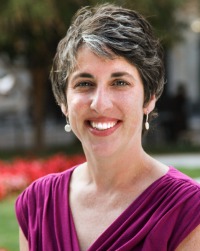 Silverman hasn’t let her former life as a reporter and current gig as a policy analyst at the left-leaning D.C. Fiscal Policy Institute weigh down her campaign; in fact, she’s proudly flown the banner as one of the wonkiest council contenders.
The one-time City Paper and Post scribe has centered her candidacy around ethics and accountability. On ethics, she notes that she actively worked on the failed 2012 ballot initiative that would have banned corporate contribution to local political campaigns; she’s also one of the few contenders that has completely sworn off any corporate contributions to her April 23 run. On accountability, Silverman argues that her work at the D.C. Fiscal Policy Institute would translate well into much-needed scrutiny of the city’s budget; not only did she help open up the budgeting process to the public, she argues, but she has also tracked how the city’s workforce development dollars are really spent.
Silverman is beloved by the city’s progressives—she’s been endorsed by Greater Greater Washington, has said that the city’s highest earners may have to pay more in taxes and has generally promised to be everything that current councilmembers are not.
But for as much as she’s tried to burnish her image as something other than a normal D.C. politico, critics say that in some ways she’s acted much like the elected officials she routinely criticizes on the campaign trail. A close supporter challenged the nominating petitions of two fellow candidates, effectively knocking one off of the ballot. She took a campaign contribution from Sinclair Skinner, a former confidante of Mayor Adrian Fenty who has been linked to contracting shenanigans, but has largely refused to answer questions about it. And as the Post reports today, she’s a savvier operator than she’s liked to admit—she allegedly asked fellow candidate Matthew Frumin to drop out of the race in exchange for supporting him if he runs against Councilmember Mary Cheh (D-Ward 3). Silverman has denied the claims.
Silverman has been endorsed by the City Paper, the Office and Professional Employees International Local 2, and Councilmember David Grosso (I-At Large).
MATTHEW FRUMIN
 Frumin, a Ward 3 ANC commissioner and trade lawyer by day, entered the race in late November, promising to focus on education issues. He was quick to raise a whole lot of money, and has since sent mailer after mailer to D.C. voters seeking their support.
He has brought a folksy appeal to the campaign—while some of his competitors have taken swipes at each other, he has generally been able to stay above the fray, outlining his vision for a city where every community can have as good a school as Wilson High School (he worked on the school’s recent modernization) and where it’s easier for long-term and working class residents to stay put (he wants a $500 monthly housing voucher for police, firefighters and teachers). He has also been able to use his ANC experience as a selling point—given the controversy over American University’s expansion plans and a new residential development at Brandywine Street and Wisconsin Avenue, managing the discussion and emerging with at least some type of compromise is impressive.
But despite a well-funded campaign and experience running at the national level—he once run for a congressional seat in Michigan—Frumin has had trouble distinguishing himself from some of his competitors. He and Silverman agree on most issues, but while she has been able to pitch herself as the ethically minded policy wonk, Frumin has more vaguely described himself as the sort of guy who can bring warring parties together. It’s not that the council doesn’t need that, but voters may also need a more distinct vision to help them understand why they should vote for Frumin.
PAUL ZUKERBERG
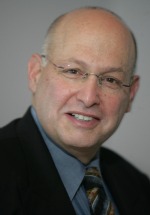 If you called Zukerberg the weed candidate, he may not disagree. The former defense attorney entered and has run the race on basically one issue, after all: decriminalizing the possession of marijuana.
While this may seem too narrow a focus for many voters, Zukerberg has nonetheless become a formidable first-time contender. Not only do his skills as a defense attorney serve him well during debates—he’s pugnacious, self-deprecating and surprisingly adept at delivering memorable one-liners—but he’s also managed to connect his single cause to a universe of other social ills that his victory would remedy. Unemployment too high among African-American men? Well, he says, if you stop arresting them for possessing marijuana, fewer of them will have the types of criminal records that make it so hard to get a job in the first place. Crime a problem? Just relieve police from the pressure of having to arrest small-time marijuana offenders and let them concentrate on more serious crimes.
Zukerberg also deserves some credit for taking on the D.C. Board of Elections. After a competitor challenged his nominating petitions and the board threatened to throw him off of the ballot, Zukerberg loudly argued that the city’s voter rolls are grossly out of date and that elections officials aren’t doing nearly enough to keep tabs on change-of-address requests. He eventually prevailed, and may have provoked a broader conversation about how well the city manages its elections.
On other issues, though, Zukerberg has been a bit of a mixed bag; he can jump from conservative to libertarian depending on the question and the day of the week. And while he’s unlikely to win tomorrow’s contest, he can probably rest easy knowing the a large majority of D.C. residents already support decriminalizing marijuana.
PERRY REDD
 Redd may well be the candidate with the single most interesting story—but the single worst way of telling it.
A native Washingtonian and longtime social justice advocate, Redd has used his campaign to bring attention to the plight of D.C.’s former convicts, many of which return to the city without the support needed to establish normal and productive lives. Redd knows something about the topic: in the mid-2000s, he fought he five-year battle against federal prosecutors in Tennessee over drug trafficking charges; after representing himself in the U.S. Court of Appeals, the charges against him were dropped.
But despite Redd’s compelling life story, he has largely failed to distinguish himself on the campaign trail. Part of it may be lack of experience, but part of it certainly stems from aligning himself with the Statehood Green Party, which for all of its history and idealism doesn’t really know how to field—or train—a winning candidate. It’s too bad, really—more than anyone else, Redd speaks to the plight of the city’s underclass, and when given an opportunity, he’s able to articulate other novel ideas. (He offered to take part-time pay for the part-time council job, and if elected promised to put all of his phone call logs online for anyone to see.) Oh yeah, and he’s also a hell of a musician and producer.
While his chances of winning tomorrow are slim-to-none, we’d love to see Redd run again. With a little message discipline and better organization, he could be a formidable candidate, the rare type whose life experiences shape his policy orientations.
MICHAEL BROWN
After some dithering, Brown entered the race in January, hoping to regain a seat on the council after having been defeated by Grosso in November. But in March, Brown withdrew, citing family issues. He remains on the ballot, but you probably shouldn’t vote for someone who doesn’t even consider himself a contender any longer. If he does manage to win, though, feel good knowing that the D.C. Board of Elections… isn’t really prepared for that eventuality at all.
Want to see where the candidates stand on the issues? Check out Let’s Choose D.C., the Post or the Current Voter’s Guide (only available in PDF, sadly).