 Via Shutterstock
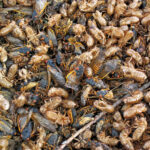
It’s probably time to invest in earplugs, because any day now, the air will be filled with the incessant screeches of cicadas, the once-every-17-years insects that emerge from the ground, let off a horrible fury, and leave a blanket of crunchy carcasses all over the place.
The group of cicadas known as Brood II—which last emerged in 1996—will be appearing once the local ground temperature reaches a consistent level of 64 degrees. When the thermometer hits that mark eight inches below the surface, it’s cicada time, and entomologists at the University of Maryland tell WTOP that this year, billions of the noisy little critters will be hatching up along a portion of the East Coast stretching from Georgia to Connecticut.
But there is still a few days’ reprieve before the D.C. area is pelted under the awful song of these high-pitched, but otherwise harmless, bugs. According to a soil temperature map maintained by WNYC, ground temperatures in the Washington region have been hovering in the mid-to-high 50s. It’s been relatively mild around here the past few days, with air temperatures topping out in the high 60s, but the temperature is forecasted to rise later this week, with an expected high tomorrow of 73. It could reach 80 by Friday.
As evidenced by the map, though, the cicada sightings—or, really, auditory notifications—have already started around New York City. Once they appear around here, they’ll be more prevalent in the suburbs than in the city, though the District will certainly see its share. Michael Raupp, a Maryland entomologist, tells WTOP the racket should peak by Memorial Day.
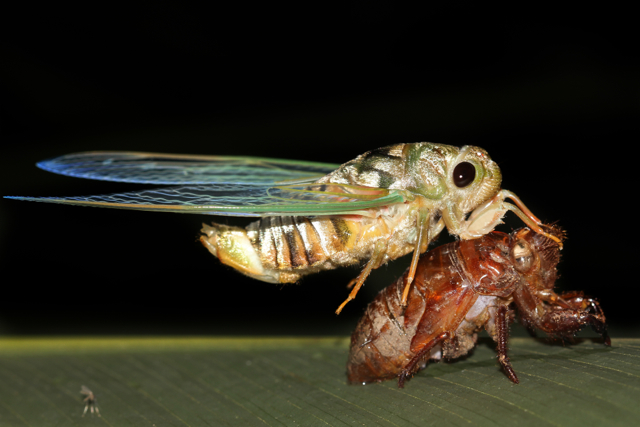
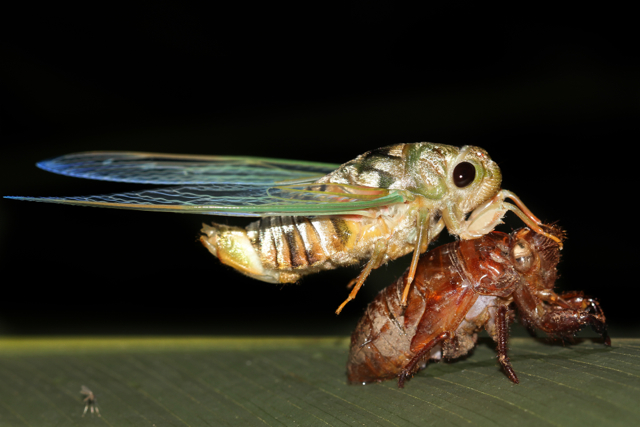
Brood II cicadas are distinguishable with black bodies, red eyes, and orange wings. They do not sting or devour crops; their once-a-generation appearance is strictly a mating period. So get ready for quite the noisy orgy.