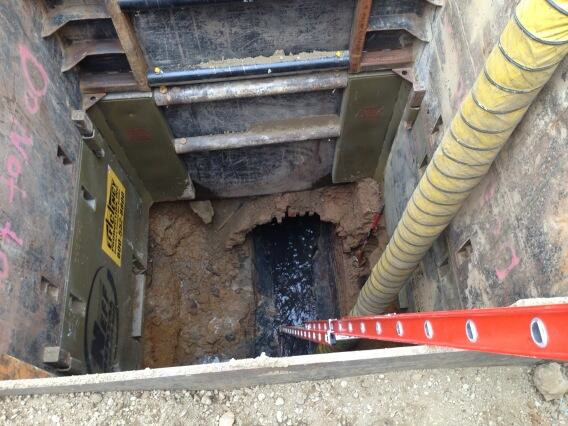
 Via DC Water
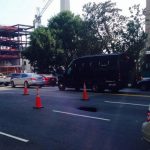
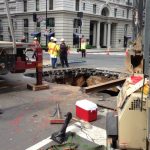
It’s been a week since crews from various D.C. agencies finished repairing the infuriating sinkhole that opened May 21 at the intersection of 14th and F streets NW. As the repair job hit the one-week mark, District officials said they estimated it would cost $2 million to repair the damage to a sewer line at the bottom of the 15-foot maw, fill in the chasm, and patch up the affected roads.
In fact, that sum turned out to be just what DC Water spent on its end of the repairs. On his personal blog this week, George Hawkins, the general manager of DC Water, posted a detailed walkthrough of why it took more than a week to fix a sinkhole that opened suddenly one weekday afternoon. The total estimated cost of filling in the sinkhole and repairing all the damaged elements is closer to $5 million, when accounting for DC Water, other city agencies, and utility companies spent to fix the whole thing.
The sum is a “rough guess,” according to DC Water spokesman John Lisle, and includes the cost of the District Department of Transportation taking the sinkhole as an opportunity to repave 14th Street between Pennsylvania and New York avenues and F Street between 13th and 15th streets.
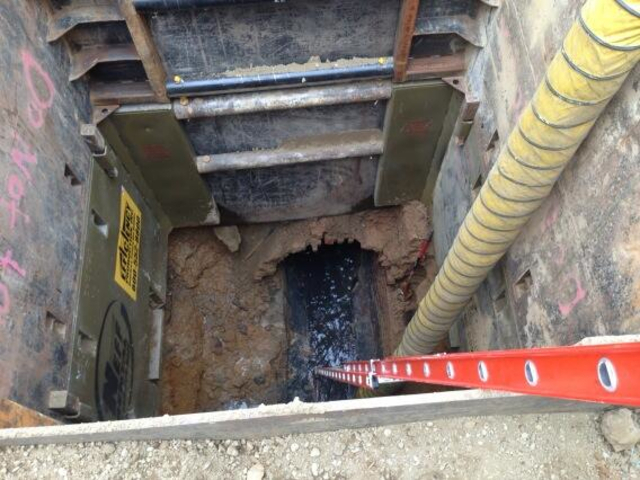
DC Water and DDOT were far from the only stakeholders in the sinkhole, though. The sinkhole was caused by the installation of a communications manhole that cut off the link between a storm drain and the sewer line 15 feet down. Instead of pouring into to the sewer system, rainwater that coursed into that storm drain escaped into the soil beneath the road, eventually causing it to cave in. Hawkins guesses on his blog that the culprit manhole was installed during the 1990s.
But that wasn’t the only thing DC Water found in its exploration of the sinkhole. Its crews had to navigate around lines owned by Washington Gas, AT&T, Verizon, and Pepco, as well as antiquated tracks from D.C.’s old streetcar system. Hawkins also writes that they found even more curious elements:
We also found unidentified communications vaults that are likely associated with the federal buildings in close proximity—perhaps even communications lines to the US Treasury and White House.