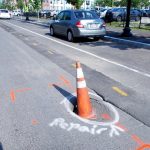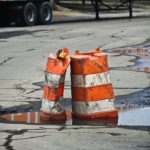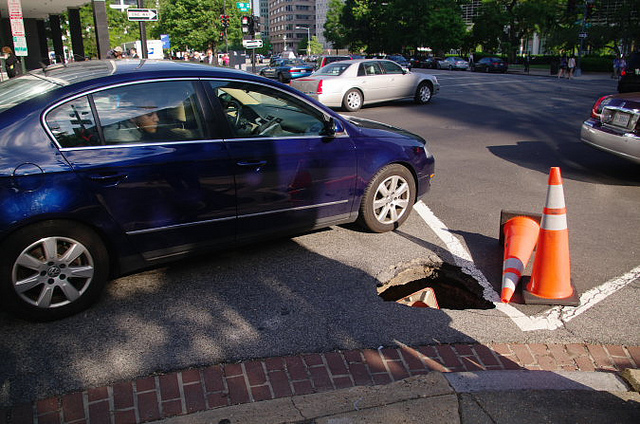
 Photo by philliefan99
An analysis of the Federal Highway Administration’s most recent data by USA Today and transportation organization TRIP paints a pretty bleak picture of D.C.’s roads. Bleak and a little misleading.
As presented in a chart, the data shows that more than 96 percent of D.C.’s roads are in poor condition, as opposed to good or fair condition. How terrible does a road need to be to be considered in poor condition? From the article:
Roads with pavement in poor condition have “advanced deterioration” and typically require structural repair or replacement, according to the FHWA. Such roads, TRIP says, may have ruts, cracks and potholes that give millions of Americans rough rides that increase repair costs and fuel consumption.
But buried deeper down in the story is this important detail, which is easy to miss: The analysis only looked at 2011 data “for all roads eligible for federal highway funds, including interstates, highways and other major roads.”
Indeed, the D.C. Department of Transportation said just 22 percent of roads managed and maintained by the agency are in poor condition. Spokeswoman Monica Hernandez says DDOT manages about 90 percent of the roads in D.C. This does not include federal roads, like Beach Drive and Rock Creek Parkway.
As for other DDOT-managed roads, 30 percent are in fair condition while 48 percent are in good or excellent condition.
The National Park Service did not respond to questions about the number of D.C. roadways under its management that are in shoddy condition. But a 2010 assessment found that about 90 percent of all roadways located inside NPS properties were in either fair or poor condition. Again, this is not D.C.-specific data.