 “Ask not what your country can do for you, because the government is shut down.” Oh, that isn’t how it goes? Rumor has it Americans used to be inspired by politicians, and evidence can be found in the legacy of President John F. Kennedy. Barring continued government closure, Scott Reich will talk about recapturing Kennedy’s commitment to citizenship at the National Archives, Monday, October 7 at 12 p.m.
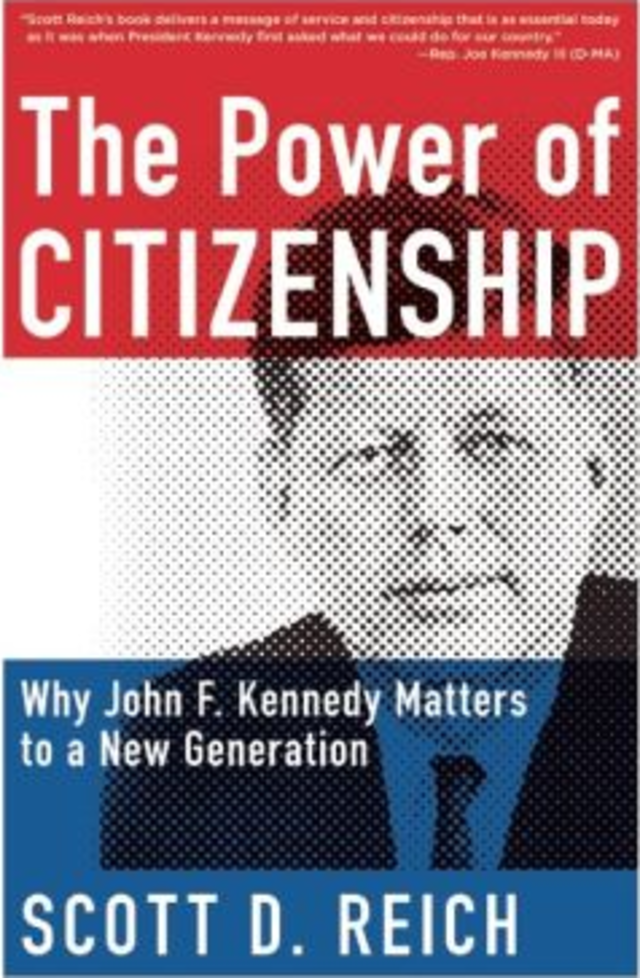
Reich’s first book, The Power of Citizenship: Why John F. Kennedy Matters to a New Generation (BenBella Books, $25), explores the 35th president’s approach to civic duty and an application to our current political reality. The author tells DCist that he saw a repeated theme of citizenship in JFK’s speeches, and realized that since millennials are used to polarization, they might not feel as connected to a larger community. The book takes an apolitical look at how to get back and prioritize our citizen spirit.
What exactly is so compelling about the Kennedy era? Reich attributes some of it to the “tragedy and romance” surrounding the young president, who was the first in his office to engage the public regularly through television. But he also cites the tumultuous chain of events following JFK’s death: more assassinations, the civil rights struggle, wars, Watergate, and so on. By comparison, JFK’s short presidency represents a period of optimism and greater trust in government.
The Peace Corps, one of Kennedy’s lasting contributions, still draws thousands of volunteers interested in demonstrating citizenship. Reich writes that Kennedy sought to use American privilege for global good. In addition, the program would “provide critical international experience to a rising generation of citizens who would need familiarity with foreign affairs if they hoped to participate in government,” not to mention advance “global connectivity … democratic initiatives in nations under the threat of communist influence … esteem in which Americans were held abroad … [and] economic ties between nations.”
The Power of Citizenship argues we can regain a sense of citizenship on our own accord; as Kennedy also said in his inaugural address, “in your hands, my fellow citizens, more than mine, will rest the final success or failure of our course.” Some of the book’s suggestions include volunteering with friends on behalf of Habitat for Humanity or hurricane relief, helping neighbors, teaching citizenship in schools, and generally resisting the “‘me against you’ mentality” so common today. With D.C. at the “center of the storm,” Reich especially encourages those living here to embrace such ideals.
Reich is a Long Island native and an attorney at a New York-based international law firm. He serves on several councils and boards for community schools and organizations. Reich has done extensive pro bono work and was one of The Jewish Week‘s “36 Under 36.” Reich attended the University of Pennsylvania for both undergrad and law school.
The event is set to be held in the William G. McGowan Theater at the Archives. Books will be available for purchase and there will be a discussion, question and answer session, and signing.
UPDATE: This event will be rescheduled at a later date due to the government shutdown. Please check back on the author’s website for further information.