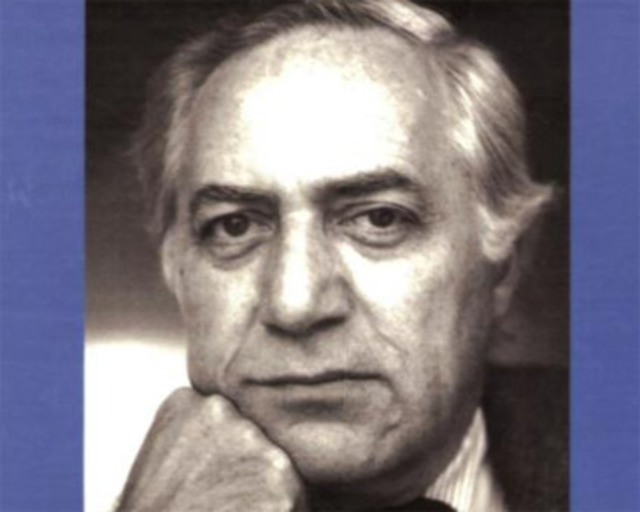
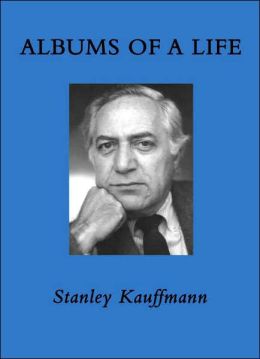
It’s been a rough couple years for film criticism. Just last year famed critic and film theorist Andrew Sarris passed away and earlier this year, we lost the great Roger Ebert, leaving two thumbs-up-sized holes in our hearts. Now, longtime New Republic film critic, Stanley Kauffmann, has passed away at age 97. The New Republic first broke the news of his passing:
We are saddened to report that Stanley Kauffmann, our film critic of more than five decades, died early this morning at St. Luke’s Hospital in New York at age 97. He died of pneumonia, and peacefully. There will be no funeral. In accordance with Stanley’s request, The New Republic will host a memorial service in New York to celebrate him and his work at a date and time to be announced.
Kauffmann leaves behind a rich and robust legacy, not only as prolific and highly influential film critic, writing film reviews for The New Republic since 1958, but also as a cultural renaissance man. During his decades-long career in the arts, Kauffmann has succeeded as a novelist (he wrote the Western novel under a pseudonym that eventually was adapted into a movie , a teacher at Yale, a book editor, the host of a cultural TV series on the arts, and a deeply respected theatre critic (his only departure from The New Republic was in 1966, when he had a brief stint as the chief theatre critic for The New York Times).
When TNR launched their “At The Movies” digital column—which featured writings and musings on current and classic cinema from Kauffmann and David Thomson—in 2011, they wrote that Kauffmann is considered the “dean of American film criticism.” Truer words never spoken. In his fifty-plus years of reviewing films, his insight, experience, and accessibility in dissecting films made him such a valued voice in the cultural community. “It’s not just that Stanley Kauffmann has lasted so long as a film critic (when so many of them die early from boredom or sitting in the dark),” Thomson wrote, “it is that his age never shows, only his experience, his insight and his insatiable urge to rescue films you might never have heard of.”
That was Kauffmann’s chief legacy: His love and devotion for covering smaller, independent films and foreign films. In the latter half of his career, Kauffmann gravitated away from covering the big Hollywood productions, and instead focused on dissecting the independent and foreign film landscape; championing little-seen or known films to a broader audience.
Roger Ebert once called Kauffmann “the most valuable film critic in America,” and I could not agree more. As a life-long cinephile myself, Kauffmann’s writing was hugely influential to me, both personally and professionally. Like so many other critics, I can safely say I would not be doing what I’m doing without his influence. But more importantly, the landscape of contemporary cinema—and how we read into and appreciate films—would not be the same without his decades of valuable, smart, and thoroughly enjoyable insight.
Thanks, Stanley.