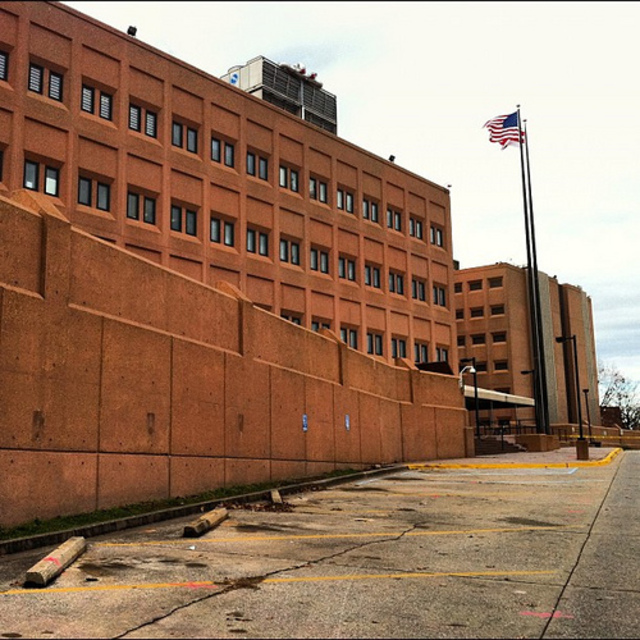
 Photo by Jame Devine.
Approximately 165 people have attempted suicide at the D.C. jail since 2011.
This fact was just one of many startling revelations from a Thursday Council hearing and a task force report on the state of suicide prevention by the D.C. Department of Corrections. Since November 2012, four men have committed suicide while in the Southeast D.C. facility, a number higher than in pervious years and the national average.
Of the attempted suicides, according to the report by Lindsay M. Hayes, project director of the National Center on Institutions and Alternatives, 99 were hangings, while 28 involved pills: “Other methods included head banging, cutting, swallowing foreign objects, jumping from a height, and hunger strike.”
“As stated in the preface of this report, [the DC Department of Corrections and Unity Health Care] have very comprehensive suicide prevention policies. It is the current suicide prevention practices that are of concern,” Hayes wrote. “However, this writer met numerous DOC and Unity Health Care officials and supervisors, as well as officers and mental health clinicians, who appeared genuinely concerned about inmate suicide and committed to taking whatever actions were necessary to reduce the opportunity for such tragedy in the future.”
Hayes was at the jail in August when an inmate attempted to hang himself. “His feet barely touch the floor, his eyes were bulging, saliva was coming from his mouth, and he urinated on himself,” a chart stated. “Despite the seriousness of the incident, the inmate was later placed on Behavioral Observation status, not Suicide Watch or Suicide Observation,” Hayes wrote.
From a review of the four suicides and numerous attempts that occurred, the DOC instituted the following measures: “increasing the ability to identify high-risk inmates, creating more suicide-resistant jail practices, improving housing unit determination processes and strengthening DOC’s culture of suicide prevention.” Tactics implemented already include having a designated intake officer to identify high-risk inmates, limiting inmate razor access, and increasing Segregation and Intake checks to every 15 minutes, as opposed to 30.
There are also plans to improve the safe cells by “addressing wall padding and light fixture concerns,” as well as the general population cells.
Recommendations included removing all handles from sinks and desks, placing fine mesh over grates, placing plastic or other material on entire head/feet ends of bunk beds, replacing woven metal bed bottoms with solid material, and future purchases of linens, blankets and uniforms that are more difficult to tie. All recommendations made to eliminate tie off points and prevent hangings.
Thomas Faust, director of the Department of Corrections, was criticized by Councilmember Tommy Well (D-Ward 6) yesterday for not making the task force’s report based on Hayes’ recommendations, completed in October, available until late Wednesday. “You understand that I have no way to verify that anything said today was true except for outside of this meeting going forward,” he said. “It undermines the credibility of your agency to deliver reports at 5 o’clock, at the close of business before the next day hearing.”
Faust replied that he had to compile a plan based on the task force report’s recommendations and that they’ve been working non-stop to do so.
Virginia Willis, the fiancé of Walter Calloway, an inmate who committed suicide in June, testified yesterday with many questions. Willis wanted to know what’s in the cells that can be used for inmates to hang themselves and what’s being done to change that.
“If they’re coming in already with a mental illness and they’ve been incarcerated before,” is old paperwork being pulled up, she asked? Willis, who received a phone call about her fiancé’s death while at a cousin’s house, also said she thinks the D.C. jail should approach informing people of their loved one’s passing in a better way. Wells agreed.