“Yet while I live, let me not live in vain.”
The words are inscribed on a weathered bronze plaque, marking the entryway to the administration building at Forest Haven Asylum.
The sprawling 200-acre, 22-building compound in Laurel, Md., once housed thousands of the District’s most mentally disabled residents. Some 23 years after shuttering its doors, it sits as a monument to a failed policy of institutionalization, a decrepit reminder of decades of abuse and mistreatment.
When the Asylum opened in 1925, it was a progressive institution, a farm colony that taught people with intellectual disabilities useable skills and aimed to get them gainfully employed. Residents milked cows, planted and tended to crops, and lived in dorms surrounded by trees, with peaceful, pastoral names like Beech or Elm cottage. Their routine included exercise and recreation: athletic fields and basketball courts filled some of the green space between buildings.
But as attitudes towards treatment of the mentally disabled evolved, Forest Haven did not. Institutionalization was rapidly becoming a last resort; more humane alternatives were provided, and many asylums closed altogether, replaced by group homes and more individualized care.
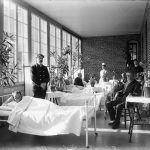
In the 1960s, Forest Haven languished. Funding for its athletic and recreation programs dried up, and residents suffered greatly. Among the worst affected were residents who weren’t mentally disabled at all – some were severely epileptic, others had similar disabilities that kept them from being functional outside the asylums gates. Once physically able, their bodies withered away for lack of activity, and many became bedridden.
It got worse. Forest Haven’s population grew far beyond its means. Many residents spent their days pacing empty, padded rooms. Staff members were under-qualified, and some of the doctors were declared medically incompetent by the state of Maryland. Abuse of every kind – physical, mental, sexual – ran rampant.
“Workers here – because of frustration and lack of help – tend to abuse residents,” the asylum’s director told the Washington Post in the mid-seventies. “Of all of our residents, I’d add, some 400 don’t belong here. In many incidents, the facility is contributing to the handicap of retardation.”
And then there were the deaths. Hundreds upon hundreds of deaths, with the bodies of many ferried down to a tiny basement morgue before being unceremoniously interred in an unmarked grave on the asylum grounds. In the late eighties, the residents’ families purchased a single headstone, which sits in a field outside the administration building, a memorial to the 387 people buried below it. More recently, it was reported that some of those graves have suffered from erosion and are becoming uncovered.
In 1976, it became too much to bear. Families raised a class-action lawsuit, detailing the abuses at Forest Haven. An investigation revealed that their concerns were far from unfounded. “Forest Haven – intended as a facility for treatment, education and training, subjects residents to physical or sexual abuse, provides virtually no treatment, has no training program and neglects basic medical care,” the suit read. “Its old, deteriorated buildings are filthy, dimly lighted, uncomfortably hot or cold and pose safety and fire hazards.”
“Forest Haven is nothing but a warehouse for the retarded,” stated Betty Evans, a plaintiff in the lawsuit.
The District balked. Joseph Yeldell, D.C.’s director of human resources, remained defiant. “The innuendo here is stifling,” he told members of the press. And Yeldell and Mayor Walter Washington rattled off myriad excuses for issues at the asylum, from budget limitations and unsympathetic city Councilmembers to media members reporting “patently false” allegations.
When the Department of Justice joined the suit, the District was compelled to act. It agreed in 1978 to relocate Forest Haven’s residents and began its most ambitious overhaul, ever, of its mental health system. Over the next decade and a half, patients were moved to a network of group homes, facilities where they could receive the care they’d lacked for decades and be closely monitored by local and federal authorities.
The horror of Forest Haven survived until the very end: in the last three years of its existence, the death toll continued to climb. Dozens of residents died of aspiration pneumonia – a condition the occurs when food enters the respiratory system – after having been fed while laying in their beds. Court orders were filed against the District, demanding that they improve conditions for the asylum’s dwindling population, but they were never enforced.
After each death, the U.S. Park Police – who had jurisdiction, because Forest Haven is located on federal park land – were called in to investigate. Geared more toward policing D.C.’s monuments and government buildings, the Park Police had no experience investigating medical malpractice or neglect.
Finally, on September 29th, 1991, the last of the asylum’s 15 residents were relocated. Now Mayor Vincent Gray – the director of the D.C. Department of Human Services at the time – shared one final memory upon Forest Haven’s closure.
“The place was inhumane. It was a very negative experience,” Gray told the Washington Examiner, adding that his most “vivid memory” of Forest Haven was seeing nude residents paraded outdoors to be hosed down by staff members.
Today, Forest Haven asylum sits abandoned. Located in Laurel, just off route 198, it is regularly patrolled by a team of security guards and its only entrance is fenced off, an attempt to keep curious onlookers at bay. Though the District has made some effort to clean it up – removing asbestos and other hazardous materials – it’s largely untouched, a ghostly and haunting reminder of its moribund past.
Those who visit – as a friend and I did recently – gain access on foot, hiking a quarter mile or so along a pathway matted down by previous visitors. Winding through adjacent woods, the asylum’s massive campus sneaks up on you, appearing from beyond the tree line with little warning.
Its southernmost building – the first one that’s visible when you emerge from the woods – is the Curley Building, Forest Haven’s most recent and final addition—a final example of abuse and neglect. The District opened it in 1971, aiming to ease over-crowding at the facility by moving 200 of its most disabled residents into this split-level, walled brick structure.
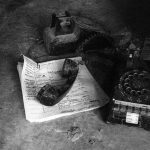
The building was in use until the very end, though it never seems to have been updated. Ancient electronics are present in nearly every room; a phototypesetter gathers dust on one desk, an ancient personal computer on another. Mainframes – the type that run on magnetic tape – are stacked on top of each other, covered in plaster and mold. Phones wait to be answered, printers await their instructions.
Many of the classrooms on Curley’s ground floor have been left nearly intact, their tile walls still plastered with the names of the students who inhabited them: Michael. Charles. Benjamin. Pictures are strewn about the floor; happy children form a dog pile in one image, a pair of friends eat ice cream in another.
And the shoes. There are shoes everywhere, as varied in age and size as the residents were. Baby shoes. Tennis shoes. Slippers, boots, even roller skates, neatly gathered into a pile at the end of a hallway.
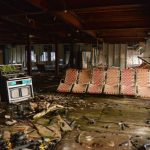
Off to the northwest of Curley is the administration building – the campus’ oldest – and some other brick ones. All of Forest Haven’s original structures are in absolute disrepair. Wandering through them is risky at best. Aside from the obvious structural issues, there is plenty of evidence that any number of people have squatted there, and those people likely wouldn’t appreciate your company.
Wandering down the hallways of the admin building, Forest Haven begins to come alive again. Medical offices are on the first floor. A pair of dental offices are nearly intact, their chairs reclined and lamps still positioned for examination. Just down the hallway is the x-ray room, and x-rays themselves have found their way out of file cabinets and onto the floor.
Ascend a floor or two and you’ll find offices full of rusty typewriters and medical records – the District removed most of the patient records several years ago, but some seem to remain.
There is beauty at Forest Haven, as well. Continue northwards across the campus, past the cafeteria and across an old basketball court, and you’ll arrive at the facility’s chapel, which seems to have survived particularly well. Warm, ethereal light filters through the stained glass – almost all of which is intact – and rows of pews await worshippers who will likely never come again.
At the end of a hallway in an adjacent dormitory, a massive window is framed by the peeling, periwinkle-colored paint of the walls that surround it. Everything is decomposing. Railings and staircases, once lifeless, black-colored pieces of iron, have burst into the spectacular reds and blues and greens of rust and patina.
But this is a very sad place. You can almost feel the trauma in its walls and hear the wails of its distressed. You feel grateful that the place is in ruins and that, despite major deficiencies in the way the District takes care of its mentally ill residents, slow progress has been made.
As I prepare to leave the chapel and head back towards the woods, I find a piece of sheet music. Let’s hope the former residents have found the sort of peace that they sang about so many years ago.
There in my Father’s home, safe and at rest,
There in my Savior’s love, perfectly blest.