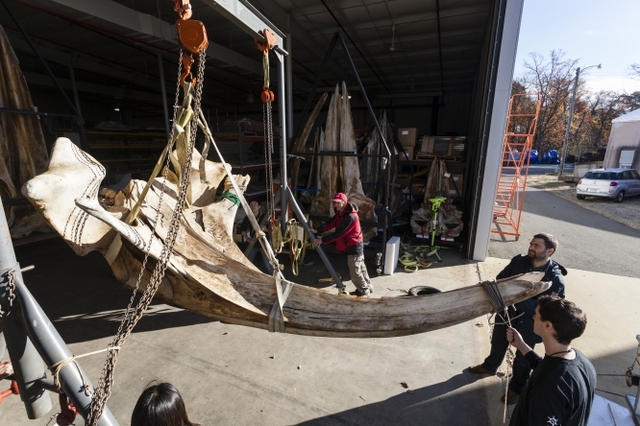
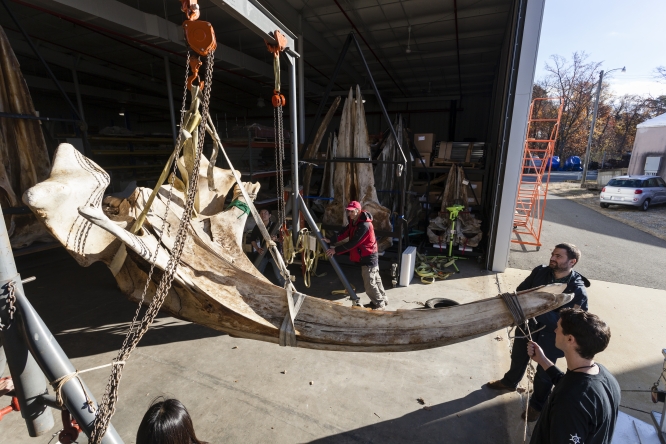
 Photo by James Di Loreto, Smithsonian.
The Smithsonian received quite a whale of a package recently: The skeleton of a 45-foot adult right whale specimen. (No, I’m not apologizing for that shameless pun.)
According to a release, the Smithsonian’s recent acquisition gives them a unique opportunity to study the habits and anatomy of right whales, which are a “critically endangered species.” The specimen, named Tips, is the skeleton of a right whale that was tagged by scientists nearly 30 years ago and has been tracked ever since. In the most depressing part of the release, the Smithsonian reports that Tips’ remains were found entangled in a fishing net in 2010.
“The scientific value of this specimen is greatly enhanced by the fact that it’s a known individual, a whale that has been followed by scientists for more than 30 years,” Charley Potter, collections manager of marine mammals at the Smithsonian, said in the release. “Right whales act as an important barometer for the general health of our oceans and rely on many of the same marine resources as people. Improving our understanding of environmental and man-made threats to whales like Tips not only contributes to right whale conservation efforts, but also improves our understanding of how the world’s oceans are changing over time.”
Already, the forensic analyses conducted by Smithsonian’s scientists have revealed some tidbits about his life. Namely how much of the whales prolonged injuries—and ultimate death—were the result of man-made challenges in our oceans, including encounters with fishing boats and gear.
Currently, North Atlantic right whales are among the world’s most endangered whales, with only approximately 500 left in existence.