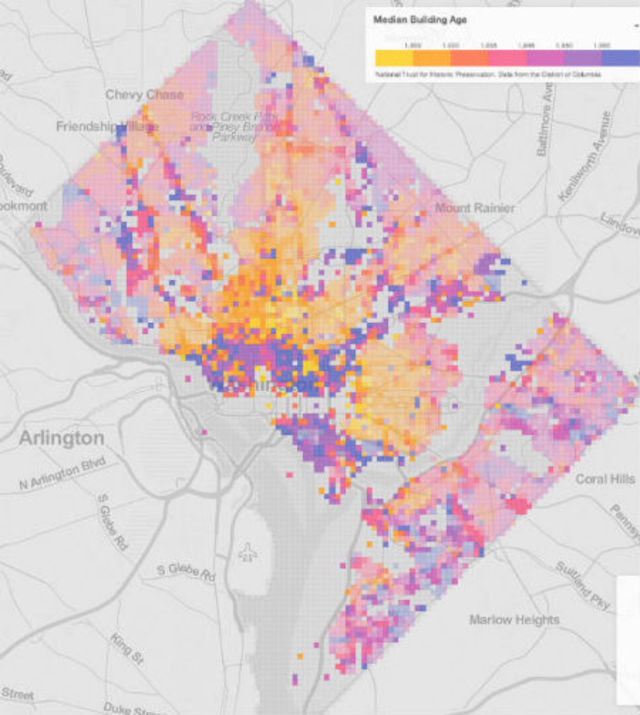
 Via NTHP.
From the National Trust for Historic Preservation comes this interactive map that shows where the oldest buildings, most businesses and percent of non-chain businesses are in D.C.
The map is part of a study [PDF] from the group that looked at how building “character” — a “composite measure that
combined select building characteristics (building age, diversity of building age, and building granularity) into a single independent variable” — influenced the vitality of an area.
The Preservation Green Lab found significant associations between higher Character Scores and measures of vitality, including significantly greater numbers of businesses, new businesses, jobs, and creative jobs per commercial square foot; higher percentages of jobs in small businesses; greater housing and population density; and higher proportions of non-chain businesses and women and minority-owned businesses.
Areas with older, smaller, mixed-vintage buildings are home to significantly younger residents and greater age diversity among residents, and these places have had significantly greater increases in property value over the past 12 years, compared to areas with newer, larger buildings.
The report also looked at how building heights influence how active an area is and how many non-chain businesses there are. If you don’t want the Height Act changed, you’ll likely agree with this assessment.
The findings of this study suggest that older sections of the city with one- to-four-story buildings (about 50 feet tall) perform extremely well. These sections of the city consistently emerged as the city’s most active and vital places, especially by measures related to entrepreneurship: percentages of non-chain businesses, new businesses, and women and minority-owned businesses. These areas also have a greater percentage of jobs in small businesses. The sections of the city with the tallest buildings, most notably the blocks just north of the White House and the National Mall, have a substantial number of the city’s businesses and jobs on an aggregate basis, but they are outperformed by older buildings on a per square foot basis.
Building height is only one of the important ingredients that affect neighborhood vitality. This study suggests that careful attention to the overall building footprint is also important. Narrow buildings create fine-grained city blocks and neighborhoods, and support dense clusters of small businesses. Taller buildings may be necessary if the city is to welcome its projected population growth, but the benefits of older, smaller buildings should be considered as well.