An analysis of the affordable housing stock in the D.C. region shows more is needed. Now.
“The shortage of affordable housing in the Washington region is becoming increasingly clear,” the report from the Urban Institute and the Metropolitan Washington Council of Governments states. “Without better information on the supply and demand for housing, however, it is extremely difficult for the public, private, and philanthropic sectors to make strategic investments or data- driven policy decisions to reduce homelessness and make housing more affordable.”
At play in D.C. specifically is a growing homeless population, a lack of permanent supportive housing for homeless adults and families and high competition for a low number of affordable units.
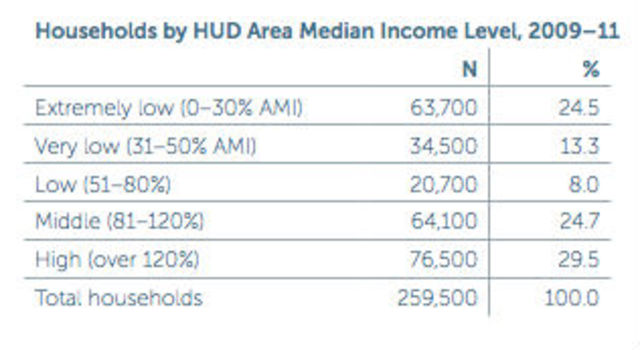
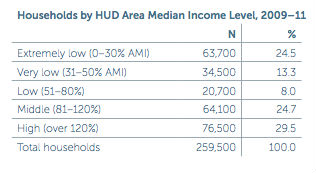 In D.C. alone, 22,100 more units are needed for extremely low income renters, according to the report, while 2,500 are needed for low income renters and 15,100 are needed for middle income renters. Extremely low income households make at the most 30 percent of the Area Median Income; that accounts for 63,700 households, according to data from 2009 to 2011. Fifty-one percent of renter households are cost-burdened (“paying more than 30 percent of gross household income for gross rent”) and 28 percent are severely cost-burdened (“paying more than 50 percent of gross income for gross rent”).
In the entire region — defined as Montgomery, Prince George’s, Arlington, Fairfax, Loudoun and Prince William counties, and the cities of Alexandria, Fairfax, Falls Church, Manassas and Manassas Park — almost half of all renter households “have struggled with high housing costs,” with 86 percent of extremely low income households cost-burdened.
The picture is basically the same for homebuyers. Just 9 percent of the region’s housing supply affordable for low income, first-time buyers was located in D.C., according to data from 2009 to 2011. “Almost one-third of owner-occupied households in the region paid more than 30 percent of their monthly income in housing costs, with cost burden rates that ranged from 88 percent for extremely low income households to 10 percent for high income households,” the report states.
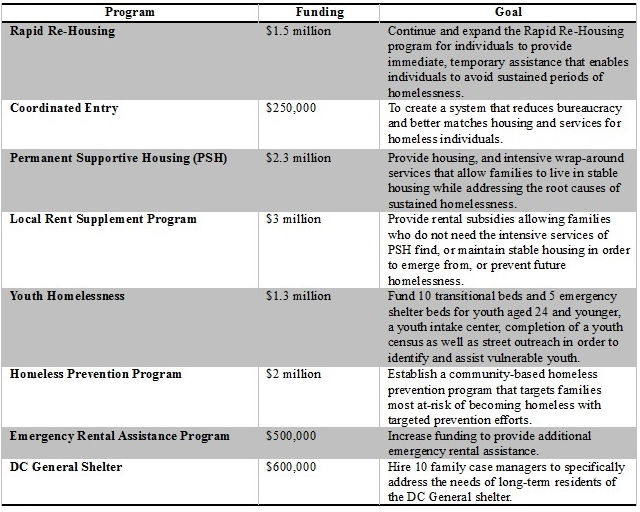
D.C.’s fiscal year 2015 budget calls for a large investment in the Housing Production Trust Fund, as well as smaller investments in the Local Rent Supplement Program and Permanent Supportive Housing.
See the study here.