 Photo by LaTur.
By DCist Contributor Jenny Holm
Don’t recognize that word on your dinner or drink menu? Sick of surreptitiously Googling at restaurants? Menu Decoder is your guide to obscure ingredients popping up on local dinner and cocktail menus.
What are they? First, let’s hammer out the technical difference between charcuterie and salumi: “Charcuterie” is the French term for meats or fish that have undergone one or more of various processes (curing, smoking, slow-cooking them in their own fat, etc.) to preserve them for longer keeping. “Salumi” is an Italian term referring specifically to meats that have been cured and air-dried, but not heated.
How exactly do you “cure” meat? Basically, curing means sucking the moisture out of something using salt in order to slow the growth of bacteria. Curing salt contains a mixture of table salt and sodium nitrite and/or nitrate, which helps prevent botulism and preserve the color of the meat. One common way to cure meat at home involves rubbing the raw meat liberally with curing salt (and possibly sugar and other spices), sealing it in a ziplock bag, and keeping it in the fridge for several days to dry it out.
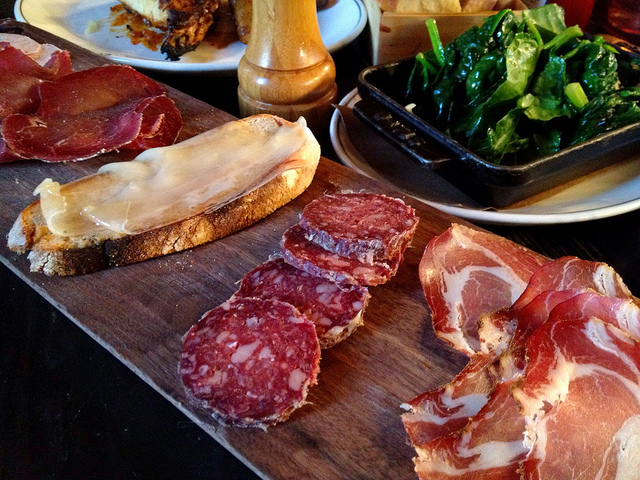
There are so many kinds! How do I make sense of them all? Here’s a handy primer covering some of D.C. restaurants’ most common charcuterie/salumi offerings to help you keep them straight.
(Note: Many of these products are prepared in different ways with different spices in various regions of Italy. The versions described here are common or classic, but certainly not the only “correct” ones).
Pancetta (pan-CHET-tuh): Pork belly that has been cured but left unsmoked. It’s usually thin-sliced or cubed and must be cooked before eating. Bacon is the smoked version of pancetta.
Prosciutto (pruh-SHU-to): Ham (meat from the hind leg of a pig or boar) that has been cured and pressed to draw out the moisture, then hung to air-dry for up to two years. Typically served thin-sliced, it does not need to be cooked before it is eaten. Prosciutto di Parma gets its slightly nutty flavor from Parmigiano-Reggiano whey that local farmers feed their pigs. The same basic technique can be used on duck breast to make duck prosciutto.
Coppa (KOH-puh): Pork neck that has been cured and seasoned, then stuffed into a casing and hung to dry for six months. The outside is often rubbed with hot pepper before drying. It is prized for its creamy, fatty texture.
Guanciale (gwan-CHAH-lay): Pork cheek cured with salt and spices (often black pepper, fennel, and occasionally garlic), then hung to dry for 3-5 weeks. Often used as an ingredient in pasta.
Finocchiona (fee-no-KYO-nuh): Tuscan sausage made with chunks of pork shoulder and fat, seasoned with fennel and aged for up to a year.
Sopressata (so-preh-SAH-tuh): Pressed sausage made from coarse-ground chunks of pork shoulder and fat, often spiced with hot red pepper and dried for about 3 months.
Mortadella: Fine-ground, fatty pork sausage that has been seasoned with black pepper and pistachios. It is slow-cooked rather than air-dried.
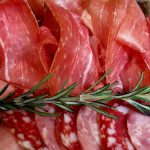
Bresaola: (breh-zuh-O-luh) Beef from the cow’s hind leg cured and traditionally seasoned with juniper berries and rosemary, then dried for 1-3 months. The meat turns out dark red or almost purple.
Tasso: A specialty of southern Louisiana Creole cuisine, tasso is often called ham but technically isn’t one, since it is made with pork shoulder rather than the hind leg. The shoulder is cured briefly in salt and sugar, then rubbed with hot pepper and garlic and smoked over a hot fire until cooked.
Speck: In Italy, speck refers to a smoked prosciutto, often spiced with pepper, laurel, and juniper berries. In Germany, speck means smoked pork belly.
Lardo: Italian for smoked pork belly, typically served thinly sliced.
Jamón ibérico: A cured Spanish ham, true jamón ibérico must be made from a breed of Iberian pigs with black hooves. The pigs’ diet affects the flavor of the meat: the most expensive sort, jamón ibérico de bellota, comes from pigs who roam through oak forests and sustain themselves on acorns before they are slaughtered. The ham is aged for 2-3 years.
Jamón serrano: This Spanish ham comes from a different breed of pig and contains less fat than jamón ibérico, making it significantly less expensive. It is typically aged for about two years.
Pâté: A mixture of cooked meat (often chicken or duck liver), fat, and seasonings that has been ground into a spreadable paste. It’s usually served at room temperature with bread or toast.
Rillettes: Similar to a pâté, rillettes are a spreadable paste made with meat or fish that has been slow-cooked in its own fat.
Terrine: A mixture of chopped meat (often game), fish, or vegetables that have been cooked and left to cool in their container, typically served in slices.
Where can I try them? The team at Three Little Pigs Charcuterie and Salumi (5111 Georgia Avenue NW) make their sausages, salami, and other products from locally raised animals and do all their own smoking, curing, and aging in-house. You can take home meats from their case, order lunch, or learn how to cure your own meat at a workshop.
Lupo Verde (1401 T Street NW) also makes several of its salumi in-house and sells them both on the menu and to-go. The Partisan (709 D Street NW), the sister restaurant to the Red Apron Butcher Shop next door, offers a rotating selection of 30-40 cured meats and sausages that you can order off a separate menu with checkmarks, sushi-style. Chef Nate Anda takes some delectable-sounding creative liberties with the seasoning mixtures, such as a Campari and rosemary-flavored salami inspired by the Negroni and another with Szechuan peppercorns and galangal.