 Via WHS Facebook.
The Washington Humane Society had another banner year in 2014.
“2014 was a great year in terms of adoption—we saw a 10.7 percent increase, which is amazing,” Zenit Chughtai, WHS online communications specialist, told DCist.
In all, the Washington Humane Society took in 10,540 animals, with a 86.53 percent live release rate, ultimately adopting out 3,387 animals. Compare that to last year’s record-setting 10,474 animals they took in with a live release rate of just over 80 percent, and it was a very good year. The live release rate, as Chugtai points out, doesn’t necessarily mean that those were all adopted animals—it also includes critters involved in their community cat program, re-homed or sent to a sanctuary.
Chughtai credits particular efforts for these numbers, particularly their creative and often humorous promotions.
“We think a lot of it has to do with just more awareness around sheltering and adoption shelters and the option to adopt,” she said. “We’ve also worked very hard on offering promotions throughout the year that reduce the adoption fee and we do offer a lot of things with the adoptions—for example, with cats you can take home two cats for the price of one, and every animal that goes home gets their first veterinary visit free with one of our partner veterinarians.”
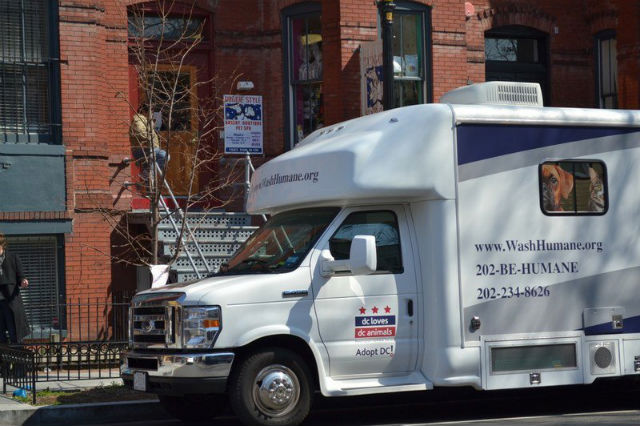
In addition to promotional adoption specials that increased foot traffic, Chughtai sees a lot of value in bringing adoption opportunities outside the shelters themselves and into communities. The WHS often goes out within the District, Northern Virginia, and Maryland to bring the pets to their potential adopters.
“It might be at a restaurant, it might be at a pet store, sometimes we do it at the Ronald Reagan building, just kind of meeting people where they are and showing them that hey, not only do we have animals, but we have a variety of animals to match your lifestyle and emphasizing that,” said Chughtai.
Indeed, Chughtai broke down the types of animals adopted in 2014: 2,199 cats, 1,022 dogs, 35 rabbits, 90 rodents, 26 domestic birds, one chicken, and 14 critters that fit in the “other” category—like reptiles. Even within those categories, there’s a lot of diversity.
“It’s letting people know [that], hey, if you’re looking for a cat who knows how to play fetch, we’ve got one. If you’re looking for a dog who just wants to sit and stare out the window all day, we’ve got one. So it’s not just talking about the variety of our animals, but the variety within our animals, too.”