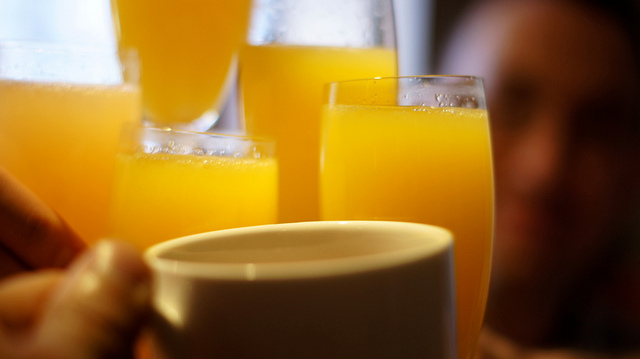
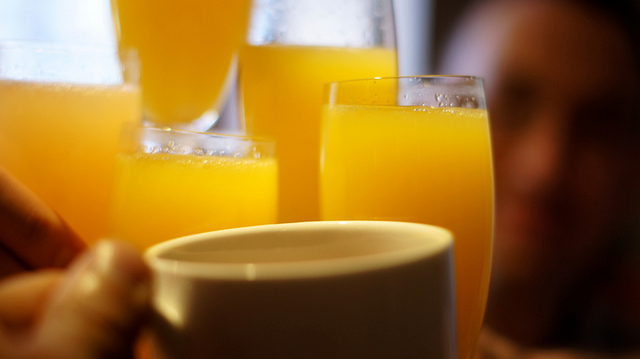
 Photo by Ted Eytan.
By DCist Contributor Victoria Finkle
D.C. is an expensive place to live, and feeding yourself is no exception. Follow Capital Cheapskate each month for a look at the cost side of the ledger, and for tips to enjoy the city’s burgeoning dining scene without breaking the bank.
Last month I told you I plan to tackle the real challenges and complications of eating out on a budget in D.C., so for this second installment I vowed to pull no punches. I’ve gone to the heart of the beast for young diners, exploring the value of brunch—specifically, bottomless brunch.
Even the haters among you have to admit that the unlimited brunch trend is going strong. Dozens of local restaurants offer infinite boozing with a side of eggs, and judging by the weekend wait times at some of the most popular spots, people can’t seem to get enough of it.
When French bistro Chez Billy (3815 Georgia Avenue NW) decided to re-launch brunch at its Petworth location last fall, it went straight to the source, asking PoPville readers for advice. Along with some predictable responses—a plea for child-friendly noms and a reader squabble over the need for vegetarian options—several would-be diners insisted that bottomless brunch was a must.
“Bottomless mimosas and bloody mary’s—PLEASE! I would be there every Sunday,” wrote one enthusiastic commenter.
Chez Billy started offering $15 unlimited mimosas on Sundays, and Courtney Sylvester, the restaurant’s events coordinator, says it’s proven to be a popular option.
“Bottomless just goes over really well,” she said. “It’s one of the questions people call with the most. They usually know we have brunch, but they’re looking for bottomless. Sometimes it’s bottomless food, but bottomless alcohol is much more important to people, it seems.”
I wanted to get my head around all this fuss—why is this intoxicating meal so … intoxicating, and how can we best take advantage of these deals?
Loss Leaders
I have some sense why many restaurants don’t mind offering brunch. The meal can attract new customers, and it gives restaurants a chance to get creative with leftovers.
(Waiters, by the way, tend to be less enthusiastic about the meal, given the slower turnover, highly customizable dishes, and paltry tips. Not to mention they’ve got to drag themselves out of bed even earlier than you do.)
The Atlantic produced what is perhaps the Internet’s seminal literature on the business of bottomless brunch a couple of years ago, arguing that it’s a “loss leader” for restaurants—meaning that they’ll offer mimosas for less, even below cost, to inspire you to spend more on other things. Think return trips to the restaurant, or maybe even a couple of extra orders of home fries or biscuits to soak up all that champagne you’re guzzling.
Chez Billy’s Sylvester noted that while “you have to watch your numbers,” the unlimited deal is “cost effective for us.”
Bottomless Demand
Still, I couldn’t quite put my finger on why diners go so crazy for the chance to pair day drinking with hollandaise.
For some insight on that question, I asked Brian Wansink, a Cornell professor and author of Slim By Design: Mindless Eating Solutions for Everyday Life.
“People are basically paying for the experience, and to tell the person you’re with, ‘you’re special and this is a special occasion,’” he told me. “You’re given an excuse that most people want on a Saturday or Sunday morning to linger a bit longer.”
In other words, it’s a classy excuse to tie one on. Not to get too philosophical here, but it seems that boozy brunch is more than the sum of its parts—breakfast food and alcohol in themselves aren’t that hard to come by, after all.
The meal gives folks the chance to treat themselves, enjoy a leisurely meal with friends and kick back a bit. It’s no wonder people are often willing to wait out the long lines and even pay a premium for the privilege, given how tough it can be to carve out extended quality time with friends during the week.
I initially thought I’d be able to assess whether the trend was a good deal or a bad one for consumers outright, but it seems the answer may be more complicated than that. The French had their salons; we’ve got bottomless brunch. So be it.
A Few Tips
That said, even the most dedicated diners can be on the lookout for a good deal.
Here are a few ways to make the most of your next outing:
Consider the bottomless coefficient. Basically, think about how much your restaurant of choice charges for its bottomless special and divide that by how much they’re charging for an a la carte mimosa or Bloody Mary. In other words, how much do you have to drink to make this deal worthwhile? And how does that compare to how much you’d otherwise want to drink?
Sylvester estimates that diners at Chez Billy probably have about four drinks on average when they sign up for the unlimited offering, a bit more than necessary to break even on the $15 deal.
Think about what else you’re paying for. If it’s the bottomless that draws the crowd, it’s worth taking a step back to consider whether you actually enjoy the other components of the experience: What is the restaurant’s atmosphere like? Is the food tasty? Is it reasonably priced? This also goes for the quality of the drinks themselves.
Wansink reminds us that these kinds of specials sometimes inspire what’s known as the “halo effect,” which induces you to overemphasize what’s distinctive about a particular offering.
At buffets, bring your gameface. Some places offer unlimited food as well as unlimited drinks, raising the level of difficulty in assessing whether you’re getting your money’s worth.
The truth is that it’s tough for most of us to break even at buffets, because the restaurants have economies of scale and fewer labor costs (you’re serving yourself, after all). But there are ways to maximize your experience.
First off, scope out the whole line-up of foods before hunkering down. It turns out that buffets will often put the tempting-but-cheap stuff, like cheesy potatoes, first in line.
Wansink said he’s found that the first three foods diners pick up will comprise more than 60 percent of their whole plate, setting the tone for the meal. Particularly important if you’re on any kind of diet. Also, steer clear of the fillers—processed foods or prepared items, like cheese and crackers, that are easy to find elsewhere. (Guilty as charged: I am definitely a sucker for a cheese tray.)
Consider the DIY route? Finally, if you’re willing to check your shame at the door—plausible, if you’re amped up for unlimited boozing—you could also try this suggestion from The Hairpin to make any brunch more bottomless:
Next time you’re about to order a mimosa off the menu, stop and ask yourself: “Is this delicious treat really worth $9 a pop?” Probably not. Especially when you could just get a bottle of champagne and a carafe of OJ and make your own cocktails at half the price.
The author also suggests methods for working around the obvious resistance you’re likely to meet from the waiter, when he reminds you that mimosas are on the menu.
You’ll look at him and say, “Oh no, I know, but some of us want just Champagne, and others of us want mimosas, and some of us like them really strong [point to yourself and wink], while others of us like them weak, so we just prefer to save you the trouble and make our own.”
I’m not sure I fully endorse this strategy, but it’s perhaps the best thing on the cost front, next to cooking your own eggs and popping some bottles with pals at home. Which is always an option.