 Photo by Frank Hamilton
By DCist Contributor Quinn Myers
Over the past ten years, Dan Deacon has established his blend of poppy, experimental, hard-to-pin-down electronic music as a bizarre practice in effusive boundary pushing. It seems to exist in an almost animated soundscapes, colored by infectious beats and a DIY fearlessness. On Gliss Riffer, his new record out on Domino, Deacon moves to a more accessible energy, building euphoric crescendos with affirming, fantastical lyrics that feel lighter—but by no means thinner—than the material on his last two albums, America and Bromst.
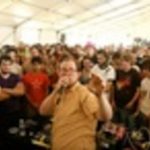
If you haven’t seen Deacon live, well, you might be missing most of the point. The “theatrics” of his concerts are essential to understanding what Deacon does so well: elevating the personal experience with music so strongly that everyone in the venue has no choice but to become part of the performance (a far cry from the head-nodding, arms-crossed routine D.C. music fans know so well). Attend a Dan Deacon show and you may be asked to dance like you’re a dinosaur in Jurassic Park or sit on the ground and gyrate in ways you weren’t aware you could.
This interview has been edited for length and clarity
DCist: Hey! So you have this new album out, Gliss Riffer—can you talk about how that came together? Were there any changes in your creative or recording process compared to previous albums?
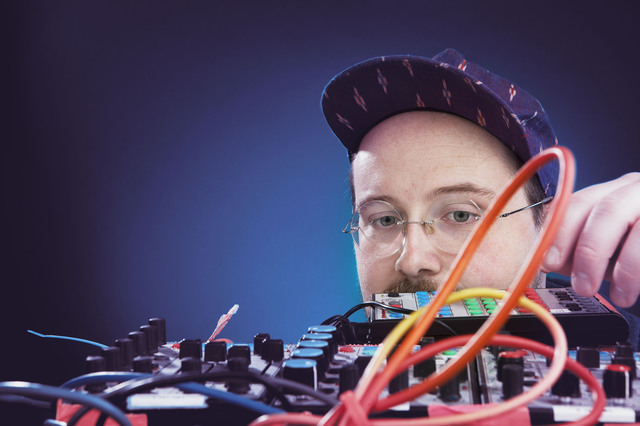
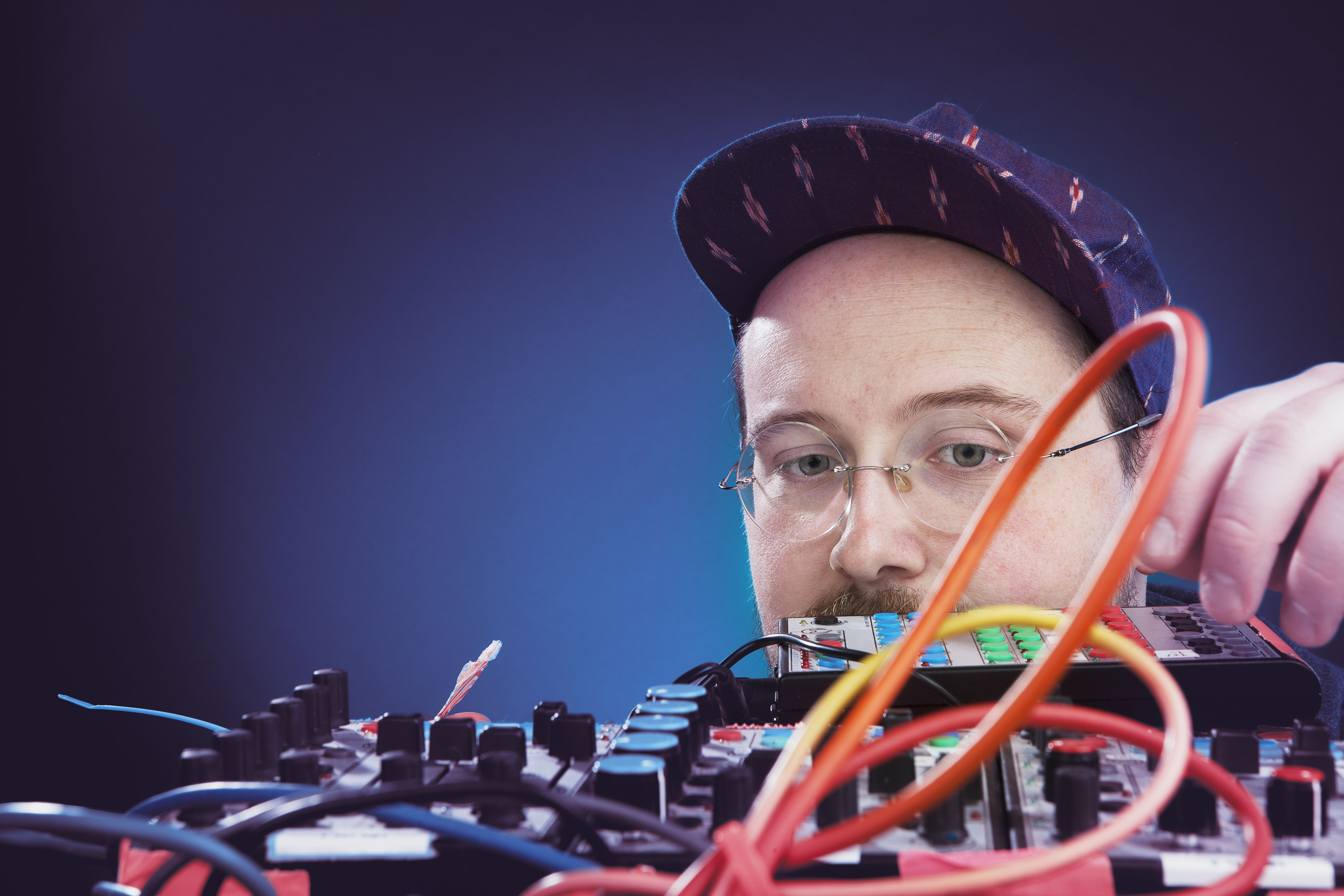
Dan Deacon: Yeah, I’ve never made a record like this before, like in the studio and by myself and thinking about electronic instruments as acoustic instruments, where they need delicacy and space. Thinking about the computer—it’s my sketchpad, it’s my piano—I use it as my main instrument.
I kept thinking about how I could use this instrument that I’ve been using ever since I started making electronic music when I was a kid—how can I use it differently, how can I experiment and use it in different ways. I think that was the biggest process; having my own studio in Baltimore made it a lot easier to dive in and experiment, which is kind of like the position I was in with Spiderman of the Rings, the last record I made by myself. It was really just like, “let’s see what I can make,” where in that case it was more of a songwriting perspective, and the recording process was mostly, like, ‘well I should have something on the merch table that is at all relevant to my show, let’s just go and record these songs exactly like how I do them live’.
With this record that wasn’t the case. It was more like, “well, what is it about these songs that I want to change?” So since I was writing and recording on the road, I could experiment a lot—“Oh let’s try this, I wrote this verse in the studio, let’s see how it hits live, is it catchier? Are people picking up on it?” I think that was a big difference in process. Where like Bromst and America, I always thought of myself as someone who was writing the music, I was composing the music, and I was using the studio to record the compositions. With this record I wanted it to be fifty-fifty—I wanted to take as many sounds outside the box and put them back in.
DCist: You’ve talked in the past about balancing your compositional creativity with the limits of the technology that you’re using; did you experience that at all while making this record?
DD: I feel like my music borders on the fringe of almost being too noisy to be pop music and too pop to be experimental music—so I think anyone who’s trying to live within something that they know is not going to achieve mainstream success—like I never think “oh someone’s going to discover me!” [laughter] I think once you start having ideas like that outside your head, it makes it a lot easier for you to experiment.
With America it was acoustic instruments, and in that process I was doing audience-based pieces at Carnegie Hall and a lot of orchestral work. I sort of was thinking about the physical limitations of acoustic sound and the performers. Like you can’t have an orchestra play at full blast the whole time, because there are just going to be different dynamic levels of each instrument—a trumpet’s going to be able to get a lot louder than a lot of other instruments. And the instrument itself—the low range of a trumpet is going to have a very different dynamic range than the middle of the range or the high point of the range. So, everything had its nuance, and that’s why a virtuosic performer knows how to push those limits of speed and dexterity and the outer boundaries of pitch or volume.
I was making acoustic music but in a very electronic way. I was recording each instrument in isolation, getting the best loops and layering them like a thousand times. And with this record I kind of wanted to do the exact opposite; I wanted to treat electronic instruments as if they were acoustic instruments.
In regards to the limitations, we went down to Moog, who design and manufacture synths and we were experimenting with, you know, chaining 19 synthesizers together, seeing how they would react when sent material and [Moog] was like “No one’s done this before”, [laughter]. So we were fucking around with this new synth that has never existed and chaining that to other preexisting synthesizers and seeing how that would communicate. It felt nice to know that we were really the first ones composing music for this synthesizer.
DCist: You’ve built this reputation for crazy fun live shows, including the audience participation portions of the show. Are there going to be any changes in the way you interact with the audience on this tour?
DD: Well this tour’s going to be pretty radically different from the others, with the staging of it. I used to play on the floor and I’ve been slowly transitioning from floor to stage. I think I played the 9:30 Club maybe three times since 2009, and one was with like a fifteen-person ensemble, and another was with a smaller, four-person ensemble, and once solo. And the solo set I played on the floor, the other two times I was on the stage. Now I play on the stage solo, and at first I was really torn by it but now whenever I don’t do it I regret it. I really like playing on stage.
When I think about a performance space I think about the entire room and the surrounding area being a performance space: the stairs, the balcony, the outside, the parking lot, what exits can we go in and out of, and everyone in the room is one of the performers. So for the beginning of my career I was ignoring every aspect of the stage—the house lights, the stage itself, and that’s crazy! [laughter] I was realizing [that] now we can build sets and have a much larger visual element, and now I can see people—now I can see the entire room—and I feel like it’s changing the way I think about performance and what performance can be.
I’m probably paraphrasing this quote, but John Cage said, “all music is theatre”, and that was why I started doing it in the first place. I think like with electronic music, where there’s not physicality to the sound, how can I add theatre to this? What’s going to make this worth watching? So I’m always trying to add new things to the show. The audience participation to me is the thing that keeps the show in the realm of experimental, because it’s an experiment. It can fail. If something can’t fail it’s not an experiment. I like set risk, I like knowing that I’m improvising with hundreds of people and they are now the focal point of the show.
DCist: So on the live note, throughout your career you’ve had deep ties with the DIY community, playing in different kinds of spaces. What’s it like going from performing at the Verizon Center to smaller venues like the First Unitarian Church in Philadelphia or similar places?
Well, I feel really psyched that I can play such a diversity of spaces. I think about how there are three different shows that I get to do. There’s the headline club show, that we’ll be doing with the show [at the 9:30 Club], and each audience has a different mindset. Like the headline audience, most of the people who are there are going to see you perform and in doing so there’s a certain energy around that. When you go to a festival, most of the people there might have heard of you but they’re there to discover new music, and they’re excited about discovery.
Then there’s the show you’re opening for—when I was opening for Arcade Fire, ninety-nine percent of the people in that room had never heard of me, so you have to perform well enough not just to be tolerated but to be remembered, and to be remembered positively. Then there’s the seated show, like when I do a “classical” show or a piano recital or something like that. So I think about all this going into a show, how to sculpt the set list [and] what the relationship to the audience is going to be.
Dan Deacon plays the 9:30 Club on April 11th with Prince Rama and Ben O’Brien.