This week DCist is getting sprung for spring. All week long we’ll be spotlighting ways to eat and cook the bounty of fruits and vegetables that are finally peeking their little green heads out of the soil.
By DCist Contributor Jordan Anthony-Brown
Congratulations, you’ve made it through winter once again—it’s finally over. In addition to navigating your way through tourists, this means it’s time to head to your local farmers’ market and check out some of the new produce that has arrived alongside the warm weather. The spring season always heralds a new set of veggies that will inspire you to start cooking again (with the windows open). Here are our favorites, as well as where you can find them below.
ARTICHOKES: In their raw state, this member of the sunflower family must be broken down into a more user-friendly form. Leaves must be removed, along with the fuzzy “choke” that resides near the center. And once you get through all that, be sure to place the cleaned artichokes in water acidulated with lemon juice or vinegar, unless you want to watch your hard earned work oxidize and turn brown. But it’s all worth it to enjoy a vegetable that boasts a unique, meaty texture. If you’re steaming or boiling your artichokes, keep it simple by drizzling them with butter or vinaigrette. Alternatively, try grilling your chokes, serving them raw in a salad, or roasting them in the oven. And if you’re truly looking to enjoy artichokes without too much effort, pick up some baby artichokes—those that have yet to develop the fuzzy choke near the center.
ARUGULA: Broadly referred to as rocket, arugula is a spicy green and spring favorite. Arugula is often used to add more character to an otherwise pedestrian salad, given that it carries some bite to it, especially in the large-leaved varieties. Avoid bunches that are starting to develop a yellow hue, and be sure to wash and dry your arugula well before using to remove any dirt or grit. As for what to do with your spicy greens beyond just salad? Consider making an earthy arugula pesto, or tossing the greens into a quick and easy pasta.
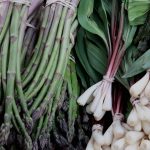
ASPARAGUS: One of the key produce indicators that spring has returned, you’re bound to start seeing asparagus popping up on restaurant menus in the near future, as it’s a versatile and efficient vegetable that comes in green, purple, and white varieties. When buying asparagus, look for brightly color stalks, and avoid smashed or bruised tips, which will spoil quickly. Be sure to use fresh asparagus within a day or two, when it’s best. Before using, bend each stalk gently toward the bottom third of each stalk, which will reveal its natural “snapping” point, enabling you to break off the tough bottom portion. Asparagus goes extremely well with garlic, lemon, and onion flavors like shallots and leeks. It’s delicious simply roasted, or shaved thin and served raw.
FAVA BEANS: Hailing from the Mediterranean region, fava beans also take some effort to prepare—assuming you don’t want to eat them with their tough outer skin. First, shuck the beans out of their shell. Then boil them, and skin each bean individually before eating or cooking further. You might be able to skip the peeling step if the beans are small, tender, and particularly fresh. But don’t let a bit of labor scare you away, as fava beans are delicious when simply grilled, or added into a soup or stew.
GREEN BEANS: Green beans (also known by their French name, haricot verts) are actually the unripe form of common dried beans and come in two varieties—bush beans and pole beans. Bush beans, as you may have guessed, grow as small bushes in the ground. Pole beans run up poles, produce more leaves than bush beans, and take longer to reach their point of maturity. There are purple and yellow varieties as well, making them a great choice for adding some color to their dinner table. If you’re boiling your beans, be sure to do so in a pot of well-salted water, drain them well, and dress while still warm in an acidic vinaigrette. Try not to dress them too far in advance as this dilutes their beautiful color. Alternatively, try green beans in a classic creamy casserole or in a salad with radishes, another spring favorite.
LEEKS: Leeks are part of the allium family (and therefore a close relative of onions) but they fall on the more mild side when it comes to the onion flavor. While they’re generally available year-round, leeks are best in the early months of spring and provide a bright addition to seasonal recipes. Leeks can be cooked and dressed with vinaigrette, sliced raw and tossed with a salad, or charred on the grill. Try pairing your leeks with complements like salty cheeses, lemon, or mustard. They serve as a good replacement for onions in recipes, particularly when looking to dial-down the strong onion flavor.
MORELS: Morels are only available for a short time during the spring, and they’re a coveted favorite of chefs and home cooks alike. Morels are hollow from top to bottom and are characterized by a ribbed cap with a soft, sponge-like texture. Because of their short-term availability (and the difficulty in gathering them), morels are on the more expensive side. But they are worth the splurge to enjoy their meaty texture and earthy flavor. Morels should never be eaten raw, as they can contain trace amounts of toxins that are offset during the cooking process. To enjoy the natural flavor of morels, keep it simple—sauté them up with just a bit of butter, salt, and perhaps some garlic and shallots, or try them breaded and fried.
PEAS: Peas actually come in three varieties that you can look for at farmers’ markets and grocery stores across the city. The most common are pod peas (also known as shelling peas or English peas). Snow peas are flat pods that are picked, cleaned, and eaten before the inner peas begin to swell or grow. The third variety is the sugar-snap pea, which is fatter than a snow pea but hasn’t fully developed into the plumpness of a pod pea. Early spring pod peas are typically cooked, while snow and snap peas can be served raw or cooked. And don’t sleep on pea shoots, which resemble watercress in size and shape and can be a nice spring addition to a salad. Peas of all varieties go well with sesame and ginger as well as herbs such as sage and tarragon. And consider pairing your peas with a salty meat to balance out their natural sweetness.
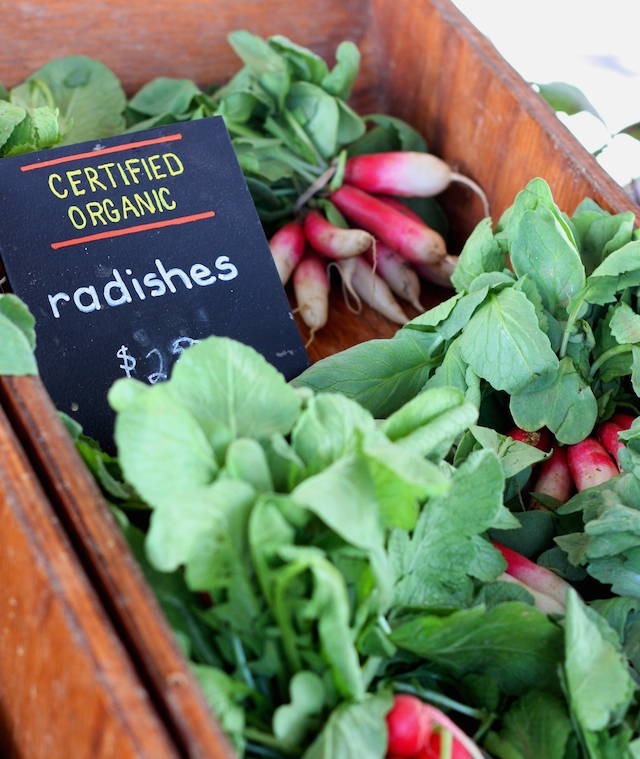
RADISHES: Because of their speedy growth rate, radishes are some of the first vegetables to reveal themselves once spring rolls around. Though first domesticated in the Mediterranean during pre-Roman times, radishes are now cultivated around the world and come in many sizes, shapes, and colors. You may have already spied French breakfast radish—finger-sized, red on top fading to white—or Daikon radishes—long root with smooth flesh, commonly used in Asian cuisine—at your local farmers market. And while radishes are delicious in their raw state with butter, they can also be sautéed, braised, or even dropped in some brine for a quick pickling. And don’t be afraid to use the whole plant—the raw leaves make for a peppery addition to any salad.
RAMPS: Ramps have gone from relative obscurity to a spring favorite. They are essentially wild leeks, which means they’re typically delicate, fragile, and require a bit of cleaning to remove dirt before they can be enjoyed. Once you get past that, ramps provide a smooth, earthy, and mild onion flavor that can take the place of leeks or onions. They’re particularly delicious when paired with other spring favorites like morels or asparagus. Ramps’ also lend themselves well to a spring pesto, a bath in pickle brine, or simply grilled and drizzled with butter or olive oil.
RHUBARB: In it’s natural state, rhubarb (both red and green varieties) has a tart taste that many find unappealing. But add some honey, sugar, or another sweetener, and you have a spring favorite that perks up compotes, pies, and cakes. Sweetened rhubarb also makes for a bright topping over ice creams and sorbet. Pair your fresh picked rhubarb with citrus zest and juices, cinnamon, or ginger.
Now that the weather has finally turned, you have even less of an excuse for not checking out some of the great local produce that can be found around D.C., Maryland, and Virginia. Here’s a sampling of local farmers’ markets in the area that operate on Saturdays and Sundays.
14th & U Farmers Market
Location: In front of the Reeves Center at 14th and U Street NW
Hours: Saturdays from 9 a.m. until 1 p.m
Bloomingdale Farmers Market
Location: In front of Big Bear Café at the corner of 1st and R Street NW
Hours: Sundays from 9 a.m. until 1 p.m
Columbia Heights Community Marketplace
Location: Columbia Heights Civic Plaza at the corner of 14th Street and Park Road NW
Hours: Saturdays from 9 a.m. until 1 p.m.
Dupont Circle FreshFarm Market
Location: 20th Street NW between Massachusetts Avenue and Hillyer Place
Hours: Sundays from 9 a.m. until 2:00 p.m.
Eastern Market Farmers’ Market and Farmers’ Line
Location: 7th Street SE, between C Street and North Carolina Avenue
Hours: Saturdays 7 a.m. to 6 p.m. and Sundays from 9 a.m. to 5 p.m.
Glover Park-Burleith Farmers Market
Location: In the parking lot of Hardy Middle School, intersection of Wisconsin Avenue and 35th Street NW
Hours: Saturdays from 9 a.m. until 1 p.m.
H Street FreshFarm Market
Location: Corner of H Street NE and 13th Street NE
Hours: Saturdays from 9 a.m. until noon
.
Mt Pleasant Farmers Market
Location: Mt Pleasant Street, between Park Road NW and Lamont Street NW
Hours: Saturdays 9 a.m. to 1 p.m.
Petworth Community Market
Location: 9th Street and Upshur Street NW
Hours: Saturdays from 9 a.m. until 1 p.m.
Union Market FreshFarm Market
Location: The parking lot of Union Market (1309 5th Street NW)
Hours: Sundays from 11 a.m. until 3 p.m.
Bethesda Central Farm Market
Location: Near the intersection of Arlington Road and Old Georgetown Road
Hours: Sundays from 9 a.m. until 1 p.m.
Silver Spring FreshFarm Market
Location: Ellsworth Drive between Fenton Street and Georgia Avenue
Hours: Sundays from 9 a.m. until 2 p.m.
Takoma Park Farmers Market
Location: Near the intersection of Eastern Avenue NW and Laurel Avenue
Hours: Sundays from 10 a.m. until 2 p.m.
Arlington Farmers Market
Location: Adjacent to the Arlington County Courthouse parking lot, at the intersection of N. Courthouse Road and N. 14th Street
Hours: Saturdays from 8 a.m. until noon
Falls Church Farmers Market
Location: In the City Hall parking lot at 300 Park Avenue
Hours: Saturdays from 8 a.m. until noon
Old Town Farmers Market
Location: Market Square at 301 King Street in Alexandria
Hours: Saturdays from 7 a.m. until 12 p.m.