By DCist Contributor Caroline Baxter
Been on a date, uh, ever? Then you’ve probably been asked, “So, what type of music do you like?” “Anything but opera and country music” is the most common answer. Just the word “opera” often brings to mind rotund, garishly dressed adults in funny hats yelling at you in a foreign language for two hours. Often they yell in groups. Sometimes the plot is completely convoluted and involves a cast of what feels like 704 central characters. Often it’s a drama involving sex and murder. Or a comedy involving sex and murder. Quotable crank H.L. Mencken said that “opera is to music what a bawdyhouse is to a cathedral.”
But which one of those places is more alive?
Humans, being social animals, connect to each other through storytelling. And that is the entire purpose of opera: telling stories. Opera as a story vehicle has been around for a very long time, well before the great Renaissance composer Claudio Monteverdi, the man credited with the genre’s invention, was born. There were even other operas written on the Orpheus myth before Monteverdi wrote his.
One such early work was “Fabula di Orfeo,” a play with musical passages, written in 1480. Two other Orpheus operas were written just years before the premier of Monteverdi’s work—one in 1600 and one in 1602. Nevertheless, it was Monteverdi’s “L’Orfeo,” written in 1607, that was opera’s Big Bang.
The opera’s first performance took place in Mantua in northern Italy on February 24, 1607. Said one of the attendees, “It should be most unusual, as all the actors are to sing their parts; it is said on all sides that it will be a great success. No doubt I shall be driven to attend out of sheer curiosity, unless I am prevented from getting in by the lack of space.” This upcoming performance at the Kennedy Center is an opportunity to hear what that audience heard, four-hundred-odd years ago—and not just the music itself, but the style in which it was played.
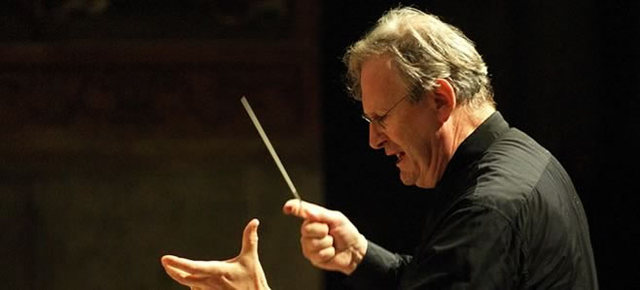
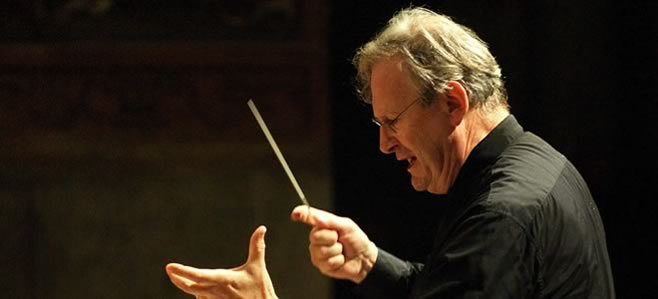
Sir John Eliot Gardiner and his English Baroque Soloists excel at providing gorgeous, period-accurate performances of Renaissance and Baroque music, including period instruments and singing techniques. Monteverdi’s opera, much like other pieces of the time, is filled with long and expressive phrases that are devilishly hard to sing well. They demand that the singer have iron breath control to stay smoothly on pitch. Happily, the English Baroque Soloists excel at this task. If you were ever to see this music performed as closely as it was performed at its inauguration, there is no better time than this week.
The story is pretty simple, as opera stories go. It tells the tale of Orpheus and his marriage to, and attempted rescue of, Eurydice over the course of five acts. Act One opens with the Muse of music introducing the story, soon after which we see Orpheus and Eurydice’s wedding celebration. Quickly, however, things start to go wrong. In Act Two, a messenger arrives to tell Orpheus that Eurydice has been killed by a snake bite. Orpheus’s refusal to accept her death leads him into the underworld, which is where Act Three begins.
Orpheus overcomes a variety of obstacles to reach Pluto, the Lord of the Underworld, and, in Act Four, plead his case. Pluto agrees to release Eurydice on one condition: Orpheus must not turn around to look at her as he leads her out of the underworld and back to earth. This, of course, he cannot do, and Eurydice is lost to him forever. In the opera’s final act, Orpheus mourns the loss of Eurydice so movingly that the god Apollo escorts Orpheus to heaven, from which vantage point he can gaze upon Eurydice’s image in the stars.
Monteverdi tells the Orpheus myth beautifully through deft use of rhythm and phrasing. When the messenger must deliver the terrible news of Eurydice’s death, the musical passage is filled with extraordinarily long notes. She doesn’t want to deliver the news at all—it is too heartbreaking to tell. This early style of opera is filled with these long passages.
There are few examples of the tightly contained set-piece melodies that made Mozart’s operas so extraordinary (example: Non Piu Andrai, from “The Marriage of Figaro”); by and large, it’s the choruses that provide the most melodic gratification. What the music lacks in melodic symmetry it more than makes up for in vast depths of feeling. It sounds, and feels, much more like engrossing storytelling.
Watch “L’Orfeo,” as performed by Sir John Eliot Gardiner and the English Baroque Soloists on Wednesday, April 21st at 8 p.m. The performance is presented by Washington Performing Arts. Tickets are $35 and up.