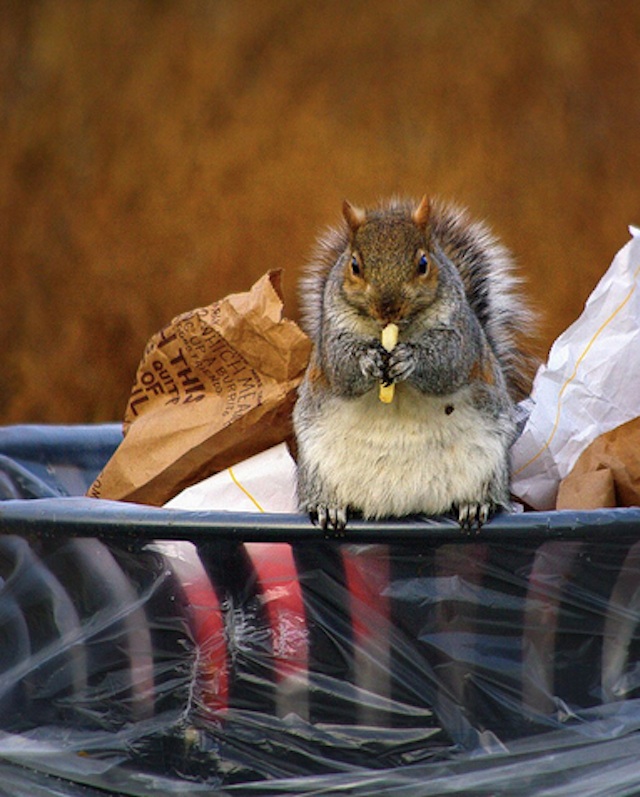
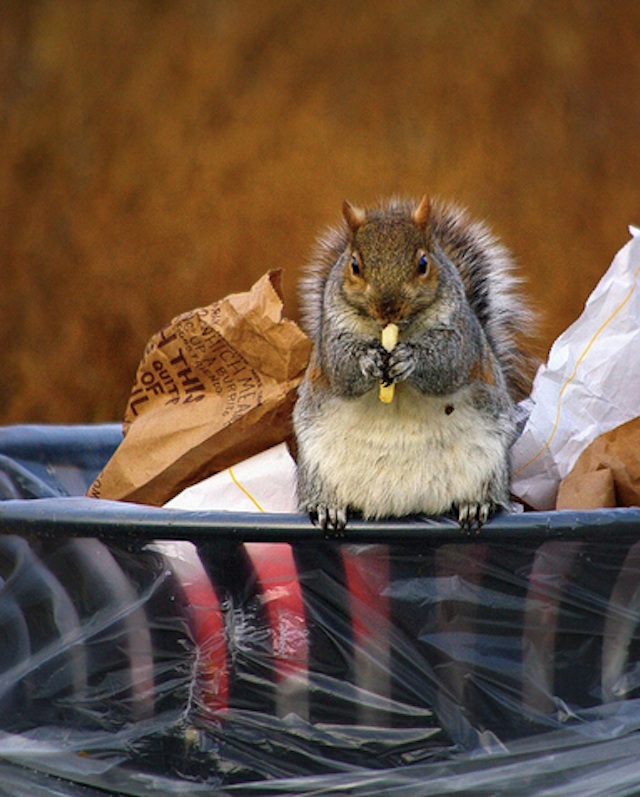
 Photo by pablo.raw.
By DCist Contributor Victoria Finkle
D.C. is an expensive place to live, and feeding yourself is no exception. Follow Capital Cheapskate each month for a look at the cost side of the ledger, and for tips to enjoy the city’s burgeoning dining scene without breaking the bank.
Hey, do you smell that? Yes, I’m talking about the overpowering scent of rotten garbage. That must be the billions of pounds of food Americans waste each year—enough to fill the 90,000-seat Rose Bowl stadium every day. It’s pretty stinky.
In addition to the food that gets tossed at farms, grocers—and yes, at home—restaurants have to juggle a lot of competing demands, and often end up with a sizable amount of waste themselves. This surplus comes even as millions of families go hungry.
Studies have found that roughly 4-10 percent of food at restaurants ends up in the dumpster before it reaches your plate, and restaurants can produce 25,000 to 75,000 pounds of food waste each year.
The good news is there’s evidence the tide (of trash) is turning.
“It’s a really exciting time for food waste right now,” said Elizabeth Bennett, founder of Fruitcycle, a D.C.-area company that repurposes discarded apples to make dried fruit snacks.
With food and commodity prices on the rise, that’s a plus for operators and diners alike. Tossed out noms reportedly cost the food service industry $100 billion a year. Anything restaurants can do to improve their own bottom line ultimately helps consumers, who are likely to be the ones paying the higher tab to account for that waste, not to mention the good it does for the planet.
“Incredible amounts of water and other resources go into producing the food, and if we don’t use it well, we’re still using those other resources,” said Mike Curtin, a former restaurateur and head of DC Central Kitchen, a nonprofit that recycles area food and helps feed the homeless and low-income families. “We think of the business as only having to protect ourselves in terms of price points and relationships with vendors—the harder issue will be commodity prices. As resources get scarce and we literally waste them, we’re all going to be paying a higher price.”
Being less picky is practically fashionable in some parts of the dining world these days. Last month, Chef Dan Barber launched a food waste “pop up” in New York City to raise awareness on the issue, and Food and Wine magazine kicked off its #LoveUglyFood campaign as a social media rallying cry for the “less-than-aesthetically pleasing foods” we often overlook.
“Food waste reduction and management” also ranked as the number nine issue in the National Restaurant Association’s “What’s Hot” survey this year—the first time it’s made the group’s top food trends list at all.
“This popped up out of nowhere,” said Laura Abshire, director of sustainability policy and government affairs with the group, who attributed the boost to greater media attention and the association’s own education efforts.
The challenge of minimizing food waste begins with a restaurant’s menu, Bart Farrell, director of food and beverage at Clyde’s Restaurant Group, told me.
“It really starts with menu development—proper menu mixing, and from our perspective, proper purchasing and ordering,” he said.
Preventing waste, after all, is much easier and less expensive than trying to repurpose it. That might include using seasonal, local produce in several dishes at once, for example.
Other restaurants now rely on technology, including a program called LeanPath, to help track and measure their food usage, along with any leftovers. The company touts that the MGM Grand Buffet in Las Vegas started using the system and cut its excess food by a whopping 80%, saving as much as $9,000 a month in costs.
Still, while Farrell said that the restaurants under his purview—including The Hamilton and Old Ebbitt Grill—tend run a pretty tight ship in terms of waste, he knows that others might still be figuring out the trick.
“In talking with vendors, especially in the last couple of years as more restaurants open up, they do see younger chefs and probably inexperienced restaurateurs with second and third deliveries being requested,” he said.
But overall, there have been improvements. DCCK’s Curtin, who previously owned The Broad Street Grill in Falls Church, said the proportion of contributions from restaurants has fallen since the non-profit was first founded, in part because the businesses have become more strategic about waste to combat their “razor-thin margins.”
“If someone’s giving us food, they might as well hand us a pile of cash. That’s lost profit, and they’re never going to see that again,” he said.
What Can Diners Do?
My boyfriend is a human garbage disposal, a fearless crusader of leftovers. But even us mere mortals can probably do more to stem our own wasteful habits, including when we’re dining out. Here are a few tips for restaurant-goers who want to help keep costs down and support sustainability:
Tend to the home front. I don’t get points for originality, but I’d wager the most important contribution we can make is to think about what we’ve got in the refrigerator before making the decision to eat out. While 50-60 percent of food waste comes from businesses and industry, consumers generate the other half at home. Given that uneaten food is the single biggest source of waste in the country, any little bit is bound to help.
Think thin. Consider splitting an entrée with your dining companion, or having two starters serve as your entire meal, Farrell suggested. “People in the last several years are more health-conscious. They want to indulge, but they don’t want to overindulge,” he noted. This could potentially be good for waste, wallet, and waistline—a hat trick!
Don’t forget the doggy bag. “The number one thing would be to take home a doggy bag if you have leftover food,” Bennett advised. Then, of course, you actually have to psyche yourself up to eat it.
As an added incentive, be sure to wow your friends next time you request a to-go box by explaining that the original incarnation dates back to the ancient Romans, who typically brought bath-towel-sized napkins to meals (yikes) and then began using them to bring food home. The modern concept of the “doggy bag” took hold in the 1940s.
All-star points if you pack your own plastic tupperware or bags in your purse or backpack. Yes, it’s a little more effort up front, but they’re a lot more secure and environmentally friendly than those leaky Styrofoam containers.
Don’t be shy. “When consumers start to pay attention to something and they show that and talk to restaurant operators, it makes a big difference,” said Abshire, pointing to the influence diners had getting gluten-free items on menus in recent years.
Curtin agreed. “A lot of times people take food home and never eat it. If you say, hey, ‘this was just too big,’ that feedback is always positive,” he said.
Let your dollars do the talking. Restaurant-goers can also vote with their mouths—so to speak—and seek out restaurants that actively strive to be green or that collaborate with nonprofits. DCCK recovers from Capitol Grille, ShopHouse, and Nando’s Peri-Peri, for example.
“Consumers can look to restaurants who support organizations like us and patronize them, so they can further engage in work with those nonprofits,” Curtin said.