 Rachel Sadon
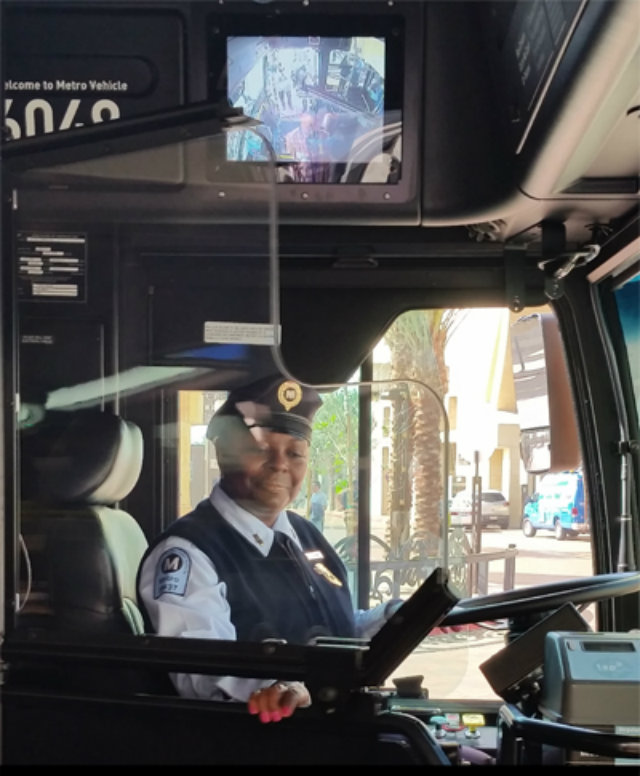 A similar installation on a bus in Los Angeles (Courtesy of the Los Angeles Metropolitan Bus Authority).
Four bus operators on the X2 bus line have been attacked so far this year—more than any other route. So that is where WMATA is turning to test video screens that will show real-time surveillance footage in a bid to prevent fare evasion and assaults.
Although there are already security cameras on the buses, the hope is that riders being able to see the footage will act as a deterrent. WMATA will install the monitors on 22 buses, showing passengers what the security cameras are recording as it is happening, under the pilot program.
The system will include an 8.4-inch screen above the bus driver showing people as they board, and a 19-inch screen behind the driver that will display feeds from four cameras. All of the buses in the pilot are assigned to the X2, one of the busiest routes in the system and with a reputation for being one of the most colorful.
“Through this effort, we want to remind riders that all activity aboard our buses is captured by the cameras and see whether the presence of the new video monitors has an additional deterrent effect,” said Metro interim general manager and CEO Jack Requa.
The pilot is expected to cost about $81,000. Metro will evaluate the screens’ effectiveness over the course of several months before deciding if they will be rolled out across the entire fleet.
“The move is part of a multi-layered response that also includes enhanced fare enforcement by plain clothes and uniformed Transit Police officers, outreach campaigns—including targeted outreach in public schools, the installation of plexiglass dividers to protect bus operators, and enhanced penalties for those found guilty of assault,” WMATA said in a statement.
Other cities whose buses have video monitors that are visible to passengers include Los Angeles, Boston, and Hampton Roads.