 Rachel Sadon
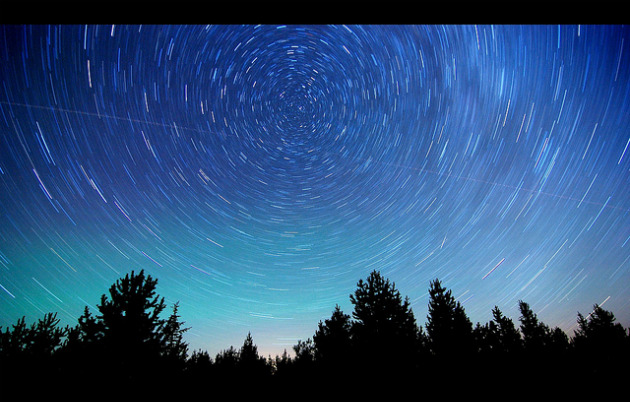 Long exposure image of a Perseid meteor trail by …. via Creative Commons license.
The best place to catch the peak of the Perseid meteor shower tonight—which is forecast to be spectacular, thanks to a lack of moonlight—is someplace far, far away from city lights. Dedicated meteor watchers suggest state parks or beaches, like Shenandoah or Chincoteague, to get away from light pollution.
Indeed, there will be three separate lectures and star gazing parties tonight in Shenandoah National Park at the Dickey Ridge Visitor Center lawn (mile 4.6 on Skyline Drive), Big Meadows lodge (mile 51), and Loft Mountain amphitheater (mile 79.5). And tomorrow, the NASA Wallops Flight Facility Visitor Center and the Delmarva Space Sciences Foundation will host a free event on Assateague Island.
But the shower is at its most glorious in the middle of the week—with the peak around 4 a.m.—and those options would make for a rather bleary-eyed commute.
A closer option is in Rockville. The city’s parks usually close at dark, but they are keeping the 33-acre Welsh Park open for stargazing this evening. “Visitors are invited to park at the Rockville Swim and Fitness Center parking lot, 355 Martins Lane and walk to the adjacent Welsh Park, at the corner of Martins Lane and Mannakee Street, for the meteor viewing. The park should provide the dark skies necessary to see the shower, with the best viewing times coming between midnight and 4 a.m.”
But with up to 100 meteors per hour, you’re still liable to see some even if you just head up to your roof. Since they can appear anywhere in the sky, all viewers need to do is look up. Skip the binoculars and avoid looking at cell phones or other devices as they impede night vision.
Alternatively, you can settle for “listening” to the meteors on SpaceWeatherRadio. As Slate’s Phil Plait explained a few years ago when the skies weren’t supposed to be as clear:
You’re not really hearing sound, of course: meteors burn up in our atmosphere at a height of 100 km or so, too high to directly carry sound waves. But the Air Force has a radar surveillance facility in Texas that beams radio waves into the sky. When a bit of cosmic fluff streaks through our sky, the ionized trail it leaves reflects the radio waves, producing an echo. This radio wave is then translated into sound, so you can effectively hear a meteor!
According to NASA, this is one of the best options for meteor watching all year. “If you see one meteor shower this year, make it August’s Perseids or December’s Geminids. The Perseids feature fast and bright meteors that frequently leave trains, and in 2015 there will be no moonlight to upstage the shower.”