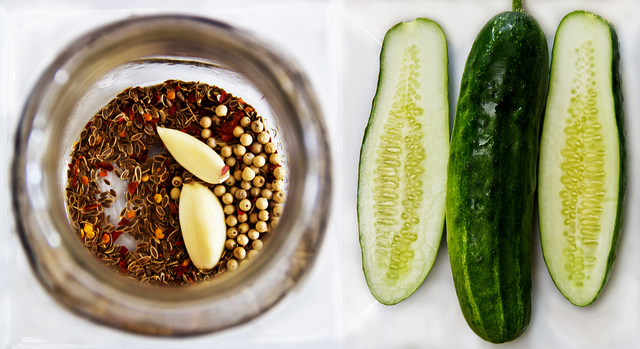
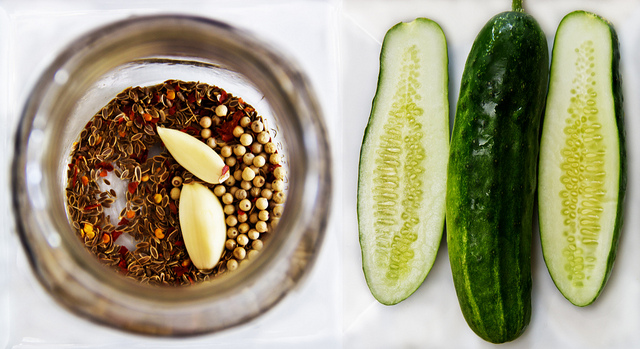
 Photo by evegophoto.
A proper pickle can elevate a sandwich or sausage from the prosaic to the sublime; add crunch and kick to members of the delectable and under appreciated mayonnaise-based salad genre (think potato, egg, chicken, and tuna); and make even the deepest fried morsel taste vibrant and fresh.
There are a plethora of local pickle producers to choose from if you want to purchase a jar and be done with it. But for the DIYers among you, and those with successful gardens or abundant CSAs who are drowning in produce, there is another way. Learning to do your own pickling can save you money, help cut down on food waste, and give you a new skill to put on your online dating profile.
If you’re still not convinced, just take Thomas Jefferson’s word for it: “On a hot day in Virginia, I know nothing more comforting than a fine spiced pickle, brought up trout-like from the sparkling depths of the aromatic jar below the stairs of Aunt Sally’s cellar.”
What to Pickle
Stubby, warty Kirby cucumbers make excellent classic dill pickles, but I find slim and smooth Persian cucumbers to be sweeter and more flavorful. You can find both in abundance at local farmers’ markets right now.
But why limit yourself to cucumbers? Their firm structure and crunchy texture make cauliflower, radishes, fennel, beets, carrots, green beans, and chiles ideal for pickling. Pickled tomatoes are a popular vodka chaser in Russia and Ukraine. Koreans ferment cabbage and daikon radish to make two of the most common types of kimchi. In many parts of India, pickled mangos and limes can be found on almost every table. Iranians pickle baby eggplants, grapes, and mulberries. Pretty much any fruit or vegetable is fair game.
How to Pickle
You can approach this a few different ways:
Quick pickling is a simple process: clean a jar, stuff it with vegetables, pour in boiling vinegar brine, put the lid on, let cool, and refrigerate. Wait a day (or better, three), and you have pickles. I keep a jar of quick-pickled red onions in the fridge at all times. Pickled is my preferred way to eat green beans: try these from Slow Food DC. And Molly Wizenberg’s recipes for pickled prunes and pickled grapes are unexpected and ideal for the impending autumn.
If you want your pickles to be shelf-stable (meaning you can keep them outside the fridge for about six months without worrying about bacterial growth), you’ll need to use canning jars with new lids, sanitize them in boiling water before filling, and boil the filled jars again to make sure any nasty buggers that might be lurking inside are dead before you call it a day. This is the method to use if you are making a feast for a small army or happen to own a root cellar. Or if you’re curious about pickled Chinese five-spice fennel, or are looking for something to do with those tiny eggplants at the farmers’ market.
A third option is fermentation. This is how true “sour” kosher dills and sauerkraut are made. The brine for these pickles is made with salt (either pickling or kosher salt) and water—no vinegar—and the process encourages the growth of the kind of bacteria your gut actually needs to function correctly. However, it’s just a bit higher maintenance: pickles take a few days sitting out on your counter to ferment, they must be monitored semi-closely to make sure they aren’t molding, and they turn out best when you have grape or oak leaves on hand to keep them crunchy. This recipe makes it simple, while this one makes me feel like I’m involved in something slightly mystical.