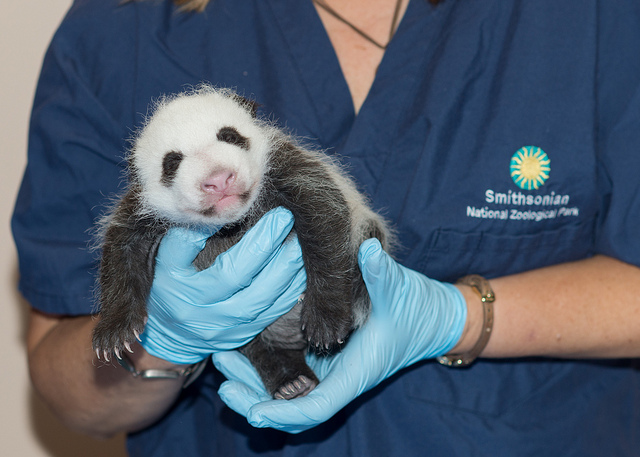
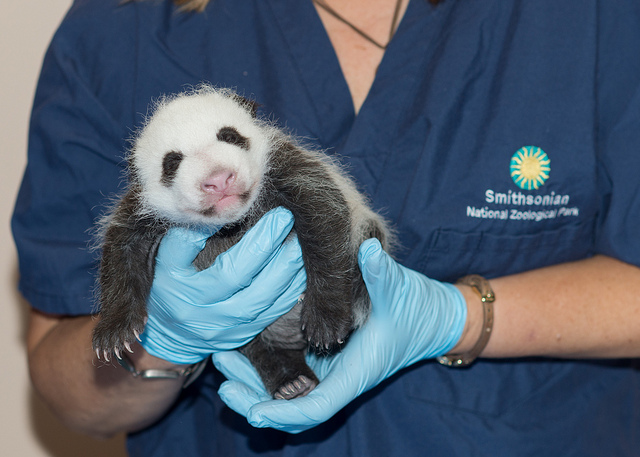
 This, forever. Photo by Abby Wood, Smithsonian’s National Zoo.
Giant pandas may be endangered, but funding for the National Zoo to continue studying them sure isn’t. The Smithsonian announced this afternoon that philanthropist David M. Rubenstein has pledged another $4.5 million towards the Zoo’s giant panda research.
Since 2011, Rubenstein has donated $9 million towards the Zoo’s panda program (as well as $2 million in 2013 to support Asian elephant research), earning his name atop the Zoo’s panda house, the David M. Rubenstein Family Giant Panda Habitat.
According to the Zoo, Rubenstein’s donation will go toward supporting conservation efforts in China, research on giant panda reproduction, training programs, care for the Zoo’s pandas and panda cubs, and upgrades to their habitat.
“David’s transformative gift is making a difference at our Zoo in our nation’s capital and across the world in China,” Smithsonian Secretary David J. Skorton said in a statment. “He understands how crucially important it is to our planet, and everyone on it, to improve the sustainability of species diversity. We greatly appreciate this most recent gift, and all he has done to support initiatives at the Zoo—and all across the Smithsonian. He is a visionary philanthropist.”
With Rubenstein’s gift, the Zoo’s research agreement with the China Wildlife Conservation Association has been renewed for another five years, at least. Under the agreement, both organizations are “[studying] the effects of land corridors linking fragmented panda habitats and the most effective methods to restore habitats, especially those where pandas appear to be making a comeback; [providing] advice on giant panda reintroduction efforts; [researching] transmissible disease effects on giant pandas and other species that share their habitat; and [continuing] research on giant panda reproduction and management.”
So yeah, panda fever at the National Zoo will extend until at least 2020.