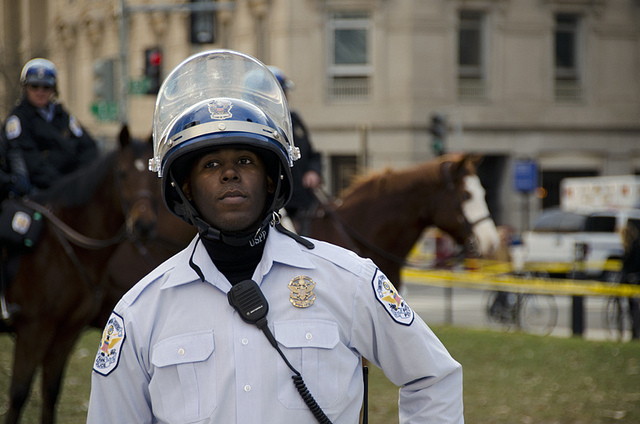
 Photo by Chris Wieland
Amid much back and forth between Mayor Muriel Bowser’s administration and the D.C. Council, D.C. residents are one step closer to getting a broad look at video taken by D.C. police officers. Yesterday, a government committee chaired by Councilmember Kenyan McDuffie (D-Ward 5) passed the “Body-Worn Camera Program Amendment Act of 2015.”
The proposal allows the public to view most footage recorded by officers’ body-worn cameras in public space, including assaults. And anyone who is the subject of a video, and those alleging officer misconduct, can view footage pertaining to their situations. In addition, the mayor can release “otherwise undisclosed” footage of officer-involved shootings, use of force by an officer, and assaults that put officers in the hospital.
The plan also restricts access to video taken in a private residence or anything involving domestic violence, sexual assault, or stalking. Plus, it includes measures to properly train officers to use body-worn cameras, and safeguards footage against police tampering.
While Mayor Muriel Bowser has supported police body-worn cameras, she initially wanted to make the recordings exempt from Freedom of Information Act requests. In May, the American Civil Liberties Union slammed that move, calling it “one more tool to surveil the residents of the District of Columbia.”
At the time, McDuffie moved to halve funding for Bowser’s full roll-out of body-worn cameras until the administration worked out a disclosure policy.
By August, the mayor said she had a change of heart that stemmed from continued police shootings. She announced a plan that would release more police footage than any other jurisdiction in the country.
Body-worn cameras first came to D.C. last October. MPD Chief Cathy Lanier began a pilot program under then-Mayor Vincent Gray, where 165 officers tested out five different kinds of cameras for a six month period.
Currently, MPD has 400 body cameras in two police districts. As part of Bowser’s Safer, Stronger D.C. legislation, the city would purchase and employ 2,800 body cameras this coming year. The cameras are about a $5 million investment.
“We have come a long way from the original plan, and this bill is a big win for both residents and law enforcement,” McDuffie said in a statement. “Our ultimate goal is to institutionalize the community policing model in our law enforcement agencies in an effort to build trust and accountability. Body-worn cameras are one tool to that end.”
The bill will go to the full council for the first of two votes on December 1.