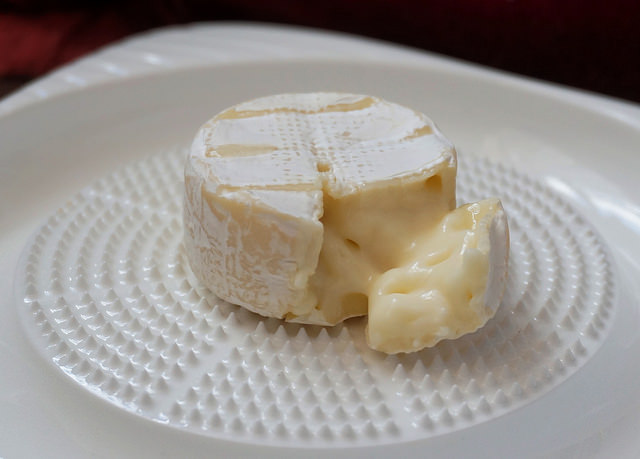
 Photo by LaTur.
D.C. is an expensive place to live, and feeding yourself is no exception. Follow Capital Cheapskate each month for a look at the cost side of the ledger, and for tips to enjoy the city’s burgeoning dining scene without breaking the bank.
Mice: they’re just like us. That’s the takeaway, at least, from a recent report that uncovered the shocking truth that cheese is addictive.
OK, so maybe the findings aren’t that shocking at all. Cheese is delicious! (My heart goes out to vegans and the lactose intolerant everywhere.)
The popular study looked at a host of foods we just can’t seem to resist, including cheesy pizza. The conclusion, in case you’ve been living in a culinary cave lately, is that dairy contains proteins called caseins. When broken down, those caseins release casomorphins, which cause a reaction in our brains not all that different from cocaine.
There’s naturally some controversy over the study and its findings, but my own love of a good cheddar, chèvre —even Polly-O String—is unimpeachable. As such, I thought I’d offer a guide to saving a buck when visiting your local ‘monger—just in time for the holiday party circuit, no less. Please see below for tips from several of D.C.’s cheese experts for next time you’re chasing the dairy dragon.
The Basics
Before you go diving headfirst into a pile of Gouda, it’s worth taking stock of your options.
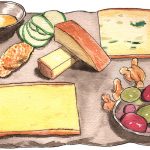
Laura Werlin, author of several popular books on cheese, has said there are eight categories of goodness: fresh (ricotta, mozzarella); semisoft (Colby, Havarti); soft-ripened (Brie); surface-ripened (La Tur, Bijou); semihard (Manchego, cheddar); hard (aged Gouda, Parmigiano-Reggiano); blue (Gorgonzola, Roquefort); and washed rind (Gruyère, Fontina).
Check out her website for even more details about what each type of cheese brings to the table. And, moreover, don’t be afraid to sample before you commit—your friendly neighborhood fromager is there to help you.
“Oftentimes cheeses taste very different than they look,” says Carolyn Stromberg, founder and owner of Righteous Cheese, located in Union Market (1309 5th St NE). “If you try before you buy, you won’t waste money on a cheese that looked appealing, but you end up not enjoying.”
Crowd-pleasers at Righteous include Manchego el Trigal, a 14-month aged sheep’s milk ($25/lb), and Beemster Extra-Aged Gouda, a 26-month aged cow’s milk cheese ($23/lb), she adds.
Portion Control
No, this is not the section where I tell you to put down the wheel of Brie and step away from the cheese board. But it is a good idea to go into a shop having a sense for both your budget and how many pounds of cheese you’ll need to feed your guests (or, um, just yourself).
Part of the calculus depends on whether your platter will serve as an appetizer or the main event. Nina Thompson, front of house manager at Cheesetique in Del Ray (2411 Mt Vernon Ave, Alexandria, Va.), recommends allotting one to two ounces per person for a starter plate and four to six ounces for a full meal.
“So if you are having five people over and are having a cheese platter before a big meal, I would recommend maybe two to three cheeses at four ounces each. If cheese was on the dinner menu, I would recommend four to five cheeses at five ounces each,” she says.
Some popular and affordable options at Cheesetique include Brie d’Amir ($11.99/lb) and smoked Gouda ($10.99/lb), Thompson says. Diners at the restaurant also qualify for 10% off same-day cheese shop orders.
Think Variety
For those looking to stretch their cheese dollars a little further, make sure to spice up your offering with an assortment of jams, crackers, and fruits. It cuts down on the amount of pricey cheese you need to buy and keeps people’s palates guessing.
Mixing it up “extends the life of the cheese plate,” says Larry Cass, general manager at Eastern Market’s Sona Creamery & Wine Bar. “By getting 1/4-1/3 pounds of multiple cheeses you can increase variety and pairing combinations, and entice people to eat smaller amounts so that they can get a taste of it all.”
And don’t be afraid to leave the usual wheat crackers at home, says Dagmawi Abedje, operations partner at GCDC, a downtown grilled cheese bar (1730 Pennsylvania Ave NW).
“Accoutrements such as pickled bell peppers, spicy pickled mango, cornichons, fresh dates, balsamic glaze, and Sriracha honey are good examples of low cost items that will taste great and give a cheese board an elegant look,” he says. “The idea is to put things on the cheese board that will create a perfect bite and will also encourage experimentation and conversation in the process.”
Go Big
Even if you’re on a tight budget, consider getting small samples of one or two special cheeses to give the whole plate some pop.
“Don’t be too frightened with cheeses that are $30-plus,” advises Thompson.
She recommends a blue cheese from Rogue Creamery that’s wrapped in grape leaves and washed in pear brandy. It goes for $39.99/lb, but Cheesetique only gets a few wheels a year, so it serves as a rare treat.
“I always just get a small quarter pound of that when I can and then round it out with maybe a half pound of a cheap brie or aged gouda,” Thompson says.
Ban Plastic
The work doesn’t stop when you leave the cheese shop. Stromberg recommends wrapping your dairy delights in special cheese paper to help extend the life of your purchase and thus get the most for your buck.
“Plastic wrap and cheese are not great friends. They just tolerate each other, and only for short amounts of time,” she warns.
On that note, she adds that it’s also a better value to buy cheese that’s packaged just for you to avoid excess drying.
“If you’re buying pre-cut cheese you have no idea when it was cut, which means the life of the cheese in your fridge could be cut dramatically. That basically means throwing money down the drain,” Stromberg says.
That brings us back to the broader message: care for your cheese and it’ll return the favor.