Rachel Kurzius
Dolly Parton bemoaned the slog of working nine-to-five, but it turns out there’s something even worse: not knowing when—or if—your shift starts.
A bill introduced this afternoon by At-Large Councilmember Vincent Orange would curb that uncertainty by compelling employers at chain restaurants and retail stores to post schedules three weeks in advance. Employers must compensate workers if they change the schedule, at a rate that increases if the switch happens within 24 hours of a shift.
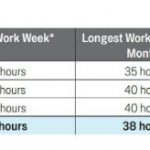
According to a report on the District’s service sector published this spring, unpredictable scheduling makes it hard for families to plan childcare, pursue educational opportunities, or take on additional employment. And because the typical worker’s schedule varies greatly—ranging from 25 to 38 hours—families have trouble budgeting.
In addition to making it difficult for employers to schedule willy-nilly without consequence, the Hours and Scheduling Stability Act would also require them to offer additional hours to qualified current employees before hiring someone new. It also closes what advocates call the “on-call” loophole, wherein bosses tell workers they need to keep their schedule open in case they’re needed. Workers would receive four hours of pay if they don’t get called or their shift gets canceled.
While there are about 130,000 service sector employees in D.C., according to a website advocating for the bill, not all of them would fall under the bill’s purview. That’s because the legislation only applies to chains, defined as retail stores with at least five establishments across the U.S. and fast-food or full-service restaurants with at least 20 establishments nationwide.
The bill would have an increased impact on both women and communities of color. 70 percent of D.C.’s service sector is comprised of Black and Latino workers, and women report higher rates of penalties for requesting a different schedule.
Some of the chains that would be affected by the passage of the bill, like Urban Outfitters, J. Crew, Gap, and more, have already stopped using on-call scheduling. Many of these retail outfits were called out by New York Attorney General Eric Schneiderman earlier this spring.
At-large Councilmember Elissa Silverman, Ward 3 Councilmember Mary Cheh, and Ward 1 Councilmember Brianne K. Nadeau co-introduced the legislation.