 (Pat Padua)
During a pre-blizzard tour of the Harper Macaw chocolate factory, co-founder Colin Hartman noted that some strains of cacao are fermented in boxes that retain their own particular variety of wild yeast. This parallels with the fermentation process for certain beers, so it’s appropriate that the bean-to-bar chocolate manufacturers have set up shop down the street from DC Brau.
The neighborhood is in transition. On the afternoon my wife and I visited, factory tours were booked two hours in advance, and patrons were encouraged to visit DC Brau’s facilities while they waited. Prospective chocolate tourists killing time before tours passed an old-school strip mall with a liquor store whose decor looks like it hasn’t been changed since 1985 and a convenience store that protects its cashiers behind a wall of bullet-proof Plexiglas. If you look closely you might even see somebody selling bootleg DVDs of current blockbusters.
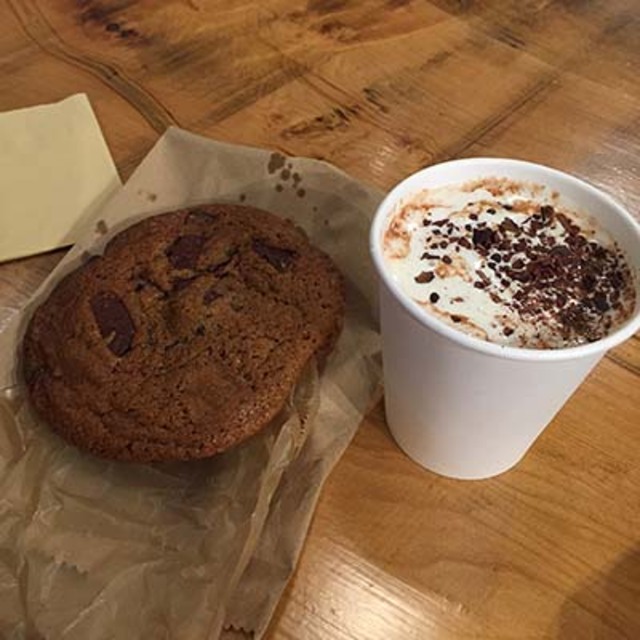
This territory at the edge of gentrification is now home to an $8 chocolate bar, and while that may seem like a lot for a snack, I can’t tell you it’s not worth it. Waiting for the tour to begin, my wife and I sampled two huge cookies, a brownie, and a big cup of sippable hot chocolate for $13, a good deal for the high-quality sugar rush. By comparison, ACKC on 14th Street used to ask the same price for the Audrey, the dense sipping cocoa that is just a little thicker than the Harper Macaw variety—but perhaps thanks to 14th Street rents, they didn’t give you half the cocoa that you can get just off Bladensburg Road.
Hartman, a former U.S. Marine, told us that he and his wife Sarah started the business from scratch. The couple set up shop in September but did not open to the public till December, spending that time fine-tuning their product on a trial and error basis. That said, the family is not new to the chocolate business. Sarah had previously worked at Valrhona and Dandelion. The Hartmans take particular pride in their direct trade cocoa beans, sourced directly from specific farms in Brazil, and a portion of their proceeds go to reforestation in Brazil’s Amazon and Atlantic forests. Harper Macaw in fact pays twice the market rate for good beans to give incentives to farmers to stay in the chocolate business.
 (Pat Padua)
As the Hartmans give back to the Brazilian communities where they get their beans, they are also engaging with surrounding communities in the District. The company is helping fundraising efforts for the Washington Jesuit Academy in Brookland, hosting private events and tours for nearby businesses, and trying to recruit and hire members of the local community.
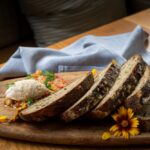
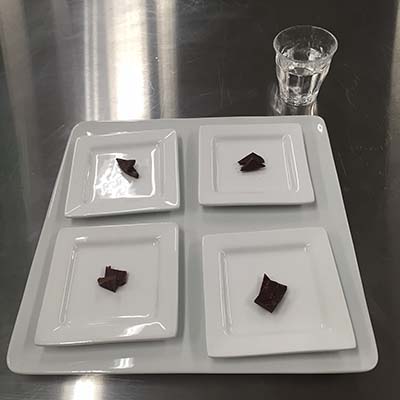
Harper Macaw makes chocolate with a conscience. But consumers also vote for flavor, and at the end of the factory tour, visitors are treated to a tasting of four varieties of chocolate. How good is their chocolate? So good that I was too full from the cafe’s baked goods to finish the samples.
The Harper Macaw factory is located at 3160 Bladensburg Rd NE. Hours are Saturday from 12-6 p.m. Hour-long factory tours are $10 per person and include a tasting. Tours are every Saturday at 1 p.m., 2 p.m., 3 p.m., 4 p.m., and 5 p.m. They ask that guests be over 10 years old due to high levels of technical content and safety reasons.
Harper Macaw chocolate is also sold at The Chocolate House, Red Apron (Mosaic and Penn Quarter), Maketto, J. Chocolatier, Glen’s Garden Market (Shaw and Dupont), Cork Market & Tasting Room, Compass Coffee 8th St Cafe and 7th Roastery.