Rachel Kurzius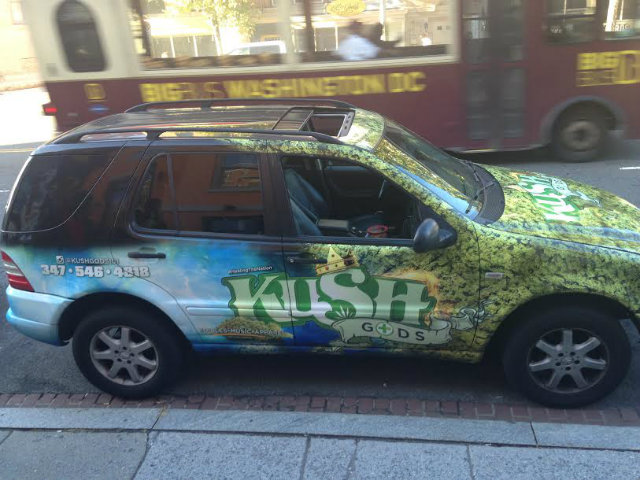
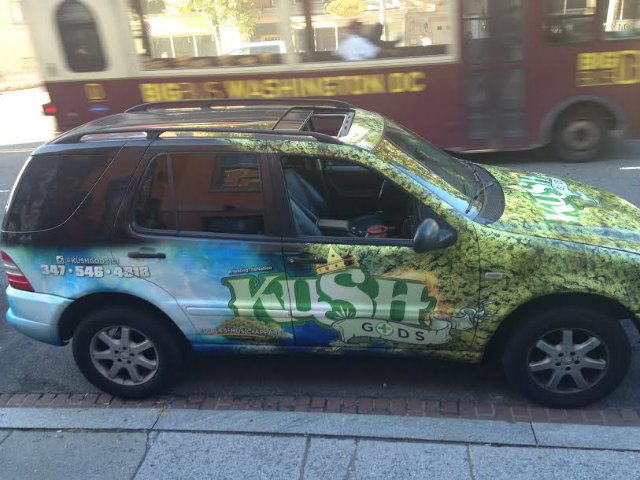 Photo by Rachel Kurzius.
The owner-operator of the Kush Gods business pleaded guilty in court today to two misdemeanor counts of marijuana distribution. And the terms of his probation will constrict his ability to rebuild that venture.
Nicholas Cunningham, 30, was arrested in late December, along with then-18 year old Evonne Lidoff, in relation to the Kush Gods operation—which offered edible marijuana using a “donation-based” system. He told DCist back in October: “People understand the reality of the situation. Brownies are ten dollars.”
Before announcing his sentence, Judge Rhonda Reid Winston said, “What you did was bold and brazen.”
She handed down a suspended sentence of 90 days in jail for each charge, to be served consecutively, as well as one year supervised probation for each charge. During that time, Cunningham cannot engage in any marijuana transactions—regardless of remuneration. He must refrain from the Kush Gods marijuana business and mobile app, insofar as they are used for the distribution of marijuana. Any additional items he sells cannot refer to marijuana, and he needs to procure a vendor’s license. And he must pay $200 per charge to the Victim’s Compensation Fund.
Additionally, while the government agreed not to oppose the release of the three luxury cars seized by D.C. Police, Cunningham must remove all designs, pictures, and labels referencing marijuana, kush, or edibles if he gets them back. MPD continues to evaluate civil forfeiture for the Mercedes Benz SUV, Mercedes Benz Coupe/Roadster, and Lexus Coupe.
Emblazoned with enlarged images of marijuana buds and the lettering “Kush Gods,” the fleet of cars had become a staple in busy corridors in D.C., offering edibles to passersby since July 2015.
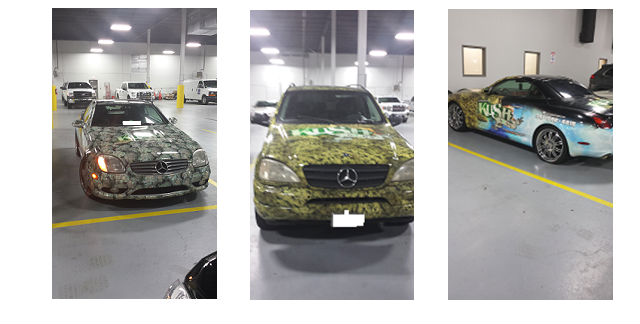 (Courtesy of MPD)
“The government respects that laws have changed” in regards to marijuana, said Assistant U.S. Attorney Richard Barker. “But not as far as Mr. Cunningham would like to carry them.”
Initiative 71, which legalized marijuana, does not allow for its sale; Congress has repeatedly blocked D.C. from enacting a system to tax and regulate it.
Barker said that Cunningham “proceeded with a reckless and irresponsible course of conduct,” selling around $2,000-worth of marijuana and edibles to an undercover officer between October and December. He scoffed at the notion that Kush Gods operated on a donation-only basis, saying that Cunningham “provided specific prices” to the undercover officer, and said his business model “had no safeguards.”
 Nicholas Cunningham, also known as Mr. Kush God. (Screenshot courtesy of Kush Gods app)
Barker also said that the Kush Gods business has impacted the community, leading to flurries of police complaints. And he brought up Lidoff, who pleaded guilty in February, implying that Cunningham led her to distribute drugs.
Cunningham disputed Barker’s claim. “I don’t influence people,” he said, painting a picture of himself as a job creator in the District.
Matthew Von Fricken, Cunningham’s lawyer, pointed out that Cunningham “runs a business that now follows all laws,” and that he’s an active member of the community, citing his work with joining in the fight against breast cancer. “He might have been a little ahead of his time,” but is ready to fall back.
Cunningham declined to comment after the hearing.
The terms of probation are a significant setback to Cunningham. He has been working since July 2015 to build up the Kush Gods brand. He has told DCist he wants to focus on the non-weed aspects of Kush Gods like apparel and music (which are already available on his app), and now those items cannot refer to marijuana, edibles, or kush.
Even as both parties went into today’s hearing expecting a plea, there were still hiccups that made it seem as though the case might proceed to trial. (Because there were four misdemeanor charges, it would have been a bench trial, not a jury trial.) Cunningham had been pleased before the hearing that the agreement “never says the undercover officer got anything hand-to-hand. There never was a sale on my part.”
However, after some semantic back and forth, he ultimately pleaded guilty to arranging a meet-up between Lidoff and the undercover officer, and to knowingly exchanging money for marijuana. When he spoke, Cunningham referred to it as “a donation.”