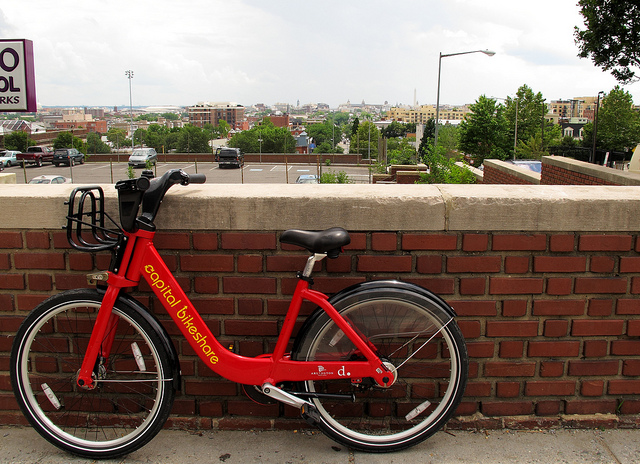
 Photo by Mr.TinDC
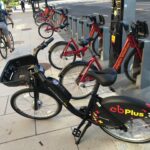
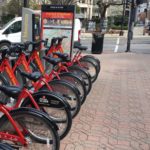
Capital Bikeshare just got a whole lot cheaper for people who are most in need of affordable transit options. The District Department of Transportation announced a program today that lets local nonprofits and government agencies provide their clients with annual bikeshare memberships for $5, compared to the standard $85 annual fee.
“It is critical that those with the most need are able to travel quickly and economically to and from their appointments, jobs, training and classes,” DDOT Director Leif Dormsjo said in a release. “By including need-based Capital Bikeshare annual memberships, we are ensuring that all District residents can use this healthy, affordable and efficient means of travel.”
The Community Partners Program is a pilot initiative involving Back on My Feet DC and the Shirlington Employment and Education Center, and a grant from the Better Bikeshare Partnership. While it’s currently available to organizations in D.C., they will soon offer discounts in Arlington and Alexandria as well. Montgomery County has its own program called MCLiberty that gives free bikeshare memberships to low-income residents.
D.C.’s initiative currently has six participating organizations: Back on My Feet DC, D.C. Department of Human Services, Unity Health DC, Whitman-Walker Health, Community of Hope, and the DC Center for the LGBT Community.
Along with the reduced membership, people who sign up also get free bikeshare helmets and a cycling class with the Washington Area Bicycling Association. Plus, instead of these riders having to switch bikes or end rides after 30 minutes (as is the regular structure), they’re getting 60-minute ride times for each trip.
Since 2008, Capital Bikeshare has rapidly expanded, from just ten bikeshare stations to hundreds around the D.C. area, changing commuting habits of residents. But a survey last year also revealed that members are becoming more affluent (as well as older and whiter). Of the 16 percent (4,314) of members who completed the survey, 50 percent made over $100,000 in 2014, compared to 39 percent in 2011 and 45 percent in 2012.