 Rachel Sadon
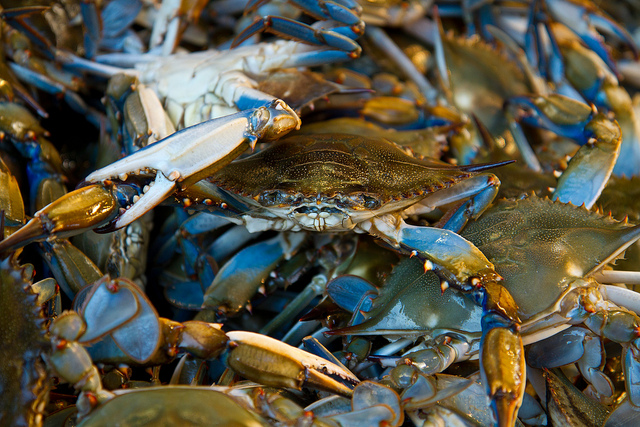 Photo by Keviikev
It looks like the crabs are all right.
The Chesapeake Bay blue crab population is up to 553 million—building on last year’s growth by another 35 percent, according to the Maryland Department of Natural Resources’ annual winter dredge survey. That puts the population up at some of the highest levels seen in two decades.
A milder winter, favorable tides, and management measures are all helping Chesapeake Bay blue crabs rebound, said Fisheries Service Director Dave Blazer.
The weather has a particularly strong influence on the crab season, the Capital Weather Gang explained recently.
Heavy rains and the influx of too much freshwater can prevent crabs from migrating to their spawning grounds. Strong winds can disrupt the delicate two-tier water circulation, and as a result, the salinity of the bay by mixing fresh water near the surface with saltwater near the bottom.
Excessive heat is no friend of the blue crab, either. The bay is rather shallow, with an average depth of only 21 feet. It is also the southern extent of eelgrass, where many crabs breed and juveniles find protection from predators. During extended periods of warmth, the bay can turn into bathwater and kill off the eelgrass, leaving crabs exposed.
Storm water runoff dumps excess nutrients, sediment and pollution into the bay, which also causes a host of problems for the blue crab.
After the blue crab population fell by half in the mid-90s (the result of a longer crabbing season because the oyster population had declined precipitously), the state enacted new guidelines and made preserving the iconic crustacean a priority. And in 2007, the governors of Maryland and Virginia launched a joint repopulation program.
Those efforts (the Chesapeake Bay Foundation and other groups recommend additional measures) seem to be paying off. “With an increase in abundance and steady recruitment, we fully anticipate a robust crab season this year,” Blazer said.
The promising survey results, combined with eight consecutive years of sustainable harvest levels, mean that the state might even consider loosening harvest limits for female crabs.
Still, be wary of menus that claim they are serving up Maryland’s “state crustacean.” A study done last year by the environmental group Oceana found that about 40 percent of crab cakes in the region that claim to contain local crab meat are actually mislabeled.