Rachel Kurzius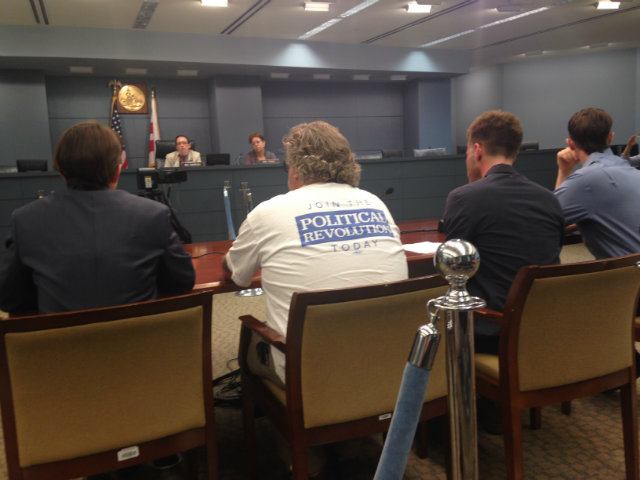
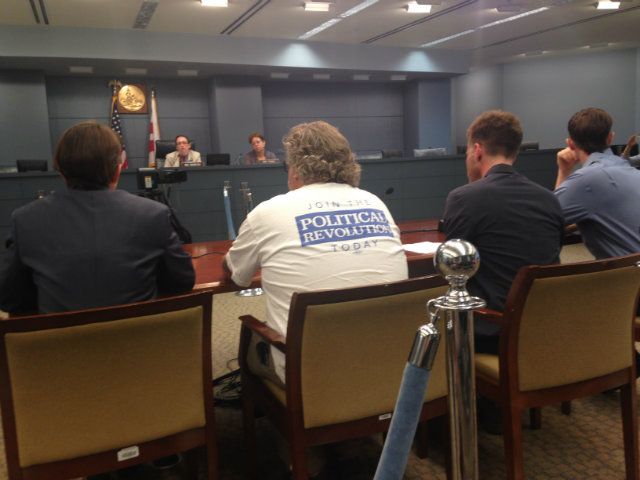 Speakers express their views on social use of marijuana at a town hall on April 19, 2016. (Photo by Rachel Kurzius)
On the same day that the D.C. Council narrowly voted to pass a permanent ban on pot clubs in the District, around 30 citizens attended an already-scheduled town hall to share their thoughts on social smoking.
The idea was for residents to discuss the issue with the two D.C. councilmembers on a task force created to issue recommendations on the feasibility of pot clubs, before the full group meets for the first time on Friday. But the D.C. Council vote preempted the conversation.
Ward 1’s Brianne Nadeau said that the task force “still has an important role to play” in hammering out future regulations for social use of cannabis in D.C. The other councilmember on the task force, Ward 4’s Brandon Todd, who voted in favor of the ban, was unable to attend the meeting and had a staffer read a statement and take notes in his stead.
Activists said that many people were too discouraged by the vote to attend the town hall, but proponents of pot clubs were the only people in attendance. The closest to an opponent was someone who called himself “a neutral person,” and referred to weed as “a vice, but then it’s a safe vice.”
Speakers talked about how cannabis was safer than alcohol, and how users were looking for a community space to imbibe outside of the home. For instance, Alex Jeffrey, the executive director of DC NORML, explained that his group rents out a space in a residence for members to consume cannabis.
One speaker pushed back against a common complaint—the smell of marijuana smoke. “Pot smoke is actually very pleasant-smelling,” he said, noting that tourists have told him as much. Another talked about how D.C. needs cannabis because it makes people more friendly and sociable.
But most speakers were more interested in policy. Numerous people brought up the racial disparity in marijuana-related arrests, which continues even in the era of decriminalization and legalization—81.9 percent of the 259 public consumption arrests from July 17, 2014 (when public consumption became a criminal offense) to the end of 2015 were of black people, according to data from the Drug Policy Alliance.
Kate Bell, an attorney for the Marijuana Policy Project, said that the ban isn’t the end of the road. “There are other avenues D.C. could explore,” she told DCist. “We’re not just talking about clubs. It’s a much broader issue.”
Nikolas Schiller of DCMJ has already written a draft referendum on the ban. But it’s an open question whether the referendum, if passed, could be implemented given the Congressional rider that hamstrings the city’s ability to regulate drug legalization. Bell says that MPP is working to ensure that the rider doesn’t appear in next year’s Congressional budget.
While Todd’s absence merited a number of comments from speakers, Nadeau got a much friendlier response—after one attendee thanked her, the room gave a round of applause.
She says she will share the concerns she heard on Tuesday night on Friday. “It’s important for the task force to understand the frustration that people have with the inability to consume cannabis publicly,” she told DCist. “I was more surprised than I should have been about how frustrated they are.”