Rachel Kurzius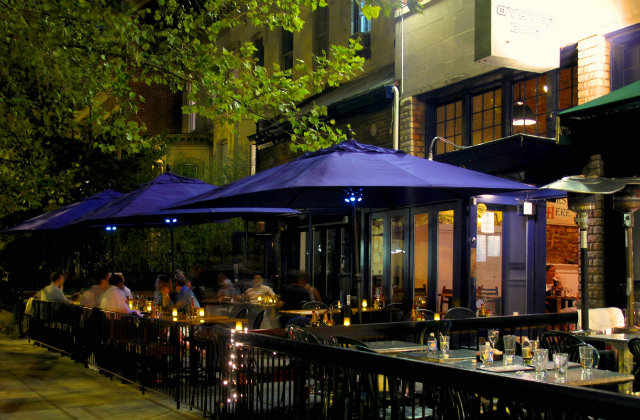
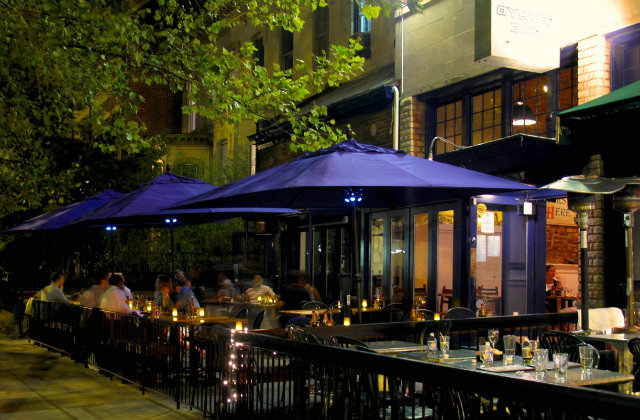 Photo by LaTur.
A new project will help bar patrons figure out which establishments have trained their staffers to intervene in instances of sexual harassment and assault.
Safe Bars has been two years in the making, and is a collaboration between Defend Yourself and Collective Action for Safe Spaces.
“You can just see why bars are the perfect place to intervene,” says Lauren Taylor, co-director of Safe Bars and founder of Defend Yourself. “It’s such an important nexus for dealing with unwanted sexual touching, harassment, or assault.”
Many people, especially women, have had the experience of feeling uncomfortable or even scared at a bar. But it’s not because aggressors are too drunk to know better. Studies have found that people target others who have been drinking. The research concluded that “Prevention needs to focus on addressing masculinity norms of male patrons and staff who support sexual aggression and better management of the highly sexualized and sexist environments of most bars.”
Ally Farouidi, a cofounder of Sudhouse on U Street, has been in the restaurant industry for more than a decade. “We’ve seen the change in clientele as U Street gentrifies, but the one thing that’s stayed the same is the amount of harassment in bars,” she says. “As bartenders, we see and hear a lot of shit.” Sudhouse plans to participate in the program.
Safe Bars conducts staff training that will help employees recognize when harassment is taking place and how to step in. There are three elements: direct, distract, and delegate. What precisely people should do “really depends on the situation and the bar staff’s role,” Taylor says. “Security does a different thing than a bartender, who does a different thing than a server.”
When establishments receive training, they will receive a decal in their window about the size of a Zagat decal. The certification lasts one year. Taylor says Safe Bars made the decision to require annual renewals because the restaurant industry has a lot of turnover.
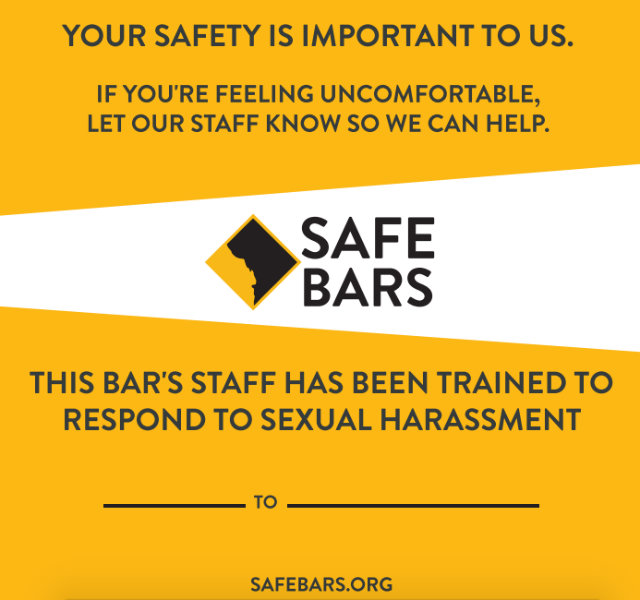 The Safe Bars decal. (Courtesy of Safe Bars)
Already, Safe Bars has conducted three trainings and a number of focus groups, including for staffers at the three locations of Hank’s Oyster Bar and The Heights, as well as a security guard training.
The initiative is offering free training until June 5, after which establishments will have to pay for the certification.
One element that could complicate staffer intervention is the industry’s reliance on tips, but Taylor says that it’s “not an issue that’s come up” in the training sessions and focus groups thus far. Safe Bar’s focus on “being preemptive rather than being responsive” will also make it easier for employees to intervene without affecting their tips, according to Farouidi of Sudhouse.
Taylor says that bar staff “have already been very smart about all this” during trainings they’ve held. “A lot of great bar staff are already doing this stuff, but it’s not necessarily shared with each other or bar policy.”
There’s another element to the initiative—the Happy Hour Pledge, wherein groups that organize bar get-togethers promise to only host events at Safe Bar-certified locations.
The idea is to turn individual action into something more comprehensive. “This is about community culture change rather than behavior enforcement,” says Taylor.
Bystander intervention has been a focus of advocates against sexual harassment; Metro’s new wave of ads will also focus on bystander intervention.
Restaurants and organizations looking to participate in Safe Bars should go to the project’s website.