 Rachel Sadon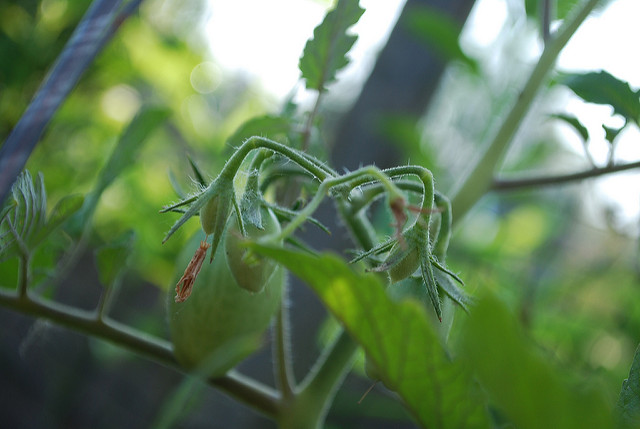
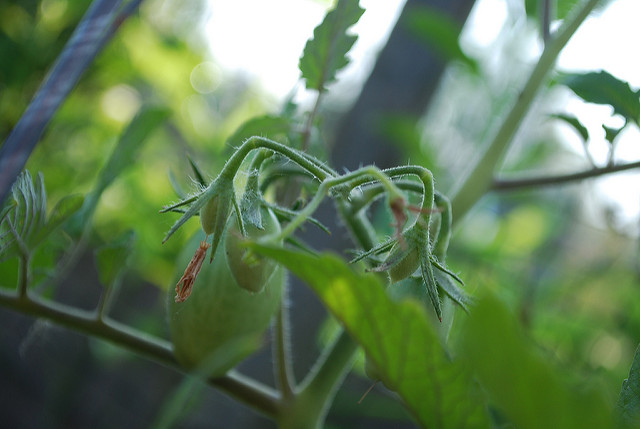 Photo by Anne Paterson
Half the cukes are dead. The basil has given up on being green. Everything else at Clagett Farm is just like the rest of the region, moping around and waiting for the sun to return.
“Photosynthesis is this magical combination of sun and water. All rain and no sun is a perfect combination for plants not growing,” says Carrie Vaughn, the farm’s vegetable production manager, with more than a hint of exasperation at the weather gods.
February and March are usually the cool and wet months, with temperatures heating up and drying out as the spring progresses. This year, the region saw the reverse—combined with seemingly unending rain.
“Certainly I’ve seen a lot of weird weather,” Vaughn says, but this is definitely a new one.
At more than two weeks, the Washington area has broken the record for consecutive rainy days, and it appears likely to continue.
Today is the first today for Clagett’s community-supported agriculture program, or CSA. People sign up at the beginning of the season for a stake in whatever the Upper Marlboro, Md. farm grows (my housemates and I have subscribed for several years). This afternoon, members will pick up about 1.5 pounds of produce—half the usual amount for this time of year (the weekly season-wide average is seven to eight pounds).
Per usual, Vaughn and the Clagett staff started out sowing hardy lettuce, kale, collards, and Swiss chard. When the threat of freezing nights passed in mid April, they added frost-sensitive plants like zucchini and tomatoes, thinking the sun had to show up soon. And while another frost didn’t show up to kill anything, overzealous watering on the part of nature did.
About half the cucumber plants succumbed to the deluge, while the basil turned yellow. The rest of the seedlings look much the same as when they planted them. “It’s so cool and dark and wet that the plants couldn’t handle it,” Vaughn says.
On the upside, nothing has washed away entirely. This is thanks to techniques like alternating tilled strips with untilled strips and mulching plants like strawberries and garlic in straw. But Vaughn has a greenhouse full of seedlings that, in her words, are “just busting out of their seams.” The desperate peppers, eggplants, and tomatoes going to have to wait until the soil dries up a bit to get into the ground, though.
That means a later yield for many of the fruits and vegetables in the CSA program and the Capital Area Food Bank, which gets the other half of the farm’s produce. That, of course, is the nature of a CSA. Members sign up in advance, not knowing exactly what kind of year or week it will be. This weeks share includes spinach, kale, rhubarb, hakurei turnips, and garlic scallions. “It’s a wonderful thing to have members who are in it for the long haul and want the farm to succeed,” Vaughn says.
And each year, she prepares Clagett, which is run by a nonprofit that benefits the Chesapeake Bay, for all kinds of weather. “We have to plant for so many circumstances.” she says. “In any given, weather some things will be okay and some things aren’t going to do very well.”
Right now, they have some very happy spinach, rhubarb, and blueberries. Everything else, not so much.