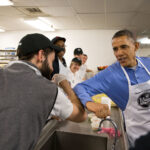
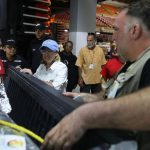
Advocates for the no-waste food movement descended on downtown D.C. yesterday for Feeding the 5000, a free lunch led by British nonprofit Feedback in partnership with local nonprofit DC Central Kitchen. Speaking in front of a curious—and hungry—crowd outside the Ronald Reagan Building, Mike Curtin, CEO of DC Central Kitchen, said, “Here we are, feeding the 5,000 — or, as we call it, Wednesday.”
Indeed, DC Central Kitchen distributes 5,000 free meals every single day of the week, year-round, and used today’s event to highlight the problem of throwing out perfectly good food, despite the fact that 48 million Americans experience food insecurity.
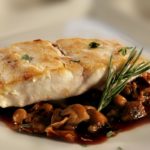
A host of celebrity chefs and policymakers were on hand to dish out meals made from “wasted” food — mostly bruised and battered fruits and vegetables that people eschew in favor of prettier produce, but also offcuts of meat and seafood that, at least here in the U.S., usually make their way into the trash. Chef Spike Mendelsohn, chair of D.C.’s Food Policy Council, demonstrated a recipe for Beef Heart Chili, while Chefs Terrell “Tee” Danley and Daniela Hurtado, both from DC Central Kitchen, used discarded fish heads for a ravioli dish.
“What we’re doing here is turning what would be nothing into something that has incredible value,” said Tristram Stuart, founder of Feedback. “It’s a colossal scandal that we waste 40 percent of food.”
Two giant paella pans were put to good use by teams of chefs from José Andrés’ restaurants—including Chef Andrés himself—where they cooked up 600 servings of “recovered vegetable” paella on site—a surprisingly delicious dish filled with a variety of saved-from-the-dumpster veggies, including parsnips, green peppers, and eggplant. As DC Central Kitchen’s chairman emeritus and culinary ambassador for the Global Alliance for Clean CookStoves, Andrés brought his passion right to the people, saying “We can change the world through the power of food.”
Dr. Zia Kahn from the Rockefeller Foundation also highlighted the potential for changing public perception about food waste, saying, “In the 1950s, littering was acceptable, but, today, it seems weird to throw a soda can out of your car window.”
Whether or not 5,000 people were at the event itself is possibly of less importance than the purpose of the event, according to U.S. Secretary of Agriculture Tom Vilsak, who pointed out that the concept of Feeding the 5000 is a direct reference to the Biblical story about the loaves and fishes that magically multiplied to feed the masses: “Christ challenged the community to step up and feed the 5000,” said Vilsak. “It’s a great example of community. The world is now engaged, and you can be a part of it.”