Rachel Kurzius
 Image courtesy of OHR.
“If you really want to serve D.C.’s trans community, hire them,” activist and organizer Ruby Corado said at the Trans Public Safety Summit last month.
But once they’re hired, how can workplaces ensure that they feel welcome?
The D.C. Office of Human Rights and the National LGBTQ Task Force published a guide of best-practices for businesses in both hiring and retaining transgender and gender non-conforming employees. A previous OHR report found that more than 90 percent of transgender people have experienced harassment in the workplace, and nearly half of D.C. employers prefer a less-qualified applicant they perceive as cisgender to a more-qualified candidate they perceive as transgender.
And those stats come from a place with explicit employment discrimination protections based on gender identity on the books.
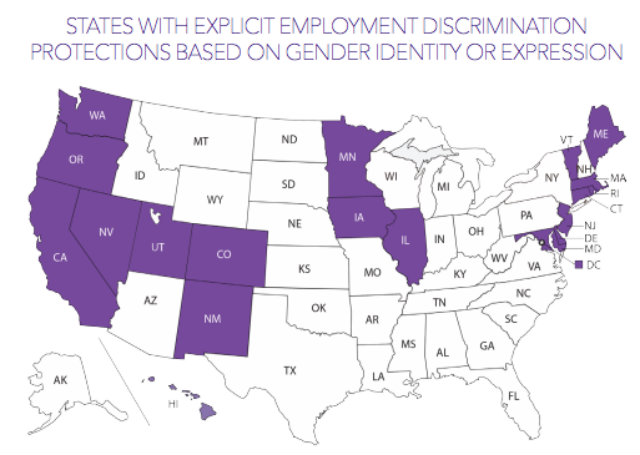 Image courtesy of D.C. OHR.
In addition to clarifying the law, the guide offers five best practices for the workplace:
1. Maintain confidentiality
2. User proper names and pronouns
3. Ensure access to restrooms
4. Implement gender-neutral dress codes
5. Address challenges with other employees and coworkers
It also contains four suggestions for ensuring that hiring practices don’t run afoul of discrimination laws.
6. Use proactive measures to uncover discrimination
7. Ensure interviews are welcoming
8. Ensure fair background checks
9. Avoid irrelevant questions when checking references
In addition to issuing guides and reports, OHR has also conducted director’s inquiries into businesses accused of discrimination.
Last month, the federal government issued guidance to help public schools provide a “safe and nondiscriminatory environment” for its transgender students. This prompted eleven states to sue the Feds, saying the government is trying “to turn workplaces and educational settings across
the country into laboratories for a massive social experiment.”
This all comes after North Carolina passed a law preventing people from using bathrooms that don’t align with the gender on their birth certificate (essentially the opposite of what D.C. passed in 2005), leading to bans on District-funded travel to the state, and dueling lawsuits from the state and Department of Justice.