By DCist contributor Kevin Thibodeaux
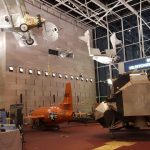
The first thing visitors will see when they step foot into the National Air and Space Museum’s newly renovated “Boeing Milestones of Flight Hall” is the Spirit of St. Louis, with original fabric from the plane’s historic 1927 flight across the Atlantic, sitting atop the 1969 Apollo Lunar Module.
It’s all part of the exhibit’s new layout that is meant to inspire awe and serve as a sought-after experience for visitors, according to Bob van der Linden, curator of aeronautics at the Air and Space Museum and one of the museum’s lead curators for the new exhibit.
“In the span between 1927 and 1969, that’s how far we’ve come,” van der Linden said. “That’s amazing. Absolutely amazing.”
The renovation officially opens to the public on Friday after two years of renovations and coincides with the 40th anniversary of the Air and Space Museum. Curators aim to bridge the historical gap by even further integrating modern day technology to hopefully inspire and connect with the next generation of aviation professionals.
“It is surprising how many people in the industry—they’ve all come through this building and seen it, usually as children—and they were inspired by something,” van der Linden said.
Visitors will now be able to download an app, Go Flight, on their smartphones that will take them on guided tours of museum exhibits and provide more information on individual aircrafts. A 16-by-12 foot wall acts as physical hub for the Go Flight app and displays pictures and information that can be synced with visitors’ phones. It’s just another way of bringing the Air and Space museum into the 21st century.
Margaret Weitekamp, curator of space history at the museum, said the digital experience was integrated every step of the way during the process of curating the new exhibit. She hopes the new exhibit will show visitors how important air and space technologies have been in shaping the modern world.
“Aviation and space flight technologies have changed how we navigate, how we communicate, how we explore; for good, for ill, they’ve fundamentally changed how we conduct warfare, how we ensure national security, how we do business and how we govern,” she said. “They’ve made the world smaller and our universe larger.”
Weitekamp said by incorporating the digital experience into the exhibit, the team thought not only about the physical exhibit but also how visitors could take the information with them anywhere in the world beyond the museum’s walls.
Announced in 2014 as part of a $30 million donation from Boeing, the new exhibit features familiar artifacts such as the lunar module-moved from the east end of the museum in September 2015-as well as new additions to the museum, such as the studio model of the Starship Enterprise from the original Star Trek series, which underwent a two-year restoration.
Van der Linden said the renovation allowed the curators to clean up some of the artifacts in the museum in hopes of making sure they were properly preserved for another 40 years.
“For all of the objects, regardless of which one, we want to do our best to preserve them as is and conserve them,” van der Linden told DCist. “And just whatever care you do, do the minimum amount necessary to keep them basically alive so to speak.”
The official opening and anniversary on Friday will include a ceremony in the morning as well as activities happening throughout the night.
Jack Daily, the museum’s director, said the Air and Space museum has an obligation to help maintain the connected world that the aviation and space flight has helped to create.
“This hall is a place of discovery and exploration. And truly one of the world’s great public spaces,” Daily said. “But with that status comes great responsibility to inspire the future pioneers and explorers.”