 Rachel Sadon
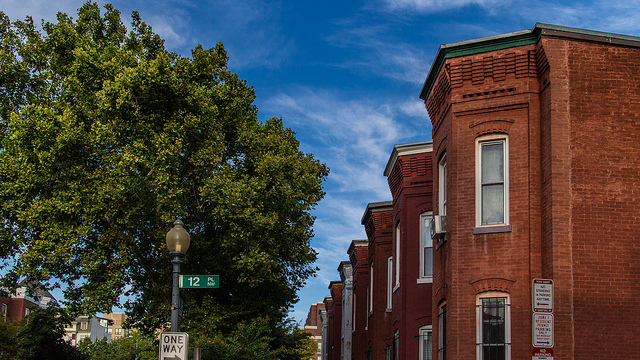 (Photo by Clif Burns)
About 30 percent of the District’s workforce of around 800,000 actually lives in D.C., according to D.C.’s Office of Revenue Analysis. Historically, most of those who both live and work in the city have been cashiers, janitors, and other workers in low-wage jobs, but you can guess where this is going.
With rising rents, a high cost of living, and a resurgent demand for living in the city, the tide is shifting and we’re seeing higher percentages of software developers, physicians, economists, and other high-wage professionals putting down roots in D.C.
ORA’s excellent District, Measured blog did the analysis, finding that in the period between 2005 and 2009, 43 percent of D.C.’s low-wage workers live in the city, while 24 percent of the District’s high-wage workers call the city home. Just five years later, from 2010-2014, the number of D.C.’s low-wage workers who live here fell to 39 percent, while the percentage of high-wage D.C. workers correspondingly went up to 27 percent.
As D.C.’s population continues to grow—recent trends indicate that the city could reach its historic peak within the next twenty years—legislators have been working to increase affordable housing and raise base wages. But some advocates fear that even a $15 minimum wage won’t be enough to keep longtime low-wage District residents in the city.

ORA’s analysis found that registered nurses and police officers (both local and federal law enforcement) are the professions least likely to reside in the the city. And according to records pulled by The Washington Post , less than half of the workers employed by the D.C. government actually live in the District: 16,103 from Maryland, 3,579 from Virginia, 429 people from elsewhere, and 15,191 D.C. residents.
This post has been updated to reflect that the percentages of low and high-wage workers who also live in the District is measuring the portion of each group rather than the the total workforce.