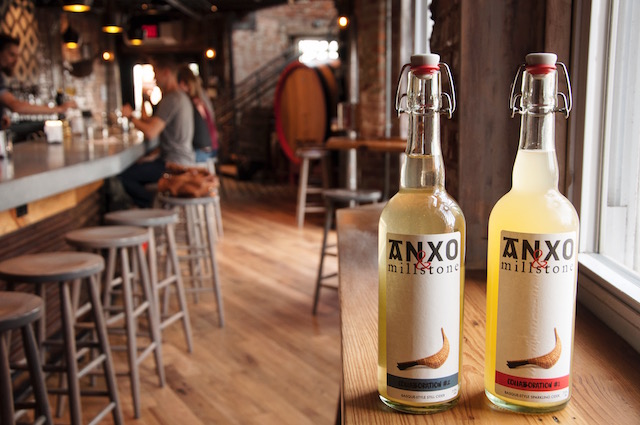
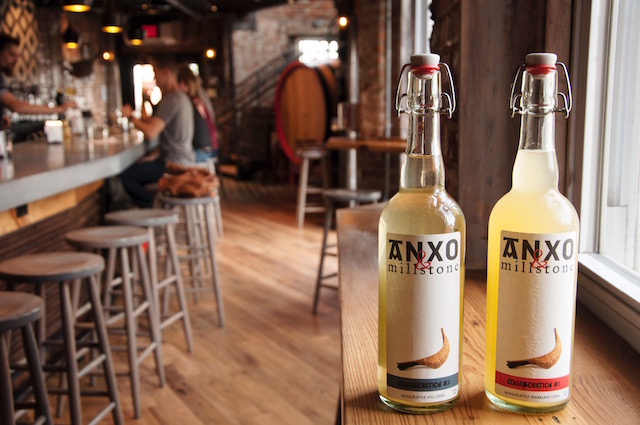
 ANXO’s ciders are brewed on site (Photo by Emelyn Rude/DCist)
By Emelyn Rude
For Tyler Hudgens, bar director of The Dabney, the critically acclaimed restaurant in Shaw focused on Mid-Atlantic cuisine, the choice to feature hard cider was an easy one. “We want to showcase what the region does well,” she explains, “and people are doing beautiful things with cider.”
To Hudgens, the techniques and knowledge of a skilled cider producer are on par with those of the world’s greatest beer and wine makers. The ever-evolving cider list she crafts at The Dabney reflects this admiration, currently featuring seven ciders from the region.
There are no cloyingly sweet, single-note beverages to be found; selections instead run the gamut in terms of the flavors and aromas a craft cider can offer. Those looking for something light and dry have met their match with an Old Hill Betwixt Cider, “a perfect aperitif,” Hudgens says. Those in the mood for something more complex and full-bodied can enjoy Potter’s Oak Barrel Reserve, which gains its depth of flavor from the months it spends fermenting in apple brandy barrels.
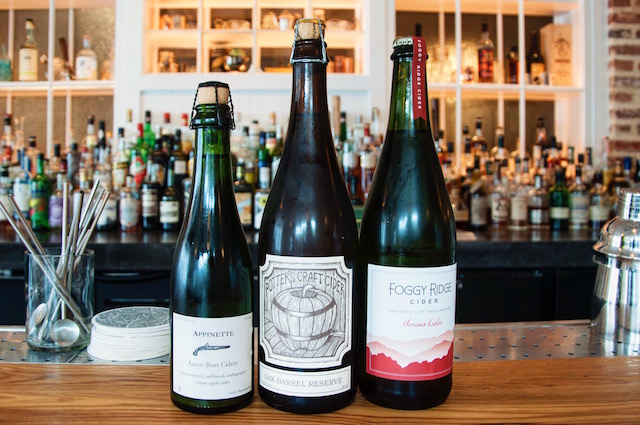 A selection of bottled ciders at The Dabney, including pioneer Foggy Ridge Cider (Photo by Emelyn Rude/DCist)
As Hudgens describes each cider, it’s easy to mistake her for a sommelier talking enthusiastically about wines instead of a beverage most have come to associate with the bottom of the beer list. The same goes for Tim Prendergast, beverage director of the new ANXO Cidery in Truxton Circle, as he goes through the dazzling array of descriptors for the more than 26 ciders available on their constantly expanding beverage menu. In fact, one of the primary things that Prendergast and his team want to make clear is that “cider is not beer.” The beverage, he emphasizes, “has nothing to do with beer.”
To begin with, true hard cider is fermented in a process similar to wine. Fruits are crushed, juices extracted, appropriate yeast is added, and then time and patience work their magic (beer, by contrast, is brewed, meaning its essential malt and hops are boiled before the yeast is thrown in). The fermentation process results in a similar range of flavors and aromas for both ciders and wines, ranging from earthy and vegetal to zesty and refreshing. When compared to their barley-based counterparts, however, hard ciders tend to be crisper and sweeter.
But what truly distinguishes the drink for Hudgens and Prendergast, along with a growing legion of cider aficionados in the Washington area, is its local history. Long before any Virginian vineyard held its first tasting and centuries before the local craft beer revolution, the Mid-Atlantic was cider country.
For centuries, the grains for beer were far too expensive for the average American homemaker and grapes for wine were virtually impossible to grow anywhere in the United States. Colonists were reasonably wary of the local drinking water and apple orchards were popping up throughout the East Coast thanks to apple-and-religion peddling raconteurs like Johnny Appleseed. Almost every American household had its own grove of apple trees by the eighteenth century. And thus, cheap cider became the most popular drink in America.
Although New Englanders were famous for the amount of cider they drank—some 35 gallons each year, by the nineteenth century—the Mid-Atlantic states of New York, New Jersey, and Virginia were producing the greatest quantity and quality of hard ciders anywhere in the country. Unfortunately, all this came to an end with the restrictions of Prohibition, and the region’s rich cider culture all but dried up.
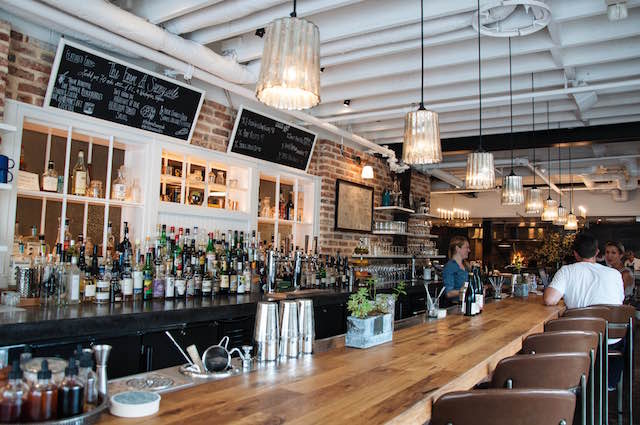 The Dabney’s bar (Photo by Emelyn Rude/DCist)
Over the past decade, Virginia has become the epicenter of a new cider revival. Since the establishment of Foggy Ridge Cider in 2005, the state’s first modern cider maker, fourteen more craft cider houses have opened up shop. Virginian cider sales have increased proportionally and today these cideries sell nearly half a million cases of their tart and refreshing products each year.
These trends are reflected nationwide; the number of craft cider producers in the U.S. has increased every year since Foggy Hill opened up shop and hard cider has been the fastest growing segment of the beverage industry since 2010.
It is these new producers, with their focus on the techniques and rich cider legacy of the region, that fill the menus at new cider-focused establishments.
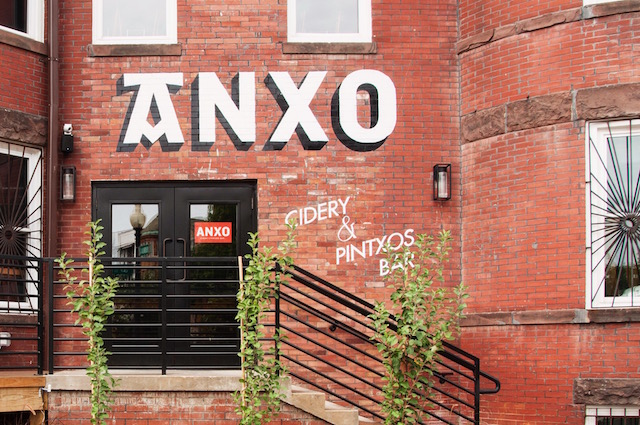 The exterior of ANXO where cider is brewed on site (Photo by Emelyn Rude/DCist)
While their food hails from the Basque country of Spain and their expansive cider list sweeps out on a global scale, the same ode to the Mid-Atlantic’s cider legacy underlies the menu at ANXO, D.C.’s first dedicated cider producer. In addition to hosting classes on the region’s ciders and cider makers, ANXO’s constantly growing menu will soon gain an even more local flavor after the team opens their new production facility in Brightwood. (They hope to have everything up and running by November.)
In the meantime, the cidery has recently launched a line of small-batch ciders featuring locally foraged apples, some of which have been plucked from apple trees within the District itself. Tart, boozy, and delicious, these hyper-local beverages reflect both the tremendous past and bright future of ciders in the Mid-Atlantic.