 Nate Parker (Fox Searchlight Pictures. © 2016 Twentieth Century Fox Film Corporation All Rights Reserved)
Nate Parker’s The Birth of a Nation implies an epic scope reminiscent of sweeping pictures like Braveheart. But the tale of Nat Turner’s short-lived slave rebellion feels as truncated as his revolution.
The movie opens with young Nat (Tony Espinosa) marked in a woodland ceremony by his own people as a chosen one, a soul destined to lead men. When the master’s wife Elizabeth (Penelope Ann Miller) discovers this slave boy can read, she sees it as a message from God, moving him into the house to study the Bible.
Nat is trapped between two warring fates. He’s been taught that God has hand picked him to deliver the good word, even though the same tome he’s made to love is used to keep his own kind shackled.
Once Nat grows up, Parker plays him with the steely eyed countenance of a reluctant hero in the Joseph Campbell mold. He has had a close relationship with the plantation owner Sam (Armie Hammer) since their time together as children. Aside from a formative moment with Nat’s father, the film’s first act depicts slavery with a calculated banality. Sam is a passive master, exhibiting just the right amount of quiet compassion to almost be mistaken for decency. It isn’t until the farm falls on hard times and Sam resorts to pimping Nat out as a wandering preacher, using the good word to keep slaves on other plantations docile for a price, that Nat and the audience are shown the extent of slavery’s inhumanity.
Touring neighboring farms, we’re introduced to a disquieting cavalcade of abusive horrors, each designed to disturb as much as enrage. But its not their relative grisliness that matters. It’s how witnessing these conditions shapes Nat, distancing himself from the dogmatic trust he’s long held in the white man’s interpretation of God. This stretch of the film is a Hero’s Journey, a spiritual awakening where Nat begins to pore over the good book with new eyes, seeing the larger picture and his predestined place within it.
Focusing on how Nat perceives the world around him, the story is designed to dramatize his rebellion, and what that revolutionary act would mean for the larger black subconscious. It positions Nat’s tale as symbolic more than historical (and indeed many of the plot points are entirely fictional).
But there’s something distasteful about seeing the atrocities of black genocide and the sexual abuse of black women reduced to casual motivation for a towering masculine hero, especially given the real life controversy surrounding Parker. What’s so novel about treating rape as fodder for the protagonist’s growth?
Parker seems far too pleased with himself in repurposing the style of white historical epics. Instead of taking a well-worn cinematic paradigm and breathing new life into it, he’s simply swapped skin tones, leaving the same formulaic structure and disappointing depiction of women that movies films like this typically deliver. Both Aunjanue Ellis as Nat’s mother Nancy and Aja Naomi King as his wife Cherry provide memorable performances, despite being mere emotional pawns in the arc of the hero.
The film isn’t entirely without merit. Save some pedestrian first time director compositions and bland ambition, Birth is still stirring. Parker comes out looking like a movie star, particularly in two key scenes: a bible verse duel with the corrupt Reverend Walthall (Mark Boone Jr.) and an incident where Nat takes lashings with an ethereal glee, finally free having discovered who he really is.
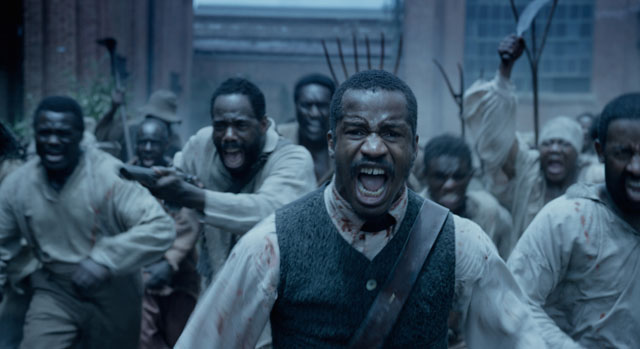
There’s a pulpy, macabre sense of thrill once the rebellion begins and white blood is vengefully spilt, but as in the history books, it’s over before it truly begun. It’s a shame that a film with so much potential is content simply to clear a low bar.
—
The Birth of a Nation
Written and directed by Nate Parker
With Nate Parker, Armie Hammer, Penelope Ann Miller
Rated R for disturbing violent content, and some brief nudity
120 minutes
Opens today at a theater near you