 Rachel Sadon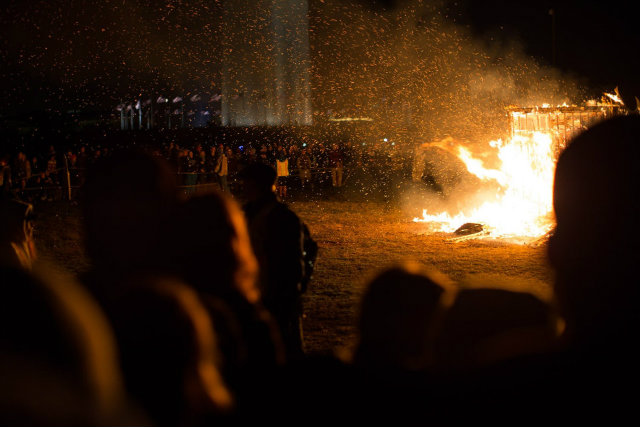
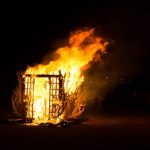
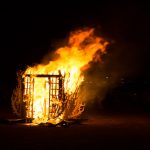
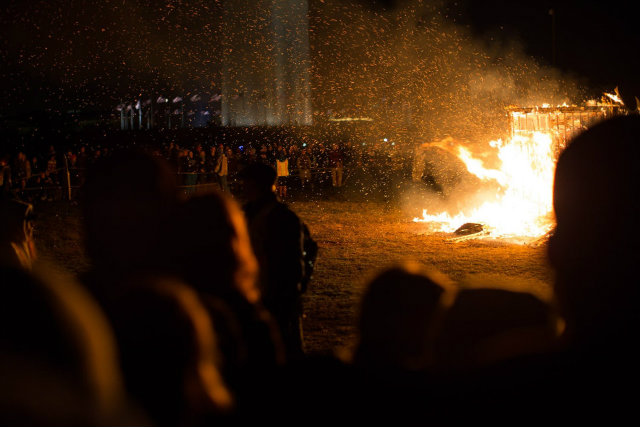 A crowd watches as a specially built temple burned to the ground near the Washington Monument in 2015. (Photo by Benjamin Strahs)
On a cool weekend last November, more than 2,500 miles away from Black Rock City, fire performers encircled an elaborate temple near the base of the Washington Monument. When they stopped spinning and breathing the flames, artist Michael Verdon walked up to the structure with a torch aloft. Then he burned the whole thing down.
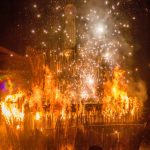
More than a thousand onlookers stood a safe distance away in a tightly packed circle, mesmerized by the dancing blaze. Many of them had attended Burning Man or smaller regional events, but plenty had never witnessed a ritual “burn” before—and certainly not on the National Mall.
The temple burning was the centerpiece of a 48-hour event, called Catharsis, meant as a vigil to heal from the drug war. It is returning on November 12 with a broader theme this time: healing from all kinds of trauma.
“We’re really talking about PTSD from any kind of incident—it doesn’t necessarily have to be a veteran, says Adam Eidinger, a local activist and one of the organizers. The event, though, is fittingly scheduled for Veterans Day weekend— just a few days after the election season mercifully ends.
“These projects create a space for people to gather and share their stories and realize that they’re not alone in those struggles,” Verdon explained last year. “When people gather together and share this experience, we take our struggles and our stories and we write them on the object, and we turn our individual stories into collective memory.”
Although officially unaffiliated with Burning Man, many of the same principles are there: a commitment to leaving no trace behind, large-scale artworks, a non-commercial nature, and, yes, lighting things on fire. But there are important differences. No one needs a ticket to Catharsis, and alcohol and drugs are technically prohibited.
“It’s actually a first amendment activity: it’s a secular humanist activity,” Eidinger says.
In addition to Burning Man, Catharsis was also informed by Toronto’s Nuit Blanche, he adds. “It’s not a bad thing if Washingtonians have one night a year where they can stay up all night for free” and dance until the sun comes up.
A dragon and an “anti-war machine” will also make appearances this year.
Last spotted in D.C. for the 2010 Rally to Restore Sanity and/or Fear, a 60-foot dragon built atop a transformed school bus, known as Abraxas, plans to circle around the National Mall in support of more federal funding for PTSD research. A retired ambulance, decked out with rainbow fabric and geodesic dome, serves as a message of peace and a “beacon for visitors to find their way home.”
And, once again, a temple burn will take place beginning at 8 p.m., if all goes according to plan. Organizers worked closely with the D.C. fire department to ensure safety last year, and they ultimately issued the permit on site. This year, due to a change in regulations, the superintendent of the National Park Service will make the call, according to organizers.
“This is just inspiration and magic. When people see this, they get a feeling you don’t get any other way,” Eidinger says. “Forget the antidepressants. You need to get out and dance with us all night.”