Rachel Kurzius
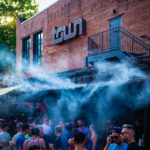
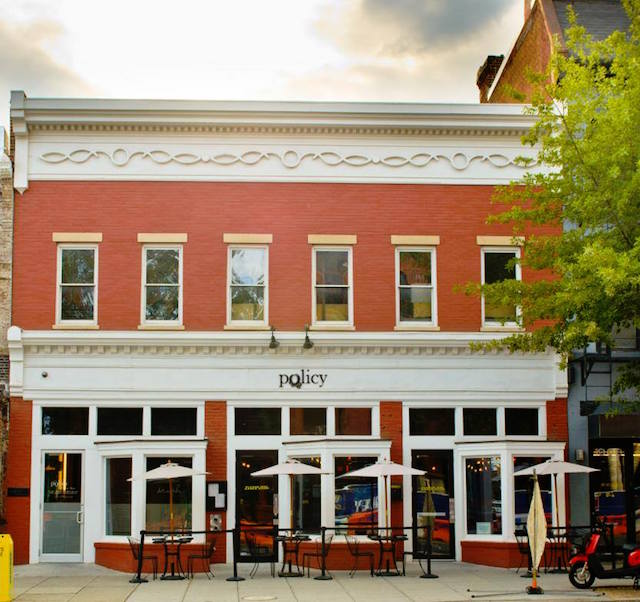 An exterior shot of Policy. (Image via Facebook)
There the Alcoholic Beverage Regulation Administration goes again, answering the metaphysical questions that stoners wonder about late at night. On this week’s docket: if people dance in a space, does that make it a dancing space?
This became a relevant question because D.C. code requires that bars get approval from the Alcoholic Beverage Control Board if they’re planning to provide “permanent space for dancing by patrons.”
But are establishments without that approval breaking the law if patrons occasionally dance there? No, ABRA ruled, in a decision flagged by Barred in DC that defines what really makes a dance floor.
The decision was prompted by a complaint against 14th Street’s Policy, accusing the restaurant and lounge of violating code by “permitting a dance floor” without the proper endorsements from ABRA.
The board dismissed the charges, ruling that “while some dancing certainly occurs on the second floor … it is just as likely that the dancing is sporadic and isolated and that Policy merely operates a cocktail lounge with a large standing area.”
On the first of her four visits to Policy, an ABRA investigator spoke with Policy co-owner Asum Walia, who “admitted that dancing occurred in the establishment on a regular basis.” However, she did not observe any dancing firsthand.
On return visits, the investigator observed people—though never more than about a dozen—dancing, and stacked tables and chairs to clear the space for them. In one instance, a DJ played. However, she never observed Policy marking off any specific area for dancing.
Turns out, it takes more than dancing to make a dance floor. While “the presence of large standing crowds engaged in dancing” is one act that a bar without an entertainment endorsement could commit to violate the code, it’s not the only one.
Others include the installation of special flooring, distinguishing the area through heightened or depressed floors, barriers, lighting, advertising with phrases like “dance party,” providing “music and encouragement,” or removing tables and chairs.
The board dismissed the charges, saying that it is “persuaded that Policy should get the benefit of the doubt in this case.”
Through the course of the investigation, Policy applied for a dancing facility endorsement from ABRA.